
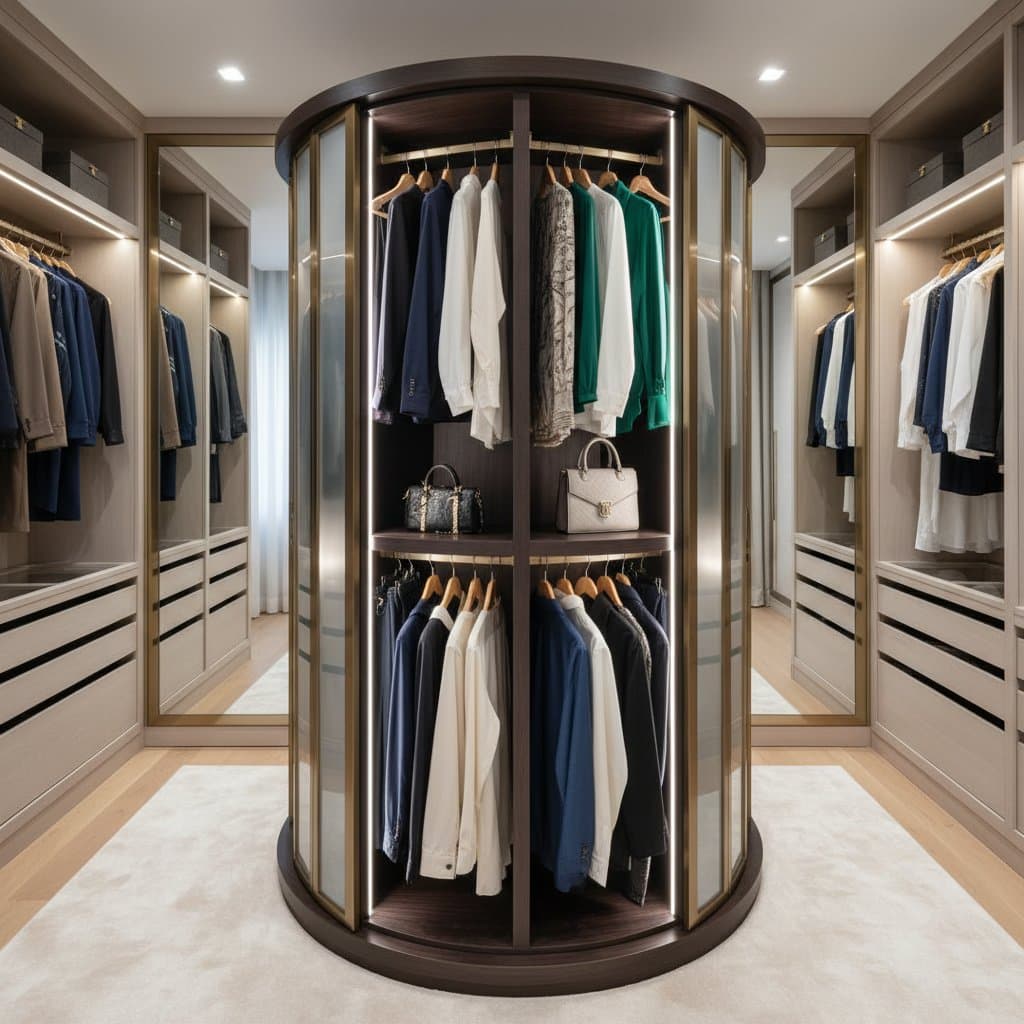
Elevate Your Closet: The Essential Guide to Rotating Wardrobe Carousels
A rotating closet carousel converts underutilized corners and overcrowded racks into a seamless, organized system that simplifies morning preparations. It provides enhanced visibility, optimal space utilization, and a subtle sense of harmony.
When your wardrobe appears full yet items remain difficult to locate, a carousel alters the entire dressing process. This guide explains the nature of a rotating closet system, its operational principles, and the reasons it defines upscale wardrobes. Bear in mind that not all spaces accommodate the necessary weight or dimensions, so precise measurements prove essential prior to purchase.
Understanding Rotating Wardrobe Carousels
A rotating wardrobe carousel employs a motorized or manual track mechanism to circulate hanging garments or shelves in a circular pattern. Activation occurs via a button press or handle turn, bringing items directly into view. These systems excel in spacious walk-in closets, though compact versions suit smaller areas provided sufficient ceiling clearance exists. Verification of load capacities remains crucial, as excess weight may compromise the motor or structural integrity.
Design variations include single-tier or multi-tier configurations, with capacities ranging from 200 to 500 pounds depending on the model. High-end options incorporate soft-close mechanisms to prevent abrupt stops, ensuring gentle handling of delicate fabrics.
Required Tools and Materials
- Tape measure for accurate dimensions
- Stud finder to identify secure mounting points
- Level to ensure even alignment
- Power drill equipped with appropriate bits
- Mounting brackets, typically included with the system
- Nearby electrical outlet for motorized variants
- Optional remote control module or wall-mounted switch
Manual systems require only fundamental hand tools and a robust wall anchor set, simplifying the setup for basic installations.
Installation Steps
1. Measure the Space
Determine ceiling height, depth, and width with precision. Allocate at least two feet of clearance around the perimeter to accommodate rotation without obstruction from walls or doors. Record these measurements to guide product selection and avoid costly adjustments.
2. Select the Configuration
Options encompass hanging-rod setups ideal for apparel or shelf-integrated designs suited for footwear and accessories. Choose based on your wardrobe composition, considering factors such as garment length and storage volume needs.
3. Identify Support Points
Employ a stud finder to pinpoint framing elements behind walls or ceiling surfaces. Secure the motor housing and track exclusively to these sturdy locations, avoiding reliance on drywall to prevent sagging or failure over time.
4. Assemble the Frame
Adhere to the manufacturer's instructions for initial assembly on the floor. With assistance, elevate the frame into place, then verify track levelness prior to tightening all bolts and fasteners.
5. Establish Power Connections
For motorized units, connect to a grounded outlet. Built-in wiring necessitates engagement of a licensed electrician to comply with local codes. Refrain from routing cords beneath rugs or within concealed panels to mitigate fire hazards.
6. Distribute the Load Evenly
Categorize and hang items by weight, positioning heavier coats opposite lighter blouses or shirts. This balance minimizes strain on gears and bearings, promoting longevity and smooth operation.
7. Conduct Rotation Tests
Initiate a complete cycle to assess clearance issues. Fine-tune hanger positions or shelf elevations as needed to resolve contact with walls, lighting, or adjacent fixtures.
8. Configure Controls
For systems featuring presets or remote functionality, program stops for specific categories like professional attire, formal outfits, or seasonal items to streamline access.
9. Implement Maintenance Protocols
Dust tracks lightly each month. Clean sensors and switches using a dry cloth. Apply silicone-based lubricant to joints quarterly to sustain fluid movement.
Essential Dos and Don’ts
Dos
- Confirm weight ratings prior to loading garments.
- Anchor all mounts into studs or reinforced supports.
- Maintain balanced distribution to avoid premature wear.
- Gently clean tracks and remove accumulated lint.
- Disconnect power before any maintenance tasks.
Don’ts
- Surpass the specified maximum weight capacity.
- Apply water or abrasive cleaners to mechanical components.
- Pull on clothing during active rotation.
- Disregard unusual grinding sounds indicating potential misalignment.
- Position near moisture sources such as unenclosed showers.
Scenarios Requiring Professional Assistance
Engage a specialist when electrical infrastructure proves inadequate, ceilings exceed standard heights, or integration of lighting and smart features is desired. Professionals perform precise load assessments and guarantee fluid performance. In homes with plaster ceilings or intricate moldings, experts reinforce structures discreetly to preserve aesthetics.
Investment and Timeline Overview
Manual carousels begin at several hundred dollars for modest sizes, escalating to thousands for expansive, motorized installations. Premium models with integrated lighting and automation command higher prices. Labor costs fluctuate based on structural modifications and electrical demands. Typical setups span from four hours for simple units to two days for complex projects, influenced by preparation and scale.
Ongoing Maintenance Schedule
- Monthly: Remove dust and debris from tracks.
- Quarterly: Examine cords for damage and secure loose bolts.
- Annually: Reassess load balance and sanitize sensors.
- Immediate Indicators: Address delays in rotation, audible squeaks, or irregular motion promptly.
Regular upkeep wards off deterioration and prolongs motor durability, often extending service life beyond a decade.
The Allure of Luxury in Rotation
True luxury within a closet extends beyond premium materials to encompass unparalleled convenience. A rotating carousel exposes every garment without the need to rearrange hangers or probe shadowed areas, inherently curbing clutter through equitable accessibility.
Interior designer Carla Mason, principal at Mason Interiors, observes, “Clients often realize they own fewer clothes than they thought once everything becomes visible. That clarity feels like luxury.” By eliminating daily hassles, the system renders dressing a tranquil ritual rather than a frantic hunt.
Advanced automation enhances this appeal, with sensors halting precisely at designated spots and synchronized lighting illuminating selections. The result mirrors the reliability of elite kitchen appliances, operating silently and dependably.
Harmonizing Style and Utility
Rotating carousels adapt seamlessly to minimalist or elaborate environments. In contemporary closets, the rotational dynamic serves as a subtle centerpiece. Within classic designs, hardware conceals behind paneled enclosures. Successful integration hinges on thoughtful concealment, such as tucking motor housings above cabinetry and aligning rods with prevailing finishes like polished chrome or satin nickel.
Custom fabricators can incorporate shelving for shoes and handbags on the shared track, repurposing overlooked areas into functional exhibits. For elevated ceilings, dual-level systems store off-season attire aloft while reserving lower tiers for frequent use.
Luxury builder Aaron Clarke of Clarke Custom Homes notes that selections stem from utility over ostentation. “It saves steps and protects fabric because clothes are not crammed together. That’s what people notice after living with it a while,” he explains.
Steps to Integrate a Rotating Carousel
During new construction or significant renovations, consult designers and contractors regarding structural reinforcements from the outset. Retrofitting succeeds more readily with exposed framing. Opt for materials complementing current fixtures, whether gleaming chrome, warm brass tones, or subtle matte black.
A rotating wardrobe carousel represents a subtle yet profound enhancement to daily life. It reclaims valuable time, preserves garment quality, and infuses your space with intentional sophistication.