
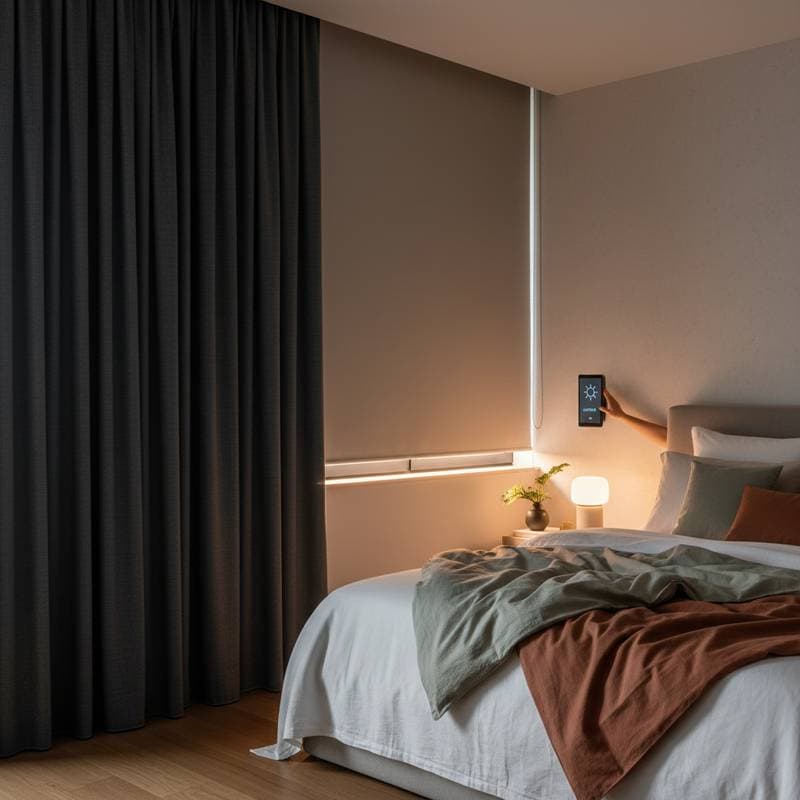
Why Light Control Matters for Sleep
Controlling light at night helps the body release melatonin, the hormone that signals sleep readiness. Even small amounts of light from streetlamps or electronics can delay this process and fragment rest. Sleep specialists recommend keeping nights dark and mornings bright to maintain a stable circadian rhythm.
Home design professionals report rising demand for sleep-friendly window treatments. Clients notice better rest once light leaks are eliminated and rooms stay consistently dark after sunset.
Choosing the Right Light-Blocking Option
Manual blackout curtains offer an affordable and durable solution. They require no power source and give immediate control over room darkness. Select tightly woven fabrics or those with foam backing for maximum light blockage.
Smart shades add convenience through scheduled operation and voice control. Models with built-in sensors can close automatically as outdoor light fades. These systems suit users who want gradual transitions that mimic natural sunset without daily effort.
For smaller rooms, roller or cellular shades provide a clean profile while trapping air for insulation. Layering a blackout curtain over existing blinds increases both darkness and thermal performance.
Tools and Materials Needed
- Measuring tape
- Step ladder
- Drill with appropriate bits and screws
- Curtain rod or mounting brackets
- Smart hub or compatible app for automated models
- Power source or rechargeable battery pack
- Soft cloth and mild cleaner for routine care
Manual setups skip the smart hub yet still deliver full sleep benefits from quality blackout fabric.
Step-by-Step Installation
- Measure window width and height twice. Add at least six inches of overlap above and on each side of the frame to prevent light leaks.
- Select fabric or shade type based on climate. Thermal linings reflect heat in warm regions while cellular shades improve insulation year-round.
- Decide between manual or automated operation according to budget and daily routine.
- Secure mounts or brackets into wall studs whenever possible. Use anchors rated for your wall material to avoid gaps.
- Hang the panel or roller and test for light along edges. Add side tracks if glow remains visible.
- Pair smart models with your network and set open-close schedules that align with bedtime and sunrise.
- Adjust timing after several nights based on how rested you feel each morning.
- Dust fabric monthly and spot-clean with mild soap. Avoid harsh chemicals that degrade the blackout coating.
- Inspect seals each season because temperature shifts can alter fabric fit.
Dos and Don'ts
Dos
- Overlap fabric generously to eliminate edge leaks.
- Verify cord-free designs when children are present.
- Use timers that gradually mimic sunrise and sunset.
- Clean gently to preserve light-blocking layers.
Don'ts
- Avoid thin room-darkening drapes when full blackout is required.
- Do not install motorized units near moisture without proper protection ratings.
-
- Never force brackets into drywall without anchors.
When Professional Help Is Recommended
Large, arched, or recessed windows benefit from custom fabrication and installation. Motorized systems tied to household wiring require licensed electricians for safe integration. Address any condensation between panes or structural leaks before hanging treatments.
Cost and Time Expectations
Manual blackout curtains range from forty to one hundred fifty dollars per window. Smart shades begin around one hundred fifty dollars and rise with custom sizing and motorization. Manual installation typically takes one hour per window while smart setups require two to three hours including app configuration.
Ongoing Maintenance
Dust monthly with a microfiber cloth or vacuum brush attachment. Spot-clean stains promptly with mild soap and water. Recharge or replace batteries in automated shades every few months. Check mounts twice yearly for loosened hardware and reseal edges at the first sign of light intrusion. Replace faded or frayed panels to sustain performance.
Energy and Comfort Advantages
Closed blackout treatments keep rooms cooler during hot afternoons and limit heat loss on cold nights. Some smart models monitor outdoor temperature and close automatically, lowering utility costs while maintaining steady sleep conditions.