
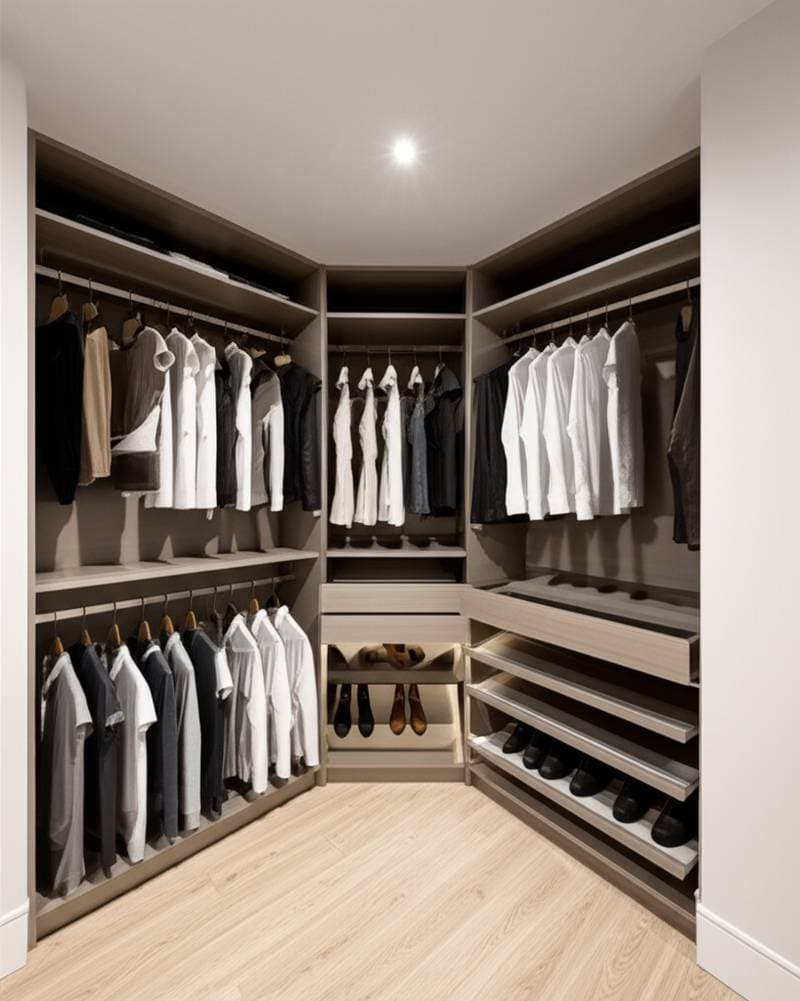
Modular Walk-Ins That Transform Tiny Spaces
Cramped corners and narrow alcoves often challenge homeowners seeking efficient storage. Modular walk-in closets address this by offering flexible systems that utilize every available inch without overwhelming the area. These setups create a sense of order and accessibility, turning limited spaces into practical retreats.
The core issue lies in balancing visibility, reach, and capacity within tight footprints. With modular components, you assemble a layout tailored to your wardrobe and habits. Proceed only if your walls lack hidden plumbing or electrical elements that restrict mounting; otherwise, consult a professional for safe modifications.
Essential Tools and Materials
Gather these items to ensure a smooth installation process.
- Tape measure for accurate dimensions
- Level to maintain straight alignments
- Stud finder to locate secure mounting points
- Drill equipped with appropriate screw bits
- Modular closet panels or a track system as the foundation
- Hanging rods, adjustable shelves, and storage baskets for organization
- Wall anchors suitable for lighter loads
- Pencil and notepad to sketch and refine your layout
- Step stool or small ladder for reaching higher areas
Consider painter's tape as an optional tool to outline positions on the wall before committing to holes. These materials support a sturdy, customizable build that withstands daily use.
Key Dos and Don’ts for Success
Follow these guidelines to avoid common pitfalls and optimize your design.
Dos
- Maximize vertical space by installing adjustable shelves that accommodate varying item heights.
- Organize items based on usage frequency, positioning everyday essentials at eye level for easy access.
- Label all storage bins and drawers to streamline retrieval and maintain long-term tidiness.
- Incorporate open spaces for airflow, which helps prevent moisture accumulation and fabric damage.
- Verify manufacturer specifications for weight capacities prior to adding heavy loads.
Don’ts
- Avoid suspending heavy items like coats on tracks not rated for such weights, as this risks structural failure.
- Refrain from drilling into walls without first scanning for hidden wiring or pipes.
- Do not position shelving in a way that obstructs heating vents or air returns.
- Never bypass leveling the components; uneven installations can lead to instability over time.
- Steer clear of overloading floating shelves with compact, heavy boxes that exceed safe limits.
Adhering to these practices ensures a durable and user-friendly result.
Cost and Time Considerations
Budget for modular walk-ins typically spans from 200 to 1,500 dollars, influenced by the room's dimensions, chosen materials, and selected brand. Wire-based systems offer affordability and lightness, while wood or composite options provide a premium aesthetic at a higher price point.
Installation generally requires four to eight hours for a basic single-wall configuration, extending to a full day for wraparound designs. Factors such as wall composition, the need for pre-installation patching, or surface painting can extend timelines. Primary expenses arise from shelf materials, the number of integrated drawers, and any added lighting features that enhance functionality.
Insights from Storage Experts
Lara Kim, an interior designer and storage specialist at Closet Logic Studio, emphasizes planning around existing possessions rather than imposing a rigid style. She advises, “Start with what you own and choose modules to fit those items, not the other way around.” Her approach favors wire or open wood shelving in confined areas to promote circulation and mitigate mildew risks.
Experts in organization highlight the long-term advantages of modularity. These systems allow for straightforward updates, such as inserting drawers into an existing frame without extensive disassembly. This adaptability minimizes costs and environmental impact, making refreshes practical as lifestyles shift.
Practical Design Strategies for Compact Areas
Enhance the illusion of space by installing a full-length mirror on the rear wall, which bounces light and visually expands the room. Opt for sliding or pocket doors in lieu of traditional swinging ones to conserve clearance in tight entryways.
Blend soft fabric bins for bulkier items with transparent boxes for quick identification of contents. Apply a light neutral paint to interior surfaces, amplifying natural brightness and creating a welcoming atmosphere. Install a slim hook rail near the entrance for frequently used accessories like belts or scarves.
These elements elevate the design from basic utility to thoughtful elegance, ensuring the space feels curated.
Planning for Future Adaptations
One of the strengths of modular closets lies in their reconfiguration potential. As your living situation evolves, such as relocating to a larger home, disassemble and reassemble the components to suit new dimensions. Store spare brackets and fasteners in a dedicated, labeled container for quick access during adjustments.
Anticipate wardrobe expansions by selecting versatile modules that allow shelf height modifications. For shared spaces, implement divided drawers or color-coded bins to delineate personal items, preserving harmony without requiring additional purchases.
This forward-thinking approach keeps the system relevant and efficient over years of use.
Installing Your Modular Walk-In
Begin the process with thorough measurements of the area, noting wall studs and obstacles. Secure anchors firmly into studs for stability, then assemble tracks and panels according to the planned layout. Test each component for levelness before finalizing placements.
Once complete, the walk-in closet delivers a dedicated home for every garment and accessory, eliminating the frustration of cluttered piles. Initiate with a single wall to build confidence, then expand incrementally. The outcome is a serene, personalized storage solution that supports a clutter-free lifestyle and adapts seamlessly to your changing needs.