
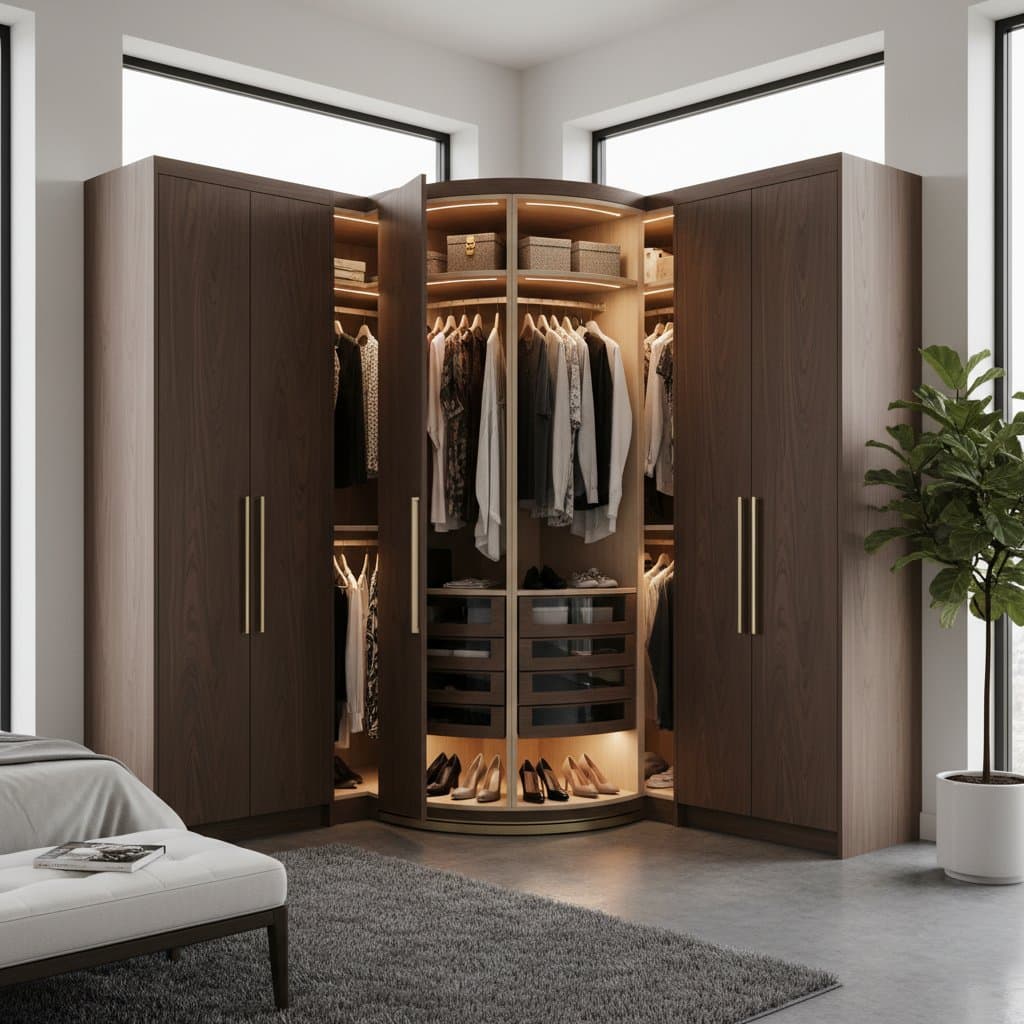
Transform Corners into Functional Storage with Carousel Closets
Unused corners often accumulate dust and clutter because standard shelving and rods fail to fit tight angles. A carousel closet addresses this challenge by introducing a rotating mechanism that brings every item into reach. This guide covers planning, installation, and maintenance to help you create an organized, accessible storage solution that maximizes vertical space.
Understanding Carousel Closets
Carousel closets feature a central rotating column or shelf assembly designed for corner installation. Items stored on the rotating elements spin into view on a stable axis, eliminating the need to navigate awkward spaces. Precise measurements and secure mounting form the foundation of a reliable system. Always anchor the base and top plates to walls or floors to minimize movement and ensure longevity.
Essential Tools and Materials
Gather these items before starting:
- Tape measure for accurate dimensions
- Level to verify even surfaces
- Power drill with appropriate bits for secure fastening
- Stud finder to locate support points
- Screwdriver for final adjustments
- Mounting brackets and screws for added stability
- Corner carousel kit or rotating pole assembly
- Protective gloves to handle components safely
- Cleaning cloth and mild detergent for preparation
For lighter installations without a drill, opt for heavy-duty wall anchors and a manual screwdriver.
Step-by-Step Installation Guide
1. Measure the Corner Area
Determine the width, depth, and height of the corner with a tape measure. Account for at least two inches of clearance on all sides to allow unrestricted rotation. Verify that the ceiling height accommodates the full height of the pole or shelving unit.
2. Inspect Floor and Ceiling Alignment
Place a level on both the floor and ceiling to check for evenness. Uneven surfaces lead to friction or instability during use. Correct minor dips by installing a thin plywood base or adjustable leveling feet beneath the unit.
3. Identify Wall Stud Locations
Use a stud finder to mark positions for secure anchoring. While the carousel rotates on a central pole, lateral supports from studs prevent side-to-side sway. This reinforcement extends the system's durability.
4. Assemble the Core Components
Refer to the manufacturer's instructions to connect the central pole, shelves, and hangers. Secure all connections with bolts, applying firm pressure without excessive force that could deform materials. The assembly should remain stable during initial handling.
5. Install the Base Plate
Mark and drill pilot holes into the floor or a prepared platform. Fasten the base plate securely, using appropriate anchors for the surface type. Reconfirm level alignment before proceeding to avoid future adjustments.
6. Mount the Top Plate
Align the top plate directly above the base and extend the pole to connect them. Tighten the tension mechanism or locking screw until the pole resists gentle lateral pressure without flexing.
7. Add Shelves and Hanging Elements
Insert trays, arms, or baskets into the designated positions on the pole. Customize vertical spacing based on item needs, such as greater height for long garments or compact levels for folded items.
8. Verify Smooth Rotation
Rotate the assembly manually to ensure fluid movement without contact to surrounding surfaces. Adjust the top tension or realign the base if resistance occurs. Continue testing until operation feels effortless.
9. Organize Items Evenly
Place heavier objects, like shoes or bins, toward the lower sections. Position lighter clothing higher up and arrange frequently used items for easy access. Balanced loading maintains stability during rotation.
Best Practices and Common Pitfalls
Recommended Actions
- Measure dimensions multiple times prior to purchasing to prevent fit issues.
- Clean all components thoroughly before assembly to eliminate dust that might impede movement.
- Test the rotation mechanism with a partial load to identify any imbalances early.
- Incorporate wall brackets for additional support in areas with weak floors or ceilings.
- Adhere strictly to the manufacturer's specified weight limits per shelf.
Actions to Avoid
- Exceed the system's capacity or use the pole for hanging body weight.
- Apply lubricants to bearings unless explicitly recommended, as residues attract debris.
- Position the unit near heat sources or high-moisture areas that could damage materials.
- Omit any anchoring steps, regardless of initial stability.
- Force the rotation if it encounters unexpected resistance.
Professional Assistance Scenarios
Seek expert help for installations involving custom cabinet integration, embedded lighting, or walls concealing utilities like plumbing or wiring. Concrete or plaster ceilings demand specialized drilling tools and anchors, best handled by a contractor. Persistent uneven rotation after leveling attempts warrants a carpenter's evaluation for precise corrections.
Cost and Time Considerations
Basic carousel kits with poles and shelves start at moderate prices, while enclosed systems with added features like lighting increase expenses. Custom builds or wall reinforcements elevate labor costs. A straightforward DIY project typically requires two to four hours, from unboxing to testing. Complex setups with carpentry or electrical work may span one to two days. Key factors influencing total investment include dimensions, material quality, and whether the design integrates into existing structures.
Ongoing Maintenance Routines
Clean shelves every two months using a damp cloth and mild detergent to prevent buildup. Inspect and tighten screws and anchors biannually for security. Monitor pivot points for signs of wear if rotation slows. Unload heavy items promptly if the pole shows any leaning. Re-level the base periodically to compensate for settling floors.
Strategic Planning for Your Carousel Closet
Assess storage needs first: allocate space for hanging versus folded items. Add two inches to the height of your longest garment for clearance. Select trays with retaining edges for shoes or bags to secure them during spins. Opt for adjustable modular designs that allow future modifications.
Interior designer Carla Nguyen of Compact Living Studio emphasizes treating corners as complete vertical storage zones. She notes that this approach distributes weight evenly and improves visibility across all levels.
Draft a layout sketch incorporating nearby furniture and door paths. Avoid corners exposed to direct sunlight or vents, which can degrade fabrics over time. Shaded locations preserve material integrity longer.
Selecting the Ideal Carousel Type
Three primary configurations suit different needs.
- Pole-Based Systems: These rely on a tension rod spanning floor to ceiling, with spinning trays attached. They install quickly and adapt well to temporary setups like rentals.
- Integrated Cabinet Models: Designed to rotate within built-in wardrobes, often featuring enclosing doors for a seamless appearance. Professional carpentry enhances their fit.
- Motorized Options: Button-activated rotation aids accessibility or tall units, though they demand electrical outlets and higher upfront costs.
Home storage consultant Ethan Morales of Streamline Interiors observes that motorized features prove most beneficial for users with mobility challenges or oversized closets. He highlights that manual versions endure longer with minimal upkeep.
Manual pole systems deliver optimal value for typical households, offering relocation flexibility without structural alterations.
Optimizing Corner Functionality
Standard storage overlooks corners due to angular constraints, but a carousel brings hidden items forward effortlessly. For acute angles formed by two walls, a quarter-circle rotating shelf fits precisely. Broader spaces benefit from half-moon configurations that expand usable area.
Incorporate low-heat LED strips along the top for illumination in dim corners. Battery-powered options eliminate wiring needs while revealing details like fabric shades.
Promote air circulation to combat corner humidity. Position a compact dehumidifier nearby to safeguard stored textiles from mold.
Organization and Styling Techniques
Organize by category and hue to streamline daily routines and preserve balance. Dedicate sections to jackets, shirts, and accessories on distinct levels.
Employ uniform hangers to maintain a tidy aesthetic. Label baskets with discreet tags for quick identification. Tuck away off-season attire on the rear-facing side, rotating it forward as needed.
Reserve lower tiers for robust items like boots, elevating delicates to avoid contact with edges. This setup prevents damage and facilitates rotation.
Adapting to Compact Spaces
In constrained rooms, a single carousel can supplant a full dresser. Complement it with slim wall-mounted shelves or a mirror to form an efficient dressing area.
For low ceilings, select compact poles paired with stackable components. Offset the installation slightly to accommodate door clearance. In studios, a freestanding unit with fabric panels doubles as a privacy divider.
Test spatial fit by outlining the rotation path with tape on the floor. Simulate movement with a stand-in pole to confirm obstacle avoidance.
Ensuring Safety and Durability
Prioritize secure anchoring and even weight distribution for reliable performance. Reinforce soft ceilings with a wood spacer under the top plate to distribute load.
Supervise children around the unit to prevent misuse as playground equipment, which risks pinches. Barrier screens deter pet interference.
Dry garments before storage to avert corrosion or warping. Reserve wet items for dedicated drying areas.
Respect maximum load guidelines to safeguard against mechanical failure.
Enhancing and Adapting Your System
Start with a basic setup and expand by adding modular shelves or lighting as needs evolve. Integrate compatible accessories like pull-out drawers for small items. If space allows, combine multiple units for comprehensive storage.
Regular assessments ensure the system aligns with changing lifestyles. Minor tweaks, such as reconfiguring shelves, keep it functional over time.
Realizing the Benefits of Rotating Storage
A well-installed carousel closet transforms overlooked corners into dynamic hubs of organization. Daily access becomes intuitive, reducing frustration from cluttered spaces. With thoughtful planning and upkeep, this solution fosters a serene, efficient home environment that adapts to your routine.