
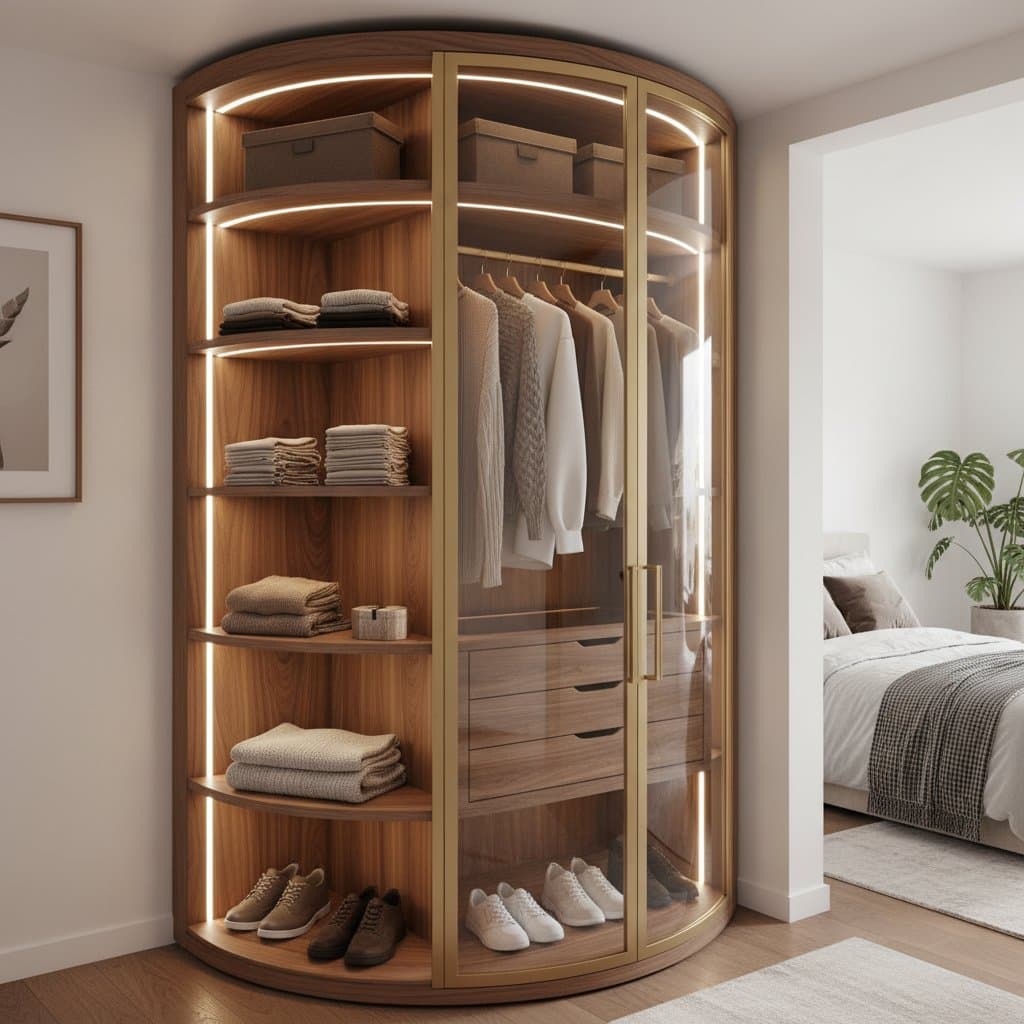
Precision defines successful carousel installations. Smooth rotation and appropriate height spacing align with specific wardrobe needs. Overloading levels with too many shelves risks reducing visibility; professional guidance or thorough kit instructions prevent such errors.
Versatile Applications Beyond Wardrobes
Carousel systems extend utility to multiple areas of the home.
- Laundry Areas: Rotating baskets facilitate sorting of lights and darks.
- Pantries: Spinning shelves organize canned goods and spices efficiently.
- Mudrooms: Compact carousels store shoes and seasonal items neatly.
- Craft Spaces: Rotating cubbies hold supplies and tools within easy reach.
The core principle remains consistent: items rotate into view for quick access and return to a compact position.
Enhancing Visibility with Strategic Lighting
Effective lighting compensates for the limited natural light in corners. Motion-sensor LED strips mounted along door frames or beneath shelves illuminate contents reliably. Select warm tones between 2700K and 3000K to create an inviting atmosphere that enhances fabric appearances. For sharper definition, opt for 4000K neutral white lighting.
Battery-powered options simplify setups in rental properties by eliminating wiring needs. Designer Nguyen suggests directing lights to skim the back wall. “That soft wash of light makes the space feel deeper and more luxurious,” she noted.
Selecting Durable Materials
Moving parts demand robust construction for sustained performance. Choose powder-coated steel frames and high-density melamine or plywood shelves to withstand regular use. Avoid plastic tracks, which degrade quickly under weight.
Test mechanisms in showrooms to confirm smooth, stable operation without wobbling or noise. Bamboo veneer provides an eco-friendly, warp-resistant alternative that complements neutral palettes. Budget-conscious choices include laminate finishes in oak or walnut patterns, which replicate wood aesthetics affordably. Prioritize rounded edges and wipeable surfaces to manage dust accumulation effectively.
Steps for Planning and Setup
Begin by measuring the corner precisely, noting width, depth, and ceiling height in inches and centimeters. Carousel units require at least 24 inches (61 centimeters) of depth and 84 inches (213 centimeters) of height. Modular designs accommodate sloped ceilings or irregular walls, while adjustable floor-to-ceiling poles suit renters by avoiding permanent fixtures.
Installation demands a few hours and basic tools. Secure the base plate firmly to ensure stability. If drilling into floors or ceilings concerns you, engage a professional handyman. This step investment guarantees safe, fluid functionality.
Managing Costs Effectively
Expenses depend on scale, materials, and personalization. Basic kits with rotating rods or trays start at a few hundred dollars. Mid-level configurations incorporating multi-tier carousels, lighting, and tailored finishes cost more. Custom builds by specialists reach several thousand dollars, integrating seamlessly with cabinetry.
Economize by assembling ready-made units and adding DIY accents. Coordinate wall paint, such as Benjamin Moore Simply White, to unify the design. Retrofit existing wardrobes by excising a side panel and inserting a rotating element.
Integrating into Daily Routines
Carousel closets integrate seamlessly into everyday habits. The intuitive rotation streamlines outfit selection and minimizes mental overload. Users often discover they purchase fewer duplicates upon gaining full visibility of possessions. Enhanced organization promotes diligent clothing maintenance.
Rina Patel reflected, “It used to take me ten minutes to choose an outfit. Now I just spin the rack and everything is visible. It sounds small, but it changes my mornings.” Thoughtful design elevates both aesthetics and efficiency.
Customizing for Personal Needs
Tailor carousel systems through varied additions. Incorporate fabric baskets for accessories, hooks for belts, or cork-lined shelves for added texture. In shared spaces, dedicate tiers to individuals. Freestanding models disassemble readily for renters.
Bold back panels in colors like Farrow & Ball Green Smoke accentuate the motion. These systems adapt to minimalist or varied aesthetics, with finishes aligning to any decor. Regardless of dwelling size, the rotating design converts overlooked corners into practical assets.
Sustaining Organization Over Time
Carousel setups foster enduring tidiness by limiting overfilling through motion constraints. Maintain only items that fit comfortably within the system. Adaptations prove simple: introduce tiers for growing families or exchange trays for rods as requirements evolve.
This adaptability represents the design's primary strength. Intentional use of every space promotes overall room harmony. Resolving minor inconveniences cultivates a sense of calm. When storage aligns with lifestyle, it evolves from mere utility to a personalized sanctuary.