
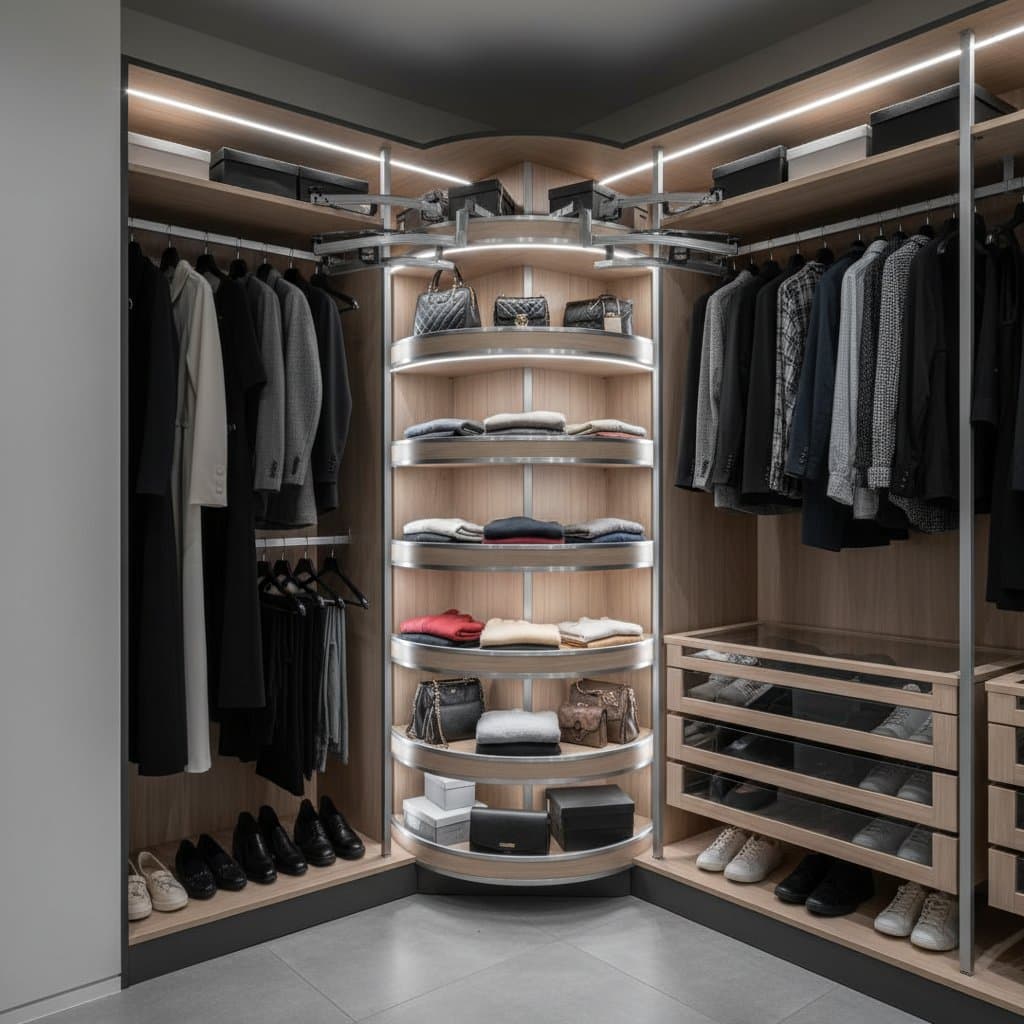
Carousel Closets: Maximizing Corner Storage Potential
Unused corners in closets often accumulate clutter and remain inaccessible. A rotating carousel system addresses this issue by providing organized, reachable storage for clothing, shoes, and accessories. These installations feature shelves or hanging arms that pivot around a central axis, bringing hidden items forward with minimal effort.
Implementing a carousel closet requires careful planning to match your space and needs. The system enhances visibility and reduces search time, ultimately streamlining daily routines. This guide outlines the process from initial assessment to long-term maintenance, ensuring a durable and efficient addition to your home.
Before beginning any modifications, evaluate your closet's structure. Load-bearing walls or integrated cabinetry may necessitate consultation with a professional to avoid damage or safety risks.
Essential Considerations for Carousel Closets
A carousel closet operates via a central pole or track that supports rotating components. Users initiate movement with a gentle push, allowing items at the rear to emerge at the front. Key constraints include sufficient clearance for complete rotation, typically requiring at least 24 inches of depth and appropriate height to accommodate the tallest items.
Balance remains critical to prevent hardware strain. Uneven loading can lead to wobbling or premature wear, so distribute weight symmetrically during setup and use. Verify smooth operation by testing the mechanism empty before adding contents; any resistance signals the need for adjustments.
Compatibility with existing closet dimensions varies by design. Standard kits suit most residential spaces, but custom solutions may prove necessary for irregular corners or high ceilings. Selecting materials like powder-coated steel or reinforced plastic ensures longevity in typical household environments.
Required Tools and Materials
Gather these essentials to facilitate a precise installation:
- Measuring tape for accurate dimensions
- Level to ensure plumb alignment
- Drill with appropriate bits for pilot holes
- Stud finder to identify secure mounting points
- Screwdriver for tightening fasteners
- Mounting hardware, often supplied in carousel kits
- Cleaning cloth for initial and ongoing maintenance
- Light lubricant suitable for metal tracks
For installations avoiding studs, opt for heavy-duty wall anchors capable of supporting at least 50 pounds per shelf. These alternatives provide stability without compromising the wall's integrity. Always review kit specifications to confirm compatibility with your chosen tools.
Detailed Installation Steps
Follow these steps methodically to achieve a professional result. Each phase builds on the previous, minimizing errors and ensuring structural soundness.
1. Measure the Corner Space Thoroughly
Begin by recording the height, width, and depth of the available area. Factor in obstructions such as doors, baseboards, or overhead lighting that could impede rotation. Aim for a minimum 36-inch height to allow tiered shelving without compression.
Sketch a simple diagram labeling measurements. This visualization aids in selecting the appropriate kit size and prevents costly rework. Double-check figures against manufacturer guidelines for optimal fit.
2. Select the Appropriate Carousel Configuration
Choose between a vertical hanging system for garments or multi-tiered shelves for folded items and accessories. Closet consultant Dana Ruiz of Closet Craft advises, "The best style depends on what you need most visible. Clothes like to hang on smooth rods, but shoes do better on flat rotating trays."
Consider frequency of use when deciding. Hanging systems excel for daily wear, while shelving suits seasonal storage. Review product options for adjustable heights to accommodate evolving needs over time.
3. Identify and Mark Secure Mounting Locations
Employ a stud finder to pinpoint wall studs or solid backing. Lightly pencil marks at these positions for the central pole or track anchors. These anchors bear the rotational load, so precision here supports overall stability.
Space marks according to kit instructions, typically 16 to 24 inches apart vertically. Test the finder's accuracy by tapping walls to confirm solid versus hollow areas. This step fortifies the installation against daily stresses.
4. Create Pilot Holes
Drill small-diameter holes at marked spots to guide screws and reduce material stress. Use bits sized for your hardware to avoid enlargement. Proceed cautiously in drywall to prevent crumbling edges.
Clean debris from holes immediately. This preparation ensures tight fits and smooth insertions, enhancing the unit's durability from the outset.
5. Mount the Central Pole or Track
Assemble and position the pole per the manufacturer's directions. Secure it with screws into pilot holes, then use a level to confirm vertical alignment. Misalignment causes friction during rotation, accelerating wear.
Tighten connections incrementally while rechecking plumb. For track-based systems, align rails parallel to the floor. A stable core forms the foundation for all subsequent attachments.
6. Secure Shelves or Hanging Arms
Attach each component by snapping or screwing into designated slots. Rotate the assembly partially after each addition to assess freedom of movement. Pause if resistance appears, adjusting as required.
Ensure arms extend fully without contacting walls or floors. This clearance promotes effortless operation and prevents binding over time.
7. Distribute Items for Balance
Place contents symmetrically around the carousel. Position heavier objects on lower levels to maintain equilibrium. Lighter items suit upper tiers, preserving accessibility without tipping risks.
Avoid clustering weight on one side, which strains the pivot. Periodically review distribution as you add or remove items to sustain performance.
8. Apply Lubrication and Conduct Tests
Clean tracks with a dry cloth to remove residue. Apply lubricant sparingly to moving parts, then rotate the unit multiple times. Listen for quiet, fluid motion without vibrations.
Inspect for play in joints or looseness in mounts. Address issues promptly to embed good habits from installation day.
9. Fine-Tune Spacing and Clearances
Examine for interferences, such as garments touching the floor or shelves grazing walls. Adjust arm heights incrementally until rotations clear all obstacles. Re-test fully loaded to confirm adjustments hold.
Document any modifications for future reference. This adaptability ensures the system evolves with your storage demands.
Best Practices and Common Pitfalls
Recommended Actions
- Measure dimensions twice to confirm accuracy before proceeding.
- Anchor the central pole into studs or robust supports for maximum strength.
- Rotate the carousel completely once monthly to prevent stiffness in joints.
- Group similar items by category to enhance quick retrieval and organization.
Actions to Avoid
- Refrain from overloading top shelves, which destabilizes the structure.
- Steer clear of abrasive cleaners on tracks to preserve finishes.
- Do not overlook emerging noises, as they indicate early wear.
- Avoid setups in humid areas lacking airflow, to prevent corrosion.
Adhering to these guidelines extends the carousel's lifespan and maintains efficiency. Simple vigilance yields lasting benefits in space utilization.
Professional Assistance Indicators
Engage a contractor for closets involving electrical outlets, plumbing lines, or load-bearing elements. These complexities demand specialized tools and knowledge to mitigate hazards. Custom fabricators excel at integrating carousels into expansive walk-ins with interconnected units.
Professionals also manage permits if structural alterations arise. Their expertise ensures compliance with building codes, providing peace of mind for intricate projects.
Investment and Timeline Overview
Entry-level rotating pole kits begin around $100, offering basic functionality. Advanced configurations with durable metal tiers and customizable finishes range from $300 to $800. Factor in professional labor at $50 to $100 per hour if DIY proves unsuitable.
A straightforward single-unit installation typically requires one to three hours. Larger systems may extend to a full day, including measurements and testing. Budget for tools if not already owned, adding $20 to $50.
Ongoing Maintenance Strategies
Perform monthly wipes on tracks and arms using a soft cloth. Reapply lubricant to pivot points biannually to sustain smoothness. Inspect screws and anchors quarterly, tightening as necessary to counter settling.
Monitor for signs of imbalance, such as sagging shelves or irregular spins. Rebalance loads promptly to avert hardware fatigue. In high-use environments, increase checks to bi-monthly intervals.
Store the carousel in a dry setting to inhibit rust. If moisture persists, incorporate vents or dehumidifiers. These routines preserve the investment and functionality for years.
Optimizing Closet Efficiency Through Rotation
Installing a carousel closet illuminates forgotten corners, revealing and utilizing possessions more effectively. Organized access reduces frustration and encourages tidier habits. Embrace this upgrade to experience a more intuitive and spacious wardrobe environment.