
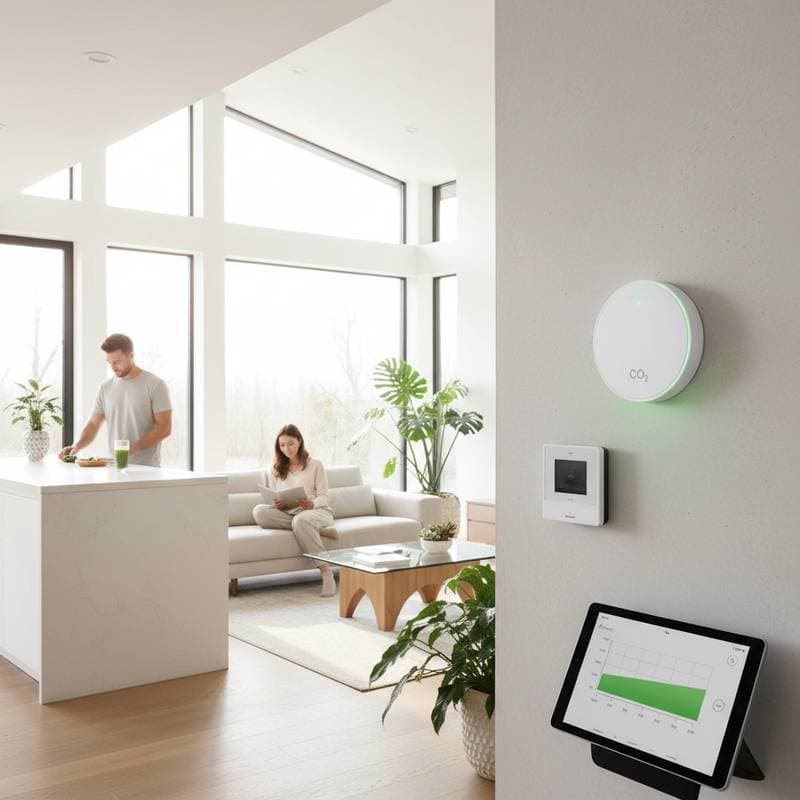
Built-in CO2 Sensors: The New Standard for Energy-Efficient Homes
People spend up to 90 percent of their time indoors, inhaling air that appears fresh yet often harbors hidden issues. Energy-efficient homes seal tightly to minimize heat loss, but this design choice can confine exhaled carbon dioxide and other contaminants. Elevated CO2 concentrations subtly undermine cognitive function, rest quality, and physical comfort. Builders address this challenge through embedded CO2 sensors, which track air composition and enable proactive ventilation for sustained indoor freshness.
The Importance of Indoor Air Quality
Indoor environments frequently harbor higher pollutant levels than outdoor spaces, particularly in cities with traffic or industrial activity. Routine tasks like preparing meals, dusting surfaces, or breathing contribute to CO2 buildup. Concentrations exceeding 1000 parts per million trigger symptoms such as drowsiness, migraines, and diminished mental clarity. In compact living spaces or well-insulated structures, these elevations occur rapidly absent adequate air exchange.
Architects and construction professionals prioritize air health alongside structural elements like natural light or thermal barriers. Embedding CO2 sensors within heating, ventilation, and air conditioning systems automates this oversight. Homeowners gain consistent purity without manual interventions, such as frequent window adjustments or manual fan operations.
Principles of CO2 Sensor Operation
CO2 sensors detect carbon dioxide density via nondispersive infrared technology. Infrared light passes through the air sample; CO2 molecules absorb particular wavelengths, allowing the device to quantify levels precisely. This information transmits to central controls, which regulate fans, dampers, or exhaust mechanisms accordingly.
Contemporary units feature slim profiles, low power draw, and wireless connectivity for integration with broader home automation networks. Upon detecting rising CO2, the setup activates enhanced circulation or notifies occupants via app or display. As levels normalize below 800 parts per million, operations scale back, preserving energy while upholding standards. This cycle operates silently, delivering reliable results across diverse room sizes and layouts.
Integration in Contemporary Home Designs
Fresh constructions routinely incorporate CO2 sensors alongside essentials like fire alarms and climate controls. Pairing with heat recovery ventilators proves especially effective; these units swap depleted indoor air for tempered outdoor intake, conserving up to 90 percent of thermal energy. Such combinations maintain even temperatures and oxygen richness throughout seasons.
This trend signals evolving priorities in residential development. Prospective buyers seek properties that foster holistic wellness beyond basic utility. A compact sensor exerts profound influence, illustrating how precise tools render environmental control intuitive and data-informed.
Tangible Advantages in Routine Activities
Daily experiences shift noticeably with optimized air. Bedrooms achieve stable CO2 under 600 parts per million, promoting restorative sleep and alert awakenings. Dedicated workspaces sustain focus, warding off mid-day slumps through steady refreshment. Play areas for children and study zones avoid stuffiness, supporting active engagement without discomfort. Household animals also thrive amid improved airflow, exhibiting higher vitality.
Apartment dwellers access similar gains without structural changes. Independent CO2 detectors, priced comparably to mid-range kitchen gadgets, offer app-based alerts and historical logs. These plug-and-play options install in minutes, empowering users to monitor and mitigate air concerns independently.
Implementation Considerations
Seamless System Connections
- Leading thermostats from brands like Ecobee and Nest process CO2 inputs to fine-tune humidity and circulation alongside temperature.
- Advanced ventilators, including Zehnder and Lunos models, modulate intake rates directly from sensor feedback for precise response.
Optimal Sensor Positioning
- Mount units at chest height, approximately five feet from the ground, steering clear of drafts, heat sources, or glazing to ensure unbiased measurements.
- Deploy a single sensor in primary zones for modest dwellings; scale to multiple for larger or multi-level properties.
Cost-Effective Choices
- Handheld CO2 trackers begin at entry-level prices, akin to durable lighting fixtures, with basic display and battery life.
- Fixed installations, bundled with HVAC upgrades, demand upfront costs yet yield savings through reduced utility bills over five to ten years.
Ongoing Upkeep
- Wipe sensor surfaces quarterly to remove dust; professional recalibration occurs biennially for accuracy retention.
- Replace ventilation filters every three to six months, depending on occupancy and local conditions, to sustain performance.
Incorporating Sensors into Existing Residences
Retrofitting older homes proves accessible with minimal disruption. Select a high-traffic spot, such as a living room or hallway, for initial placement. Collect readings for a week to pinpoint peaks, like those from evening gatherings or closed-door sleeping. Respond by installing exhaust fans, deploying purifiers, or linking automated shades to boost natural exchange during alerts.
Gradually, intuitive cues emerge: lighter breathing, sustained vigor, and reduced tension. Aim for informed adjustments rather than rigid thresholds. Sensors equip users with real-time intelligence, facilitating organic enhancements to living conditions.
Sustaining Wellness Through Air Monitoring
Forward-thinking homes extend beyond protection to actively nurture health. CO2 sensors enable this advancement affordably and effectively. For new constructions, renovations, or simple upgrades, air quality oversight delivers enduring value. Clean respiration forms the foundation of enduring comfort, transforming any space into a resilient sanctuary.