
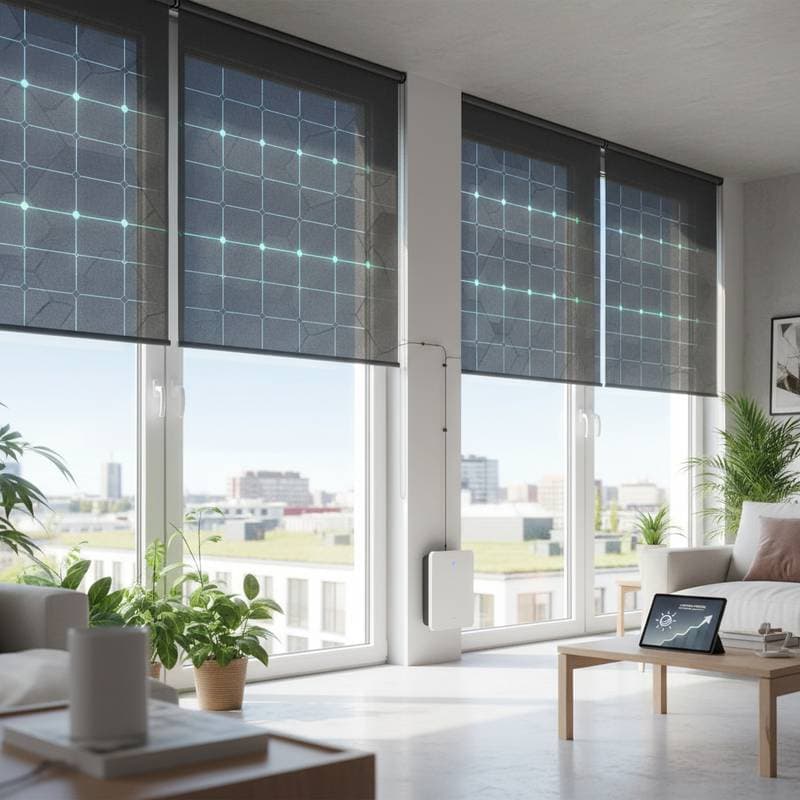
Solar Shades That Power Your Home with Sunlight
Imagine lowering your window shades in the morning and knowing that they quietly generate electricity for your home. Solar shades that function as energy producers represent more than futuristic concepts. They offer practical, attractive options for homeowners committed to integrating sustainability into daily life. These shades merge the standard benefits of light and privacy control with advanced photovoltaic cells that transform sunlight into usable power.
The appeal lies in their seamless integration into existing spaces. Residents of urban apartments with expansive windows or compact suburban homes find that solar shades complement interior decor. At the same time, they lower energy costs and minimize carbon emissions.
How Solar Shades Work
Solar shades incorporating photovoltaic technology function similarly to conventional solar panels, yet the key innovation resides in the materials. Manufacturers embed thin-film solar cells directly into the shade fabric or surface. Sunlight striking the material prompts these cells to convert light into electricity, which integrates into the home electrical system or powers small devices.
Unlike rooftop installations, these shades harness vertical window areas often overlooked for energy production. Windows exposed to steady daylight, particularly those oriented south or west, deliver consistent renewable power. The design avoids blocking views and eliminates the need for extensive setup.
Engineers craft the materials to maintain semi-transparency, permitting filtered natural light indoors while capturing solar energy. This approach yields window coverings that mitigate glare, shield furnishings from ultraviolet rays, and contribute to the home energy network without disruption.
Benefits for Daily Life
Balancing natural illumination with thermal regulation presents a common challenge. Excessive sunlight warms interiors, while fully drawn coverings create dim, enclosed spaces. Solar shades address this by regulating light intensity and producing energy concurrently. They diminish heat buildup, decrease reliance on air conditioning, and compensate for power drawn by lights or gadgets.
For individuals in rental properties or situations precluding rooftop solar arrays, these shades provide an straightforward entry to renewables. Numerous models employ plug-and-play configurations linked to compact inverters or batteries. Installation proceeds without wall modifications or structural changes, suiting apartments and transient residences.
Key Specifications
- Primary users: Homeowners and renters pursuing sustainable, low-effort energy options
- Ideal environments: Regions with ample or moderate sunlight
- Standard dimensions: 3 feet by 5 feet, equivalent to 0.9 by 1.5 meters
- Setup duration: Several hours per window for typical installations
- Cost estimate: 400 to 900 units of local currency per window, varying by dimensions and output capacity
The Limitations of Conventional Windows
Standard homes experience substantial energy loss via windows. While traditional blinds manage light, they fail to enhance overall efficiency. Many residents encounter the irony of vibrant, sunlit rooms that escalate cooling expenses and squander solar potential.
One homeowner shared, "Our living room featured large south-facing windows that brightened the space but turned it uncomfortably warm by midday. We sought a method to harness that sunlight rather than combat it."
Transformation Through Installation
Solar shades altered that living room dramatically. They curbed glare, maintained even temperatures, and supplied auxiliary electricity. The homeowner observed a more serene atmosphere and a clear reduction in monthly power consumption. The shades connect effortlessly to the home smart energy setup, channeling excess power into a compact battery for nighttime use.
These enhancements transcend mere mechanics. The space now aligns with principles of sustainability and ease, preserving aesthetic appeal. Options in neutral tones such as soft gray, linen beige, and graphite harmonize with diverse interiors.
Technical Features
- Core components: Fabric infused with thin-film photovoltaic cells, typically flexible silicon or perovskite-based
- Support structures: Powder-coated aluminum or matte black steel frames for enduring performance
- Control options: Bluetooth or Wi-Fi connectivity for app-based or voice-activated adjustments
- Power handling: Integration with micro-inverters that shift direct current to alternating current for home appliances
- Illumination management: Variable opacity from translucent to opaque, adaptable to room functions
- Affordable variants: Manual shades with removable solar inserts for modest windows or constrained finances
Aesthetic and Tactile Qualities
Solar shades unite advanced functionality with understated elegance. When extended, they resemble contemporary blinds with smooth profiles. Retracted, the photovoltaic layers retract into a unobtrusive top-mounted cassette. Certain designs incorporate faint geometric motifs that scatter sunlight softly onto surfaces.
In minimalist settings, the shades sharp lines enhance the look. Traditional environments benefit from fabric-lined editions that introduce subtle warmth alongside efficiency. With varied hues and finishes available, they serve as focal points or subtle accents as needed.
Seamless Smart Home Compatibility
A standout feature involves compatibility with intelligent home ecosystems. Program the shades to descend during optimal sun exposure, optimizing energy capture and heat deflection. At dusk, they ascend to reveal vistas and facilitate passive ventilation.
Advanced models route generated power to integrated outlets or devices. Consider charging a smartphone via a living room window outlet in the afternoon. Such conveniences make eco-conscious habits tangible and rewarding.
Upkeep and Longevity
Adopting novel technologies raises concerns about care, yet solar shades demand little attention. Protective encasements shield photovoltaic films from humidity and particles. Maintenance consists of periodic dusting or light cloth wiping. Mechanisms mirror those of ordinary blinds, accessible to anyone versed in basic window maintenance.
Designers engineer these systems for extended service, backed by warranties guaranteeing reliable output. Consistent exposure from multiple windows accumulates meaningful contributions to household energy needs over time.
Broader Environmental Impact
Advantages surpass direct power generation. By limiting heat ingress, the shades ease demands on cooling units, yielding indirect savings. Contemporary models employ recycled or recyclable elements, amplifying ecological value.
Relative to short-lived traditional coverings, solar shades deliver durability and quantifiable gains. They embody progress in circular economies, where routine items advance planetary health.
Steps to Adopt Solar Shades
To explore solar shades, identify windows with reliable sunlight. Precisely measure widths and heights for accurate sizing. Consult providers on projected output per square foot to project savings against local rates.
Begin with a single installation to assess performance. Monitor energy contributions via connected apps, adjusting as seasons shift. This measured approach builds confidence in expanding to additional areas.
Realizing Sustainable Comfort
Embracing solar shades reshapes daily routines around efficiency and enjoyment. Homes gain not only reduced bills but also spaces that harmonize with environmental stewardship. The subtle hum of generated power underscores a commitment to brighter, greener living.