
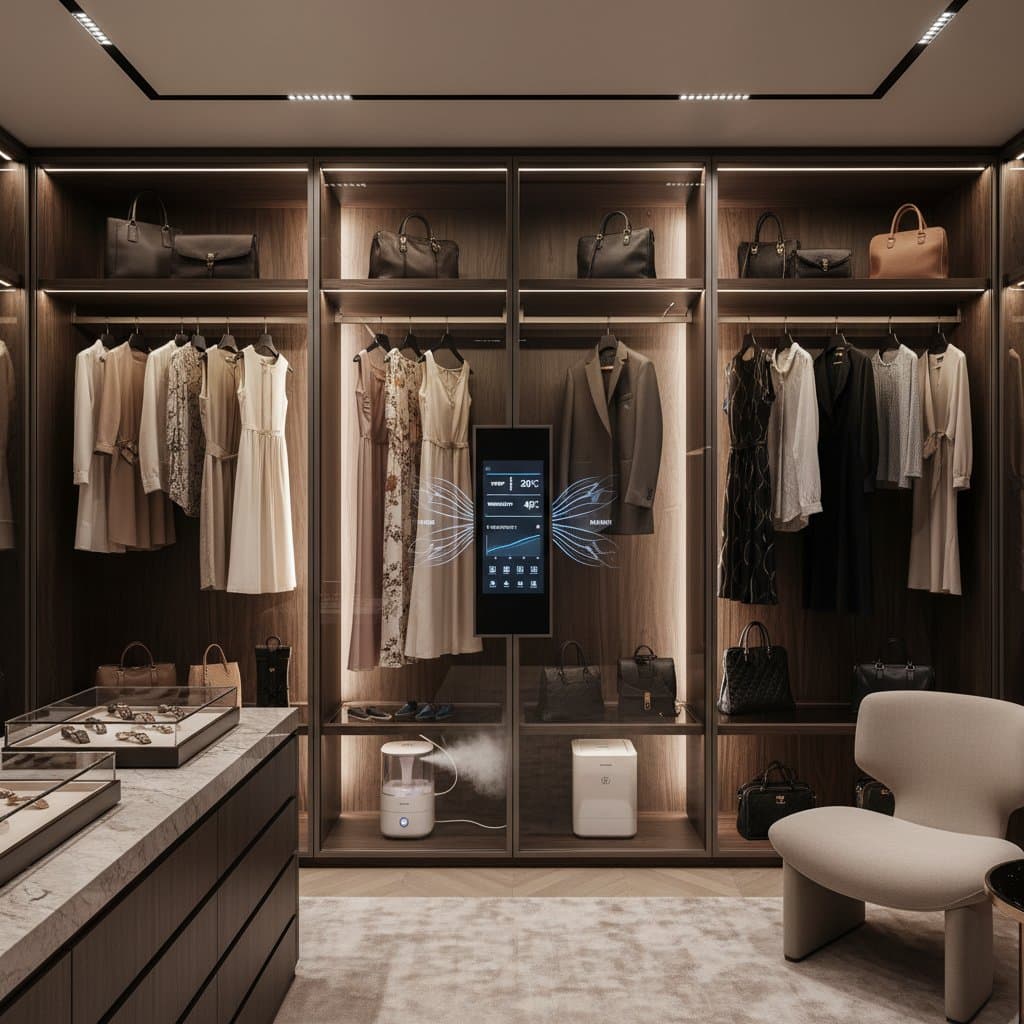
Climate-Controlled Closets: Essential Protection for Luxury Wardrobes
Luxury wardrobes demand more than basic storage solutions. Delicate fabrics, artisanal leather, and cherished accessories respond sensitively to shifts in temperature and humidity, which can erode their quality over time. A climate-controlled closet integrates precise technology with elegant design to sustain each item in flawless condition, all while offering the convenience of daily use.
Understanding the Impact of Environmental Factors
Homes contain varied microclimates that affect stored clothing. Sunlit areas heat up faster than shaded spots, while attics and basements retain excess moisture. Such variations lead to silk discoloration, leather cracking, and cashmere stiffening. Relative humidity exceeding 55 percent fosters mold growth on natural fibers, whereas levels below 40 percent cause materials to become fragile and prone to tearing.
A climate-controlled system counters these issues by holding temperature and humidity at stable levels, akin to professional archival settings yet styled as an inviting dressing space. To implement this, select a unit that targets 45 to 50 percent humidity and 70 degrees Fahrenheit. Regular monitoring prevents subtle damage that accumulates unnoticed.
Key Components of Climate-Controlled Systems
Effective climate control depends on steady airflow, humidity management, and temperature regulation. Install a dedicated dehumidifier or connect to the home HVAC system to keep moisture in check. Use smart thermostats to hold steady temperatures, and incorporate subtle fans or vents to ensure even air distribution without disturbing garments.
Incorporate vapor barriers along walls to block external dampness, and opt for insulated doors that create a tight seal. These features maintain the internal environment regardless of external conditions. For illumination, choose low-heat LED lights placed strategically under shelves or along rods to provide clear visibility without altering the climate.
Designing Storage for Protection and Accessibility
A climate-controlled closet must blend functionality with aesthetic appeal. Construct it with solid wood drawers lined in breathable linen, paired with durable brass fittings that develop a natural patina. Glass-fronted cabinets allow display while protecting contents, and adjustable shelves accommodate varying item sizes for seasonal organization.
Vented drawers keep folded items free from odors, and for accessories, select acid-free boxes or canvas storage to avoid moisture buildup. Position leather items on padded surfaces, stuffing them lightly to retain form. Integrate cedar blocks in wool and cashmere sections to repel insects, enhancing the system's overall efficacy.
Integrating Technology with Timeless Craft
Contemporary climate systems link to home automation for seamless oversight. Access an app to track conditions and receive notifications about deviations. Designer Elise Hartmann emphasizes, “Technology should support the wardrobe, not dominate it. The goal is to create a space where luxury feels effortless.”
For smaller spaces, avoid extensive renovations by using portable dehumidifiers alongside digital hygrometers. Sealed cabinets with integrated LEDs mimic full systems effectively. Renters benefit from freestanding units equipped with climate features to secure valuable pieces without permanent changes.
Evaluating Costs and Upkeep
Custom installations match the expense of a moderate kitchen upgrade, though modular approaches cost considerably less. Primary investments cover insulation materials, sensors, and ventilation components. To maintain the system, inspect and clean filters every three months, verify door seals, and refresh desiccant packs as needed.
These routines demand minimal effort but yield substantial returns by averting costly repairs to damaged items. Calculate long-term savings by considering the value of preserved luxury goods. Start with essential elements like a hygrometer to assess your current setup before expanding.
Realizing the Benefits of a Controlled Environment
Imagine accessing a closet where garments emerge soft, vibrant, and prepared for wear. Stable conditions eliminate odors and sustain shoe shapes, while linens remain sharp after extended storage. This setup extends the life of couture and everyday favorites alike, fostering sustainable habits over frequent purchases.
Invest in climate control to honor your collection's quality. It transforms storage into a sanctuary that enhances daily routines, ensuring elegance persists through seasons and years.