
Why Mushroom Leather Represents the Future of Eco-Friendly Upholstery
Individuals who appreciate interior design yet remain concerned about environmental impacts find mushroom leather to be a promising solution. This material, derived from mycelium the root-like structure of mushrooms, provides softness and durability without reliance on animal products or intensive manufacturing. Homeowners increasingly select sustainable options for their spaces, and mushroom leather emerges as a compelling choice in eco-conscious design.
Understanding Mushroom Leather and Its Production Process
Mushroom leather originates from mycelium, a network of fungal threads that expands underground. Scientists and material experts grow it in controlled settings, often incorporating agricultural waste such as sawdust or corn residues as substrates. In a matter of days, the mycelium develops into solid sheets, which undergo harvesting, pressing, and finishing to yield a flexible, leather-resembling product. The method avoids harmful chemicals, heavy metals, and animal-derived elements, while requiring far less water and energy than conventional leather tanning.
Upon handling, mushroom leather delivers a texture akin to genuine leather, featuring a subtle grain and robust integrity. It allows air circulation to prevent stiffness and supports customization in thickness or embossing for tailored applications. Natural dyes enable coloration in shades from deep emerald to amber hues, ensuring aesthetic appeal alongside ecological benefits.
Reasons Designers Adopt Mycelium-Based Upholstery
Professionals in sustainable interior design value mushroom leather for its adaptability across various furnishings. It suits upholstery on seating, bed headboards, and architectural panels without complications. The interwoven fibers produce a seamless finish that conforms to intricate shapes and edges effectively.
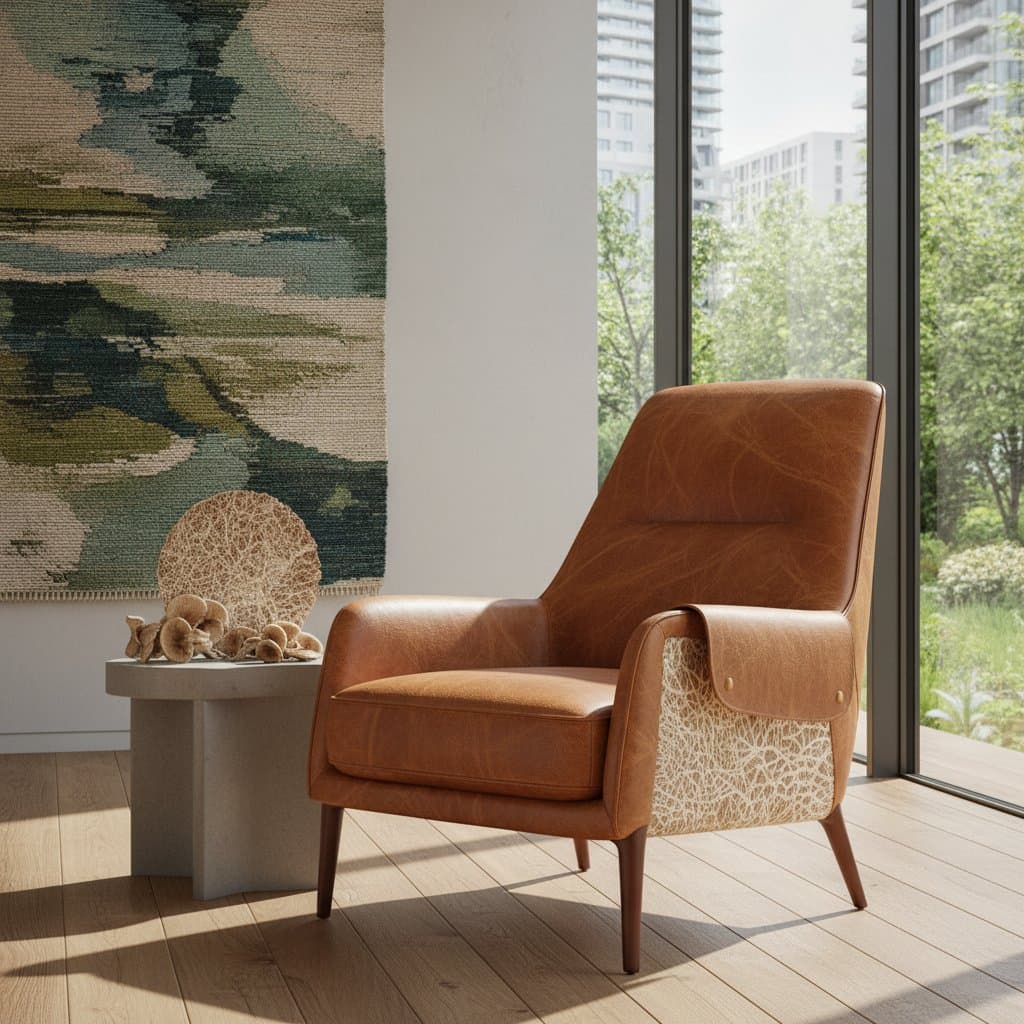
In contrast to plastic-derived vegan alternatives, mycelium products decompose naturally at the end of their lifecycle, supporting circular design principles. Designer Clara Nguyen states, “Clients want pieces that feel good in every sense. Mushroom leather gives that tactile luxury while staying true to their values.” Her recent project involved reupholstering a mid-century armchair in light tan mycelium leather, complemented by walnut accents, resulting in a piece that blends enduring style with ethical considerations.
Evaluating Mushroom Leather Against Conventional Options
Genuine leather endures due to its strength, but production involves animal sourcing and resource-heavy processing with pollutants. Synthetic leathers remove the animal element yet contribute to persistent plastic pollution. Mushroom leather resolves these issues by mimicking leather's elegance without associated harms.
Performance evaluations demonstrate that mycelium upholstery withstands daily wear, including resistance to abrasions and color fading. Cleaning requires only a damp cloth for routine maintenance, making it practical for active households. Over time, the surface evolves a subtle patina that enhances character rather than showing deterioration.
Practical Applications and Styling Suggestions
Mushroom leather's pliability facilitates diverse uses in home settings:
- Seating Solutions: Apply it to dining chairs, bar stools, or built-in benches, where it distributes tension uniformly and secures fasteners reliably.
- Wall and Bed Features: Install as backing for accent walls or padded headboards to introduce a tactile, earthy element.
- Accessory Items: Incorporate into pillow slips, serving trays, or lamp shades for added depth and refinement.
To achieve a warm, organic ambiance, integrate mushroom leather with linen textiles, untreated wood, and metallic accents in gold tones. For contemporary minimalism, select darker mycelium variants alongside sleek metals and neutral stone elements. Its dye affinity supports integration into bohemian, industrial, or monochromatic schemes seamlessly.
Pricing and Availability Considerations
As production methods advance, mushroom leather achieves greater market penetration and reduced costs. Current prices align with premium textiles or standard leather grades. Budget-conscious users often start with accents like ottoman tops or throw pillows to evaluate its qualities before broader commitments. Expanding supplier networks promise further accessibility for residential and professional applications.
Maintenance Guidelines for Mushroom Leather
Preserve the material by addressing spills promptly with a gentle wipe. Steer clear of abrasive or chemical-based cleaners to maintain integrity. Its breathable nature discourages moisture buildup and mold formation. Position items away from intense light exposure, and apply a natural conditioner periodically to sustain suppleness. Minor surface marks typically respond to light buffing with soft tools.
Experiencing Mushroom Leather in Daily Life
Mushroom leather extends beyond functionality to foster a deeper connection with one's surroundings. The awareness that a chosen piece contributes positively to environmental health instills satisfaction. Its inviting texture encourages interaction, underscoring the harmony between aesthetic pleasure and planetary stewardship. This material elevates upholstery from mere covering to a statement of mindful living.
Incorporating Mushroom Leather into Your Space
Explore mushroom leather through collaborations with eco-focused craftspeople or by acquiring material swatches for direct assessment. Revive existing furniture with this covering to build personalized, sustainable narratives. Such integrations yield environments that honor both heritage and innovation.