
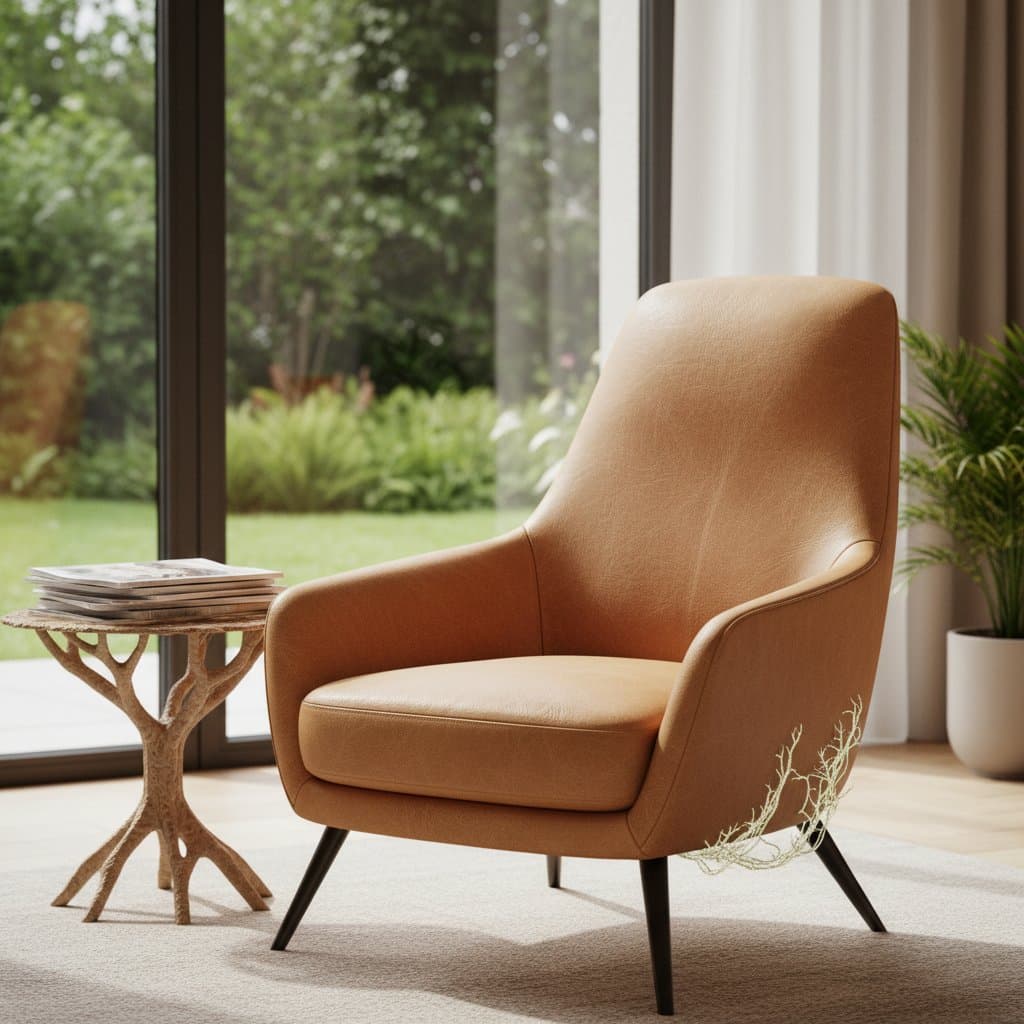
Mushroom Leather: The Next Luxury Upholstery Revolution
Every few decades, a groundbreaking material redefines luxury. Mushroom leather, cultivated from mycelium the root-like structure of fungi, emerges as such an innovation. Originating in sustainable fashion, it now influences high-end interiors, providing the supple texture of animal hides at a reduced environmental expense. Designers, upholsterers, and homeowners appreciate its ethical profile, aesthetic refinement, and unexpected resilience.
Why Mushroom Leather Matters
The conflict between appreciating beauty and embracing responsibility persists in design choices. Traditional leather evokes sophistication yet burdens the planet with resource demands and ethical concerns. Synthetic options frequently appear artificial, degrade quickly, and contribute microplastics to ecosystems. Mushroom leather resolves this divide by growing in controlled facilities that utilize agricultural waste, yielding flexible sheets resembling genuine leather in feel and fortitude.
This mycelium-derived product proves compostable and avoids petroleum-based toxins. It accepts dyes, embossing, and finishes akin to conventional leather, while permitting natural breathability. The outcome delivers a vibrant, warm surface that embodies contemporary elegance.
The Science Behind the Softness
Mycelium consists of interwoven microscopic fibers that fungi employ for nutrient uptake. Cultivated in precise humidity and temperature settings, these fibers form a compact mat ready for compression, plant-based tanning, and sheet formation. Production spans mere weeks, contrasting sharply with the multi-year cycle for animal leather processing.
Producers tailor density and texture through environmental adjustments. Certain variants yield a suede-like surface, others a sleek gloss suited for seating. Growth molds enable exact shaping, minimizing waste. This precision allows panels to match specific furniture components, optimizing material use and fabrication efficiency.
A Material That Feels Like the Future
Initial impressions of mushroom leather may suggest experimentation, yet it presents polished sophistication. Professionals liken it to calfskin blended with nubuck, featuring inherent elasticity for contoured upholstery. It absorbs colors effectively: natural dyes produce deep tones like chestnut or umber, while eco-pigments offer neutrals or charcoals.
Its sensory appeal converts doubters. Unlike cold vinyl, it warms upon contact and carries a subtle, earthy aroma from its organic base. This authenticity enhances its modern allure.
Designers Leading the Shift
Prominent studios integrate mycelium upholstery into their work. Interior designer Clara Nguyen, celebrated for tactile minimalism, reupholstered vintage Danish chairs with it. She noted, "I wanted something sustainable that didn’t feel like a compromise. The texture is stunning, and clients love that it’s both luxurious and responsible."
Artisan furniture brands experiment with it in headboards, ottomans, and chairs, often combining it with reclaimed wood or recycled metals. These pairings narrate sustainability while preserving refined aesthetics.
Why It Works for Upholstery
Upholstery requires materials to withstand stretching, fading, and abrasion. Mycelium leather excels here, its fiber matrix providing tear resistance and durability. Natural wax or oil treatments confer water resistance without synthetic layers.
With use, it acquires a subtle patina, avoiding the pronounced creases of animal leather. Furniture thus develops character over time, appealing to those seeking enduring, personalized pieces.
The Sustainability Equation
Contemporary luxury increasingly aligns with ethical practices. Mushroom leather embodies this by incorporating byproducts like corn husks or sawdust, demanding minimal water and eliminating grazing needs. Its production generates low emissions, with substrates often recycled into compost.
Closed-loop operations ensure near-zero waste, distinguishing it among upholstery options. For those furnishing ethically, it offers style without compromise.
Comparing Costs and Accessibility
Currently, mushroom leather exceeds synthetic pricing yet undercuts premium hides. As scale increases, costs align with mid-tier leathers, with handling comparable to standard materials. Specialty retailers stock upholstered accents like chairs or cushions.
Custom sofas and panels appear as supply grows. Early investments yield long-term gains in resilience and prestige.
How to Use Mushroom Leather at Home
Versatility defines mushroom leather, suiting diverse aesthetics. Consider these applications:
- Accent Seating: Pair an armchair in mushroom leather with linen cushions for textural contrast and warmth.
- Dining Chairs: Cover mid-century frames in camel-toned material; it repels stains and cleans with ease.
- Headboards: Install padded panels for a crisp bedroom focal point, lighter than traditional tufting.
- Wall Treatments: Apply to acoustic panels for functionality and style.
- Small Accessories: Use for pillows, mats, or stool covers to test affordability.
Care and Maintenance
Maintenance proves straightforward. Wipe surfaces with a damp soft cloth. Steer clear of chemicals to preserve finishes. Apply plant-based wax quarterly for suppleness.
Its breathability deters mildew and odors. Buff scratches lightly; treat deeper marks with matching oil. This repair ease suits active households.
Budget-Friendly Alternatives
Hybrids blend mycelium with recycled fabrics, lowering costs while retaining appeal. Veneers suit cabinetry or headboards economically.
DIY users source offcuts for chair seats or decor, building collections gradually.
What to Expect from the Market
Mushroom leather transitions from niche to mainstream. Major brands test it in hospitality and vehicles, bolstering its reputation.
Educational programs train future craftspeople in its handling, accelerating residential and commercial uptake.
Integrating Mushroom Leather into Daily Life
Design mirrors lived experiences. Mushroom leather endures daily demands, offers inviting softness, and reflects intentional creation. It suits varied spaces, fostering serene opulence.
Envision a resilient sofa or nature-inspired headboard. Such elements harmonize comfort with ethics, elevating homes thoughtfully.
This material reimagines luxury through renewal. As adoption spreads, it integrates seamlessly, demonstrating that sophistication thrives in sustainable innovation.