
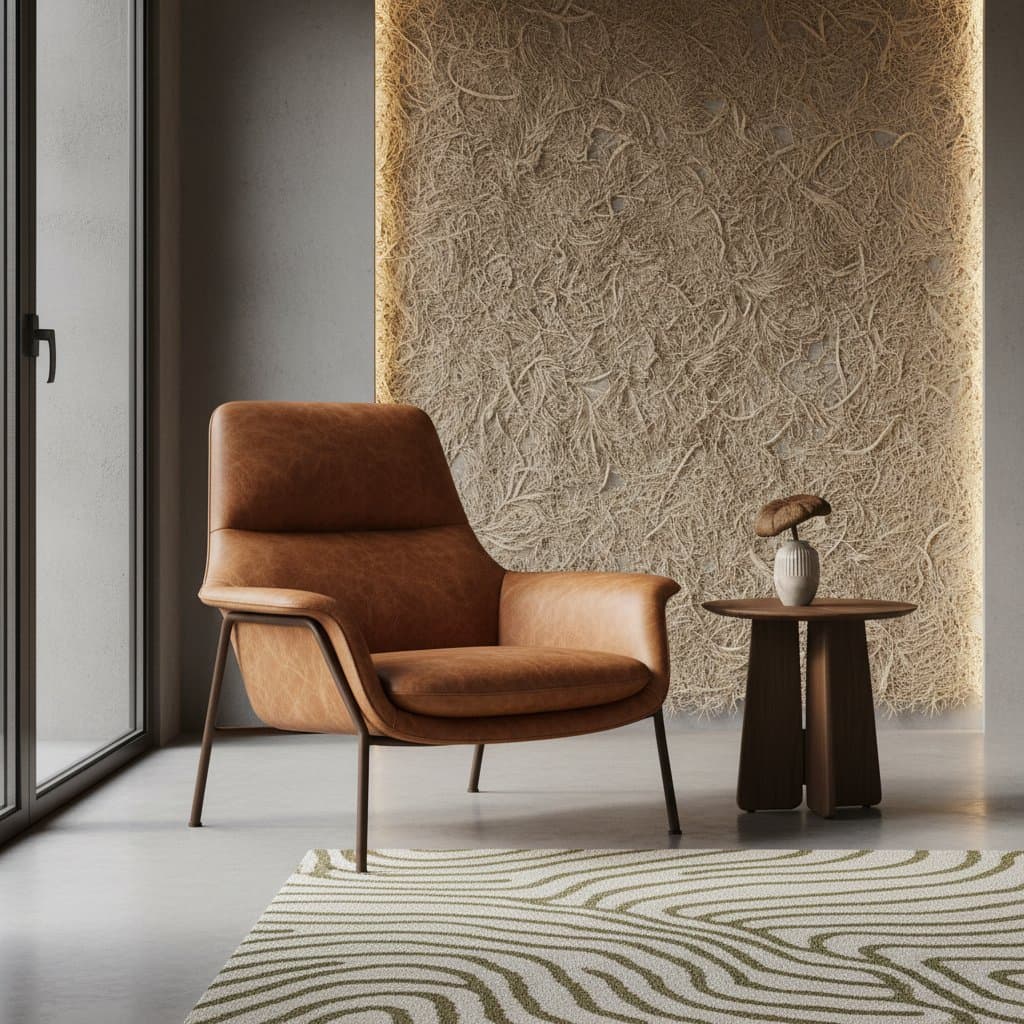
Mushroom Leather: Revolutionizing Vegan Upholstery
Vegan design has evolved from a niche pursuit to a central topic in mainstream discussions. One material stands out for its potential to redefine sustainable luxury: mushroom leather, derived from the mycelium root structure of fungi. This innovative textile offers a soft texture akin to calfskin, natural breathability, and an environmental footprint far smaller than that of animal leather or synthetic alternatives. For homeowners, interior designers, and those committed to conscious living, mushroom leather provides a durable, aesthetically pleasing option that balances style with ethical considerations.
What Is Mushroom Leather?
Mushroom leather originates from mycelium, the intricate network of fungal threads that spreads underground. Producers cultivate this material in controlled environments to form sheets of desired thickness and shape. After growth, the mycelium undergoes heat treatment and compression to yield flexible, leather-like panels suitable for various applications.
Companies employ diverse methods to produce this material. Some cultivate mycelium on substrates such as corn husks or sawdust, while others implement nutrient-recycling systems. A primary benefit lies in its precision: growth within molds allows for exact sizing, which minimizes waste during cutting for upholstery projects.
The Importance for Upholstery Applications
The tactile qualities of upholstery directly influence comfort and visual appeal in furniture. Conventional leathers demand animal sourcing, intensive chemical processing, and substantial water consumption. Synthetic vegan leathers, though animal-free, often degrade through cracking and microplastic shedding. Mushroom leather addresses these issues by offering biodegradability, breathability, and inherent strength without harmful additives.
This material accepts dyes in hues like deep forest green or warm cognac brown. Its surface features a subtle, organic grain that conveys authenticity rather than artificial uniformity. Installers note its slight stretchability, which facilitates seamless application over contoured frames. With use, it acquires a soft patina instead of deteriorating through peeling or splitting.
Key Characteristics at a Glance
- Material Composition: Mycelium-derived leather alternative
- Production Method: Cultivated on organic substrates, then compressed and finished
- Durability Level: Matches mid-grade animal leather
- Environmental Profile: Low water and carbon emissions
- Recommended Uses: Sofas, headboards, dining chairs, wall panels, accessories
- Care Instructions: Clean with a damp cloth; steer clear of harsh solvents
The Production Process
Producers replace expansive livestock operations with efficient vertical farming setups for material growth. Mycelium expands in trays of organic substrates, forming dense fiber mats in mere days. Harvested sheets then dry, press, and receive treatments with plant-derived oils or waxes to enhance pliability and moisture resistance.
Rapid growth enables swift production of sizable panels, essential for consistent upholstery quality. This approach bypasses traditional tanning, avoiding contaminants like chromium salts and formaldehyde common in animal leathers.
Brands such as Mylo, Reishi, and Muskin innovate with unique finishes. Mylo incorporates natural rubber for added resilience, whereas Muskin applies wax to emphasize the material's inherent texture. These variations provide designers with diverse options for visual and functional outcomes.
Integrating Functional Beauty into Daily Environments
In one living room installation, mushroom leather covered a compact mid-century sofa in soft taupe. The owner sought a vegan alternative that maintained an air of refinement. The outcome created an welcoming atmosphere, with the matte finish diffusing light effectively alongside linen cushions and oak floors.
Breathability ensures year-round comfort, preventing adhesion in heat or stiffness in cold. Pet owners value its resistance to scratches compared to many synthetics. For budget-conscious individuals or renters, items like ottomans or chair seats serve as accessible starting points.
Essential Design Specifications
- Surface Treatments: Natural wax or plant-based oils for enhanced softness
- Available Colors: Earth tones, charcoal, custom shades with eco-friendly pigments
- Surface Feel: Gently pebbled yet smooth
- Notable Brands: Mylo by Bolt Threads, Reishi by MycoWorks, Muskin by Grado Zero Espace
- Cost-Saving Advice: Source remnant fabrics from suppliers for modest DIY endeavors
- Eco-Advantage: Completely compostable upon disposal
Evaluating Costs and Durability
Mushroom leather exceeds the price of vinyl or basic synthetics but falls below premium animal leathers. As manufacturing expands, costs should decline. Labor fees for upholstery remain comparable, given its compatibility with standard cutting and sewing techniques.
Proper maintenance determines lifespan. Dust regularly and apply natural conditioning balms periodically to preserve suppleness. Unlike polyurethane, it resists cracking, and surface marks often integrate naturally. This suits households that favor furniture with character over pristine perfection.
Designer Perspectives on Its Appeal
Interior designer Carmen Liu describes mushroom leather as a bridge between ethical priorities and refined aesthetics. She incorporates it into minimalist and transitional schemes, where it harmonizes with elements like rattan or ash wood while holding dyes vibrantly.
Alex Romero, another designer, highlights its matte quality for photography, as it captures light nuances effectively in editorial settings. Technically, the material's workability supports innovation: it adheres, fastens, or sews using conventional tools. Custom fabricators appreciate its flexibility for sculptural forms beyond the limits of traditional leathers.
Incorporating Mushroom Leather into Your Space
Begin with modest updates rather than comprehensive overhauls. Reupholster a stool or add a leather-wrapped headboard panel to gauge its qualities. Retailers offer sample swatches online, allowing tests of color pairings prior to larger purchases. Combine it with fabrics like cotton canvas or recycled wool for varied sensory experiences.
Renters can apply adhesive panels in mushroom leather to refresh entryways or desks without alterations. Its light weight simplifies handling in personal projects.
Maintenance Strategies for Longevity
Preserve the appearance of mushroom leather furnishings through these practices:
- Position away from direct sunlight to prevent dye fading.
- Opt for breathable storage covers over plastic.
- Maintain moderate humidity levels to avoid drying.
- Address spills immediately using a damp cloth and mild soap.
Such routines sustain the material's texture and extend its service life.
Embracing Sustainable Design Choices
Spaces featuring mushroom leather exude tranquility and connection to nature. The knowledge that daily surfaces derive from renewable origins fosters a sense of assurance. Whether outfitting a reading area, refreshing seating, or commissioning bespoke pieces, this material underscores dedication to quality and environmental stewardship.
Future applications may extend to automotive interiors, wall treatments, and fixtures, thanks to its versatility and low impact. Accessibility broadens its reach: curiosity suffices to engage with forward-thinking design. Select enduring items thoughtfully, allowing materials like mushroom leather to illustrate the harmony of sustainability and elegance.