
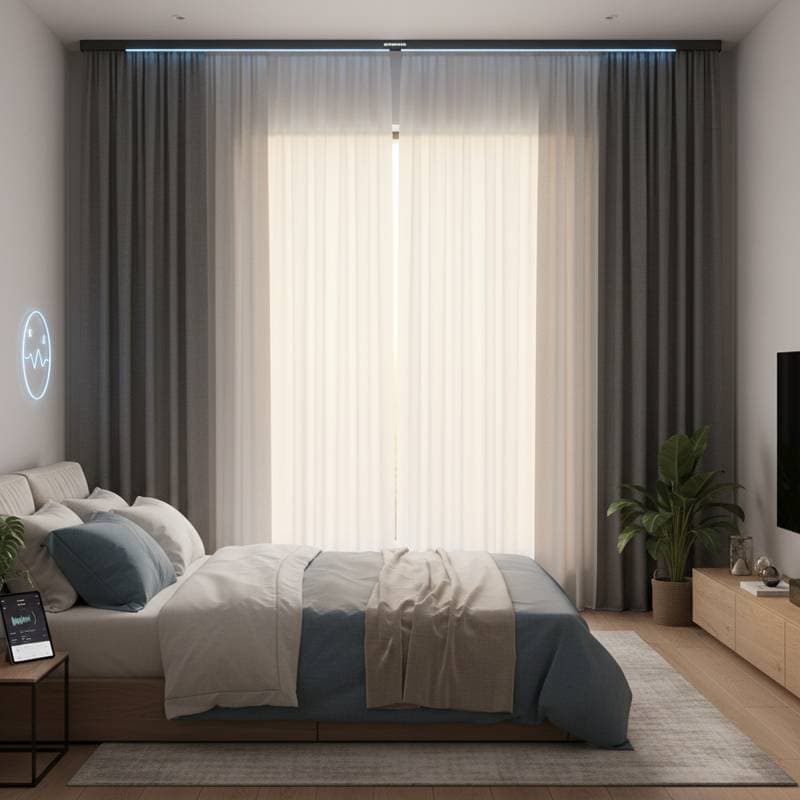
Smart Curtains That Track Sleep for Better Nights
Every home should support restful sleep for its occupants, beyond mere aesthetics. Smart curtains equipped with sleep-tracking capabilities achieve this by integrating technology with everyday comfort. These systems manage light exposure, align with natural body rhythms, and gather data to reveal how environmental factors influence sleep quality. For individuals facing irregular sleep patterns or variable schedules, such an upgrade delivers noticeable improvements.
Why Smart Curtains Matter
Waking up feeling unrested or struggling to fall asleep disrupts daily life. The body depends on light signals to maintain the circadian rhythm, the biological clock that dictates alertness and drowsiness. Smart curtains employ sensors and automated controls to fine-tune light levels at optimal times. Rather than manually operating heavy drapes, these systems gradually open in the morning to simulate a natural dawn and close softly at night to shield against external lights from streets or vehicles.
This precise management extends beyond convenience. It enables the body to realign naturally, fostering better mood, sustained energy, and sharper focus during waking hours. When paired with sleep-tracking features, the curtains actively contribute to establishing healthier sleep habits.
How Sleep-Tracking Curtains Work
The underlying principle proves straightforward yet effective. Smart curtains link to a central hub or mobile application that interfaces with sensors positioned near the bed or integrated into the curtain mechanisms. These sensors measure light intensity, ambient temperature, and occasionally motion or noise levels. The resulting data uncovers disruptions to sleep, including premature morning brightness or erratic evening illumination.
Based on user-defined settings, the curtains respond automatically. For instance, if outdoor light prompts early awakening, the system detects dawn and maintains closure until the programmed wake time. In the evening, it may identify prolonged wakefulness and gradually darken the space instead of an abrupt blackout. Such adjustments facilitate seamless shifts into rest.
Integration with broader smart home ecosystems remains seamless. Compatibility extends to voice-activated assistants, climate controls, and audio devices, orchestrating a unified setting. Manual overrides occur effortlessly via app or remote at any moment.
Choosing the Right System for Your Space
Automation levels vary by household needs. Consider bedroom usage and essential features before purchase. Renters or those seeking simple setups benefit from battery-operated tracks that adhere with clips or lightweight mounts, allowing easy removal upon relocation. Homeowners undertaking renovations may select wired tracks with low-voltage systems for a seamless, embedded appearance.
Fabric selection influences performance. Sheer options suit rooms with gentle morning light, whereas opaque blackout materials excel in light-polluted urban environments. Accurate window measurements prove essential. Leading brands provide adjustable tracks spanning 30 to 120 inches, or 76 to 305 centimeters, accommodating curtain weights from 5 to 20 pounds.
Evaluate compatibility with existing sleep monitors or wearables. Systems from SwitchBot Curtain Rod 2, Somfy Glydea, and Eve MotionBlinds connect to Apple Home, Alexa, or Google Home platforms. Certain models link to specialized sleep analytics tools, delivering unified insights on lighting, temperature, and activity.
Everyday Benefits Beyond Sleep
These curtains enhance energy conservation by modulating window-related heat transfer. In summer, midday closure prevents overheating. During winter, daytime opening harnesses solar warmth. Such practices lower utility costs while preserving indoor comfort year-round.
Daily rituals gain refinement. Picture curtains parting to reveal diffused light precisely at alarm time, or closing automatically as evening routines unfold. These automations render the home intuitive, anticipating needs with minimal effort.
Households with infants, children, or nontraditional work hours gain particular value. Individualized schedules per room accommodate diverse sleep needs, promoting balance amid varying lifestyles.
Design Considerations and Style Choices
Curtains function as key decorative elements, even when automated. Superior smart variants feature discreet motors paired with textiles that harmonize with interiors. Linen-cotton mixes in neutral tones offer a serene, organic feel, while velvet-cotton blends provide depth and superior light blocking. For streamlined aesthetics, opt for hidden-track designs with straightforward pleats.
Curtain length demands attention. Floor-grazing panels convey sophistication but necessitate exact sizing. Allow approximately half an inch, or one centimeter, clearance from the floor to ensure fluid operation. Tall windows suit dual-track configurations layering translucent and opaque fabrics, enabling independent control of opacity and illumination without sacrificing smart functionality.
Complementary lighting amplifies effectiveness. Combine with adjustable bedside fixtures or sensor-triggered low-light sources to soften light transitions. Coordinated illumination creates a serene, rhythmic ambiance.
Budget and Installation Tips
High-end units may range from several hundred euros or dollars per window, yet entry-level choices abound. Retrofit battery kits, compatible with standard rods, cost comparably to quality manual curtains and install in less than an hour using basic tools or clips. Begin with a single window to assess performance before full implementation.
Professional services include measurement, setup, and calibration; request inclusive quotes. For self-installation, ensure bracket alignment and motor testing prior to fabric attachment. Patience yields optimal outcomes in this accessible endeavor.
Strategic placement in high-impact zones, such as bedrooms, paired with conventional options elsewhere, controls expenses effectively while upholding livability.
Data Privacy and Control
Sleep and motion data collection raises valid concerns. Established manufacturers employ encryption and support on-device processing to avoid cloud transmission. During configuration, prioritize local data retention and scrutinize application access rights. Users retain full authority to erase records or deactivate monitoring as needed.
View these systems as aids for personal insight, not oversight mechanisms. Analyze environmental impacts on sleep to refine practices, like reducing screen time or optimizing pre-bedtime climate. Progressive adjustments cultivate refined evening protocols.
Integrating Smart Curtains into Daily Life
After setup, smart curtains operate unobtrusively, enhancing routines without ongoing intervention. Initial light cues may startle, but they quickly integrate into normalcy.
Sleep remains an individual pursuit, influenced by surroundings and habits alike. Sleep-tracking smart curtains connect aesthetics and wellness, empowering precise environmental stewardship.