
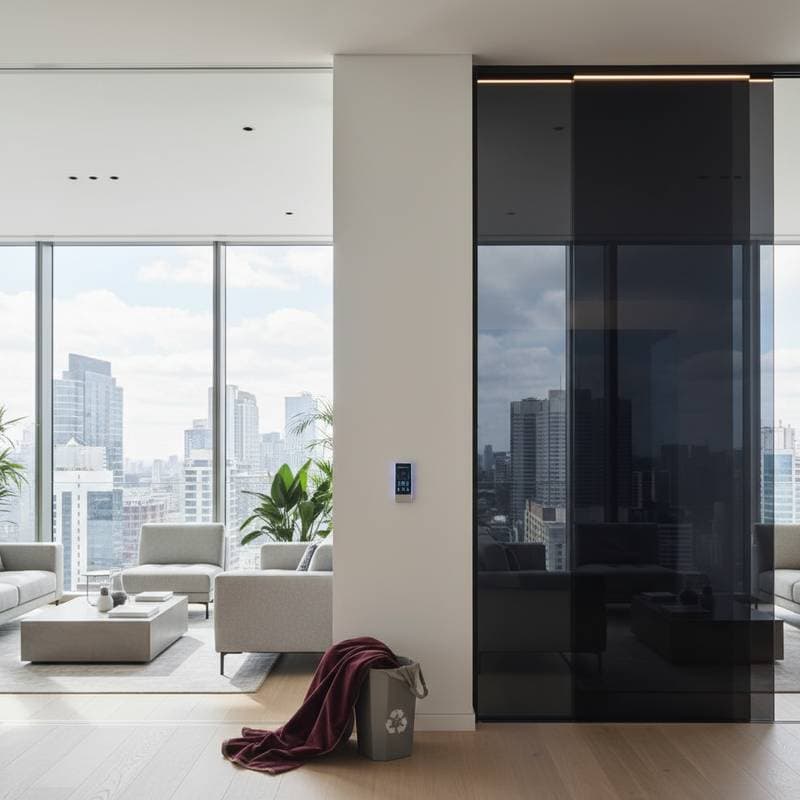
Why Blackout Smart Glass Outperforms Traditional Curtains
Homeowners seek environments that balance natural light, privacy, and ease of maintenance. For decades, curtains served as the primary method to regulate sunlight and shield interiors from prying eyes. However, advancements in blackout smart glass, known technically as electrochromic glass, introduce a superior alternative. These dynamic panes shift from transparent to opaque with a simple electrical impulse, eliminating the need for cumbersome fabrics and hardware while addressing longstanding limitations of conventional window coverings.
Limitations of Conventional Curtains
Curtains and blinds often compromise functionality for appearance. Dense materials effectively block light yet obstruct scenic views and accumulate dust particles that trigger allergies. Over time, exposure to sunlight causes colors to fade, necessitating frequent cleaning or outright replacement. In compact living areas, the added bulk of hanging fabrics reduces perceived space and complicates airflow. Even lightweight sheers fail to provide adequate seclusion during evening hours when interior lights illuminate the room, leaving occupants exposed.
How Blackout Smart Glass Functions
Blackout smart glass operates by applying a low-voltage current to alter its optical properties in mere seconds. In the default clear state, it allows unobstructed passage of light and visibility. Activation triggers a molecular realignment that scatters light, rendering the surface frosted or fully opaque to block up to 99 percent of transmission. Key variants include electrochromic glass, which gradually tints to various shades; PDLC (polymer dispersed liquid crystal), ideal for instant privacy switching; and SPD (suspended particle device), which excels in blocking infrared heat alongside visible light.
Consider practical applications across daily routines. In bedrooms, program the glass to gradually lighten at dawn for a natural wake-up, then activate full blackout for undisturbed rest. Living areas benefit from adjustable tinting that preserves outdoor vistas while mitigating glare on televisions or computer monitors. For bathrooms and offices, the technology ensures seclusion without installing protruding fixtures that disrupt clean lines.
Key Advantages in Performance and Efficiency
One standout benefit lies in energy conservation. Smart glass regulates solar heat gain by dynamically adjusting transparency, which minimizes reliance on heating or cooling systems. This insulation effect stabilizes indoor climates, potentially reducing energy bills by 20 to 30 percent in sun-exposed rooms. Additionally, it shields furnishings, flooring, and artwork from ultraviolet degradation, preserving their condition for years longer than with unprotected exposure through curtain gaps.
Maintenance demands plummet with this technology. Unlike curtains that harbor allergens and require seasonal deep cleans, smart glass surfaces repel dust and wipe clean with a standard microfiber cloth and mild solution. This feature proves invaluable in homes with sensitive residents or high-traffic zones where upkeep time is limited.
From a design perspective, aesthetic versatility enhances its appeal. The frameless appearance complements sleek, contemporary interiors and expansive layouts by maintaining visual continuity. In urban dwellings or open-concept homes, it avoids the layered look of drapery, allowing architectural elements and decor to shine. Professionals in interior design frequently specify it for projects aiming to blend functionality with elegance, as it adapts to themes from industrial to Scandinavian minimalism.
Installation Options and Cost Factors
Initial setup for full smart glass replacement depends on window dimensions, selected technology, and professional labor, typically ranging from moderate to higher investments as production scales reduce expenses. For budget-conscious upgrades, apply smart film directly to existing panes; this self-adhesive layer mimics core functionalities without structural alterations. Installation involves surface preparation, application, and connection to a power source, often completable in a single day.
Integration with smart home ecosystems amplifies usability. Link the glass to platforms like automated hubs for scheduling based on time, weather, or occupancy. Voice commands via assistants enable hands-free adjustments, while sensors can automate responses to sunlight intensity. Renters appreciate temporary solutions such as clip-on smart panels, which install without adhesives or modifications to lease agreements.
Integrating Smart Glass into Everyday Living
Adopting blackout smart glass streamlines routines by removing mechanical frustrations. Absence of pull cords prevents accidents in households with children or pets, and the silent operation avoids disturbances. This shift fosters a sense of empowerment over one's environment, where light and privacy align precisely with momentary needs.
Ultimately, this innovation elevates residential comfort through thoughtful engineering. Homeowners who install smart glass report heightened satisfaction with their spaces, as it harmonizes modern convenience with enduring practicality. Consider evaluating your current window treatments against these capabilities to determine if an upgrade aligns with your lifestyle goals.