
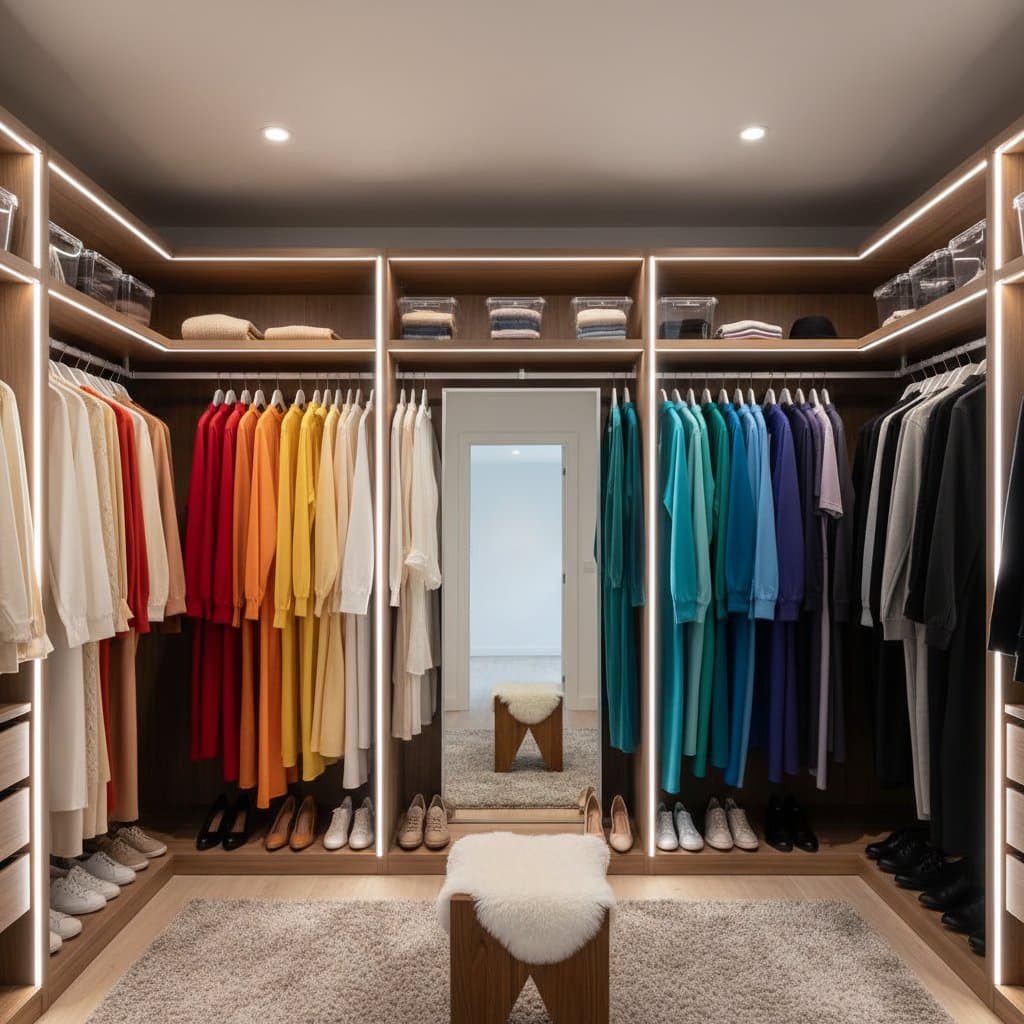
Color Zones Cut Closet Decisions by Half
Color-coded zones transform a disorganized closet into a clear visual map of your wardrobe. This approach saves time and simplifies daily dressing routines. Plan, sort, and maintain a layout that groups items by color and purpose, ensuring every piece has a designated spot.
Most closets conceal what you own, leading to frustration during morning rushes. Group clothing by color and function to create visibility and efficiency. Note that this system performs best after decluttering items you no longer wear.
What To Know
Color-coding accelerates visual scanning for the brain. Sort clothes by shade and category to minimize decision fatigue and identify wardrobe gaps or duplicates with ease. The primary challenge lies in maintaining consistency; select a color sequence and adhere to it rigorously. Protect fabrics from moisture and direct sunlight to prevent fading, which could undermine the color cues.
Tools and Materials
- Sturdy hangers, preferably all in one uniform style
- Matching bins or storage boxes
- Masking tape or adhesive labels
- Fine-tip marker
- A simple color wheel or printed reference guide
- Optional dividers or shelf risers for added organization
Step By Step
1. Empty and Assess
Remove all items from the closet. Group them by type, such as tops, bottoms, outerwear, and shoes. This initial step reveals the full volume of your wardrobe before proceeding to color sorting.
2. Declutter First
Retain only pieces that fit well, feel comfortable, and align with your current needs. Donate or discard duplicates and items unworn for several months. Aim to reduce your collection by at least 20 percent for optimal space.
3. Define Your Color Order
Establish a sequence using a rainbow progression or a gradient from neutrals to brights. Begin with white, followed by beige, gray, navy, and progress to bolder hues like red and purple. Choose a simple, memorable order that suits your personal style.
4. Create Zones by Hue
Dedicate a section to each color family. Apply tape or small labels to closet rods and shelves to delineate boundaries clearly. Maintain a few inches of space between zones to prevent visual overload and ensure easy access.
5. Layer Purpose Within Color
Within each color zone, organize by item type. For instance, in the blue section, position shirts nearest the front, followed by pants and dresses toward the back. This dual organization highlights both color and functionality at a glance.
6. Label Bins and Drawers
Affix adhesive labels that correspond to the color zones. Include both the color and category on each label, for example, "Green Accessories" or "Gray Workout Gear." Place labels on the front edges for quick reference.
7. Adjust Lighting
Install neutral light bulbs to avoid distorting colors. Opt for cool white bulbs, which render true fabric tones accurately under various conditions.
8. Step Back and Test
Open the closet doors and scan from left to right. Evaluate if the color gradient flows logically and feels intuitive. Reposition items as needed to achieve a balanced, harmonious layout.
9. Maintain Weekly
After laundry, return clothes promptly to their designated zones. Conduct brief five-minute inspections each week to correct any misplaced items and sustain the system's integrity.
Dos and Don’ts
Dos
- Use a consistent hanger style to eliminate visual distractions.
- Keep a printed color guide affixed inside the closet door for easy reference.
- Store seasonal items in labeled bins that align with their primary color zone.
- Integrate patterned pieces into zones based on their dominant shade for seamless clarity.
Don’ts
- Avoid overpacking sections, as dense arrangements obscure the color progression.
- Refrain from blending incompatible color systems, like warm-cool splits adjacent to dark-light groupings.
- Steer clear of colored lighting that skews fabric perceptions.
- Do not overlook neutrals; position them as foundational elements in your sequence.
When To Call A Pro
For built-in closets featuring intricate shelving, lighting, or ventilation challenges, consult a professional organizer or closet designer. Experts install permanent dividers, custom rods, and optimized lighting to enhance zones while safeguarding materials from wear.
Cost and Time Snapshot
Budget between 20 and 80 dollars for essentials like hangers, bins, and labels. Costs vary with the quantity required and material durability. Allocate two to four hours for the project, scaling with closet dimensions and decluttering extent.
Maintenance and Upkeep
Reevaluate the color order every few months to accommodate wardrobe changes. Replace any faded labels immediately to preserve clarity. Dust rods and bins on a monthly basis. Conduct seasonal reviews to ensure zones reflect your evolving clothing mix.
Expert View
Professional organizer Lisa Tran of Neat Habitat states, "People respond faster to color than to words. A clean color sequence helps you stay organized without thinking." She emphasizes that such visual consistency also minimizes laundry mishaps by facilitating quick identification of missing pieces.
Build Lasting Habits
After several weeks with a color-coded closet, mornings become streamlined, and outfit selection feels intuitive. The zones evolve into automatic habits, prompting effortless returns of items to their spots. Start small in compact spaces by organizing one rack or shelf; gradually expand to drawers, accessories, and footwear. This method succeeds through simplicity, visibility, and personalization. Maintain a steady palette, neutral illumination, and uniform hangers for a serene, efficient wardrobe that enhances daily life.