
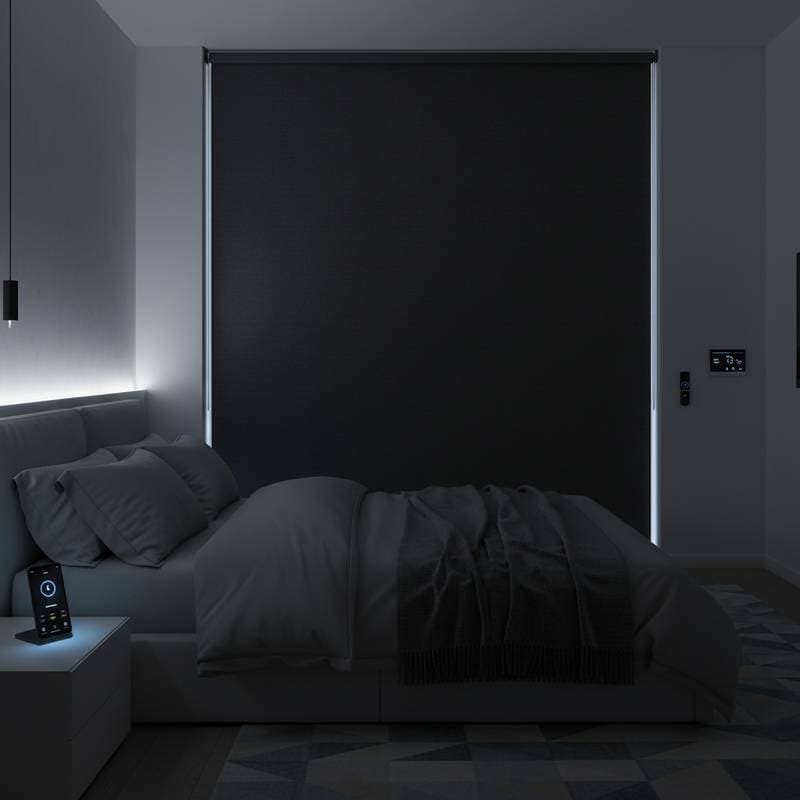
Enhance Sleep Quality with Motorized Blackout Shades
Motorized blackout shades offer a reliable method to improve sleep by fully blocking light and controlling temperature. These shades simplify evening preparations and support consistent rest patterns.
Excess light and warmth often disrupt sleep cycles. This article explains selection, installation, and operation of motorized blackout shades to address those issues effectively.
Note that renters should consult landlords prior to any drilling or wiring near window frames.
Essential Tools and Materials
Gather these items for a successful installation:
- Measuring tape for accurate dimensions
- Level to ensure even mounting
- Drill with appropriate bits for secure attachment
- Mounting brackets, typically provided with the shades
- Screws and wall anchors suited to the surface
- Screwdriver for final tightening
- Sturdy ladder for reaching higher windows
- Remote control or central hub for operation
- Rechargeable battery pack as an alternative to wired power
For plaster walls, select anchors designed for heavier weights to avoid surface damage.
Key Practices for Installation and Maintenance
Recommended Actions
- Measure windows twice to guarantee a precise fit for custom orders.
- Charge motor batteries regularly or replace them every few months to maintain performance.
- Verify the motor's operational range prior to permanent mounting for unobstructed movement.
- Clean fabric surfaces using a soft microfiber cloth or vacuum attachment to preserve appearance.
- Opt for voice-activated or app-based controls to accommodate mobility challenges.
Actions to Avoid
- Refrain from attaching shades to unsupported drywall without proper anchors.
- Do not attempt to force the motor during a halt; inspect for blockages first.
- Avoid applying liquid cleaners directly to the fabric to prevent staining.
- Allow shades to dry completely before rolling them up after any cleaning.
- Limit multiple plug-in shades to a single outlet only if the electrical circuit supports the load.
Investment and Timeline Overview
Budget between $150 and $800 per window, influenced by dimensions, material durability, and motor specifications. Battery-operated units present lower initial costs yet require periodic cell replacements. Wired models with smart features involve higher expenses but demand minimal ongoing maintenance.
Standard installations require 30 to 90 minutes per window. Factor in additional time for battery charging or concealed wiring. Primary cost factors include tailored measurements, reputable motor brands, and integration with home automation systems.
The Role of Motorized Blackout Shades in Sleep Improvement
Exposure to light influences the body's circadian rhythm. Intruding light signals the brain to remain alert, hindering necessary rest. Blackout shades establish complete darkness, fostering extended and more profound sleep phases.
Dr. Emily Torres, a specialist in behavioral sleep science, states, "Consistent darkness signals the body to produce melatonin, the hormone essential for initiating and sustaining sleep." She notes that minor light penetrations can postpone this hormonal response significantly.
Motorized operation facilitates darkness without physical effort. Users activate closure via remote, button, or voice, preserving a serene pre-sleep environment.
Seamless Integration with Smart Home Ecosystems
Contemporary motorized blackout shades connect effortlessly to smart assistants via Wi-Fi or Bluetooth protocols. This compatibility enables voice directives, timed schedules, and automated sequences.
Program shades to activate at dusk or during evening activities like film viewing. Advanced models incorporate light sensors that trigger closure upon detecting specific illumination levels, mitigating glare while enhancing privacy.
Pair shades with existing thermostats or lighting controls to form unified routines. A "Bedtime" sequence, for instance, might dim lights, optimize climate settings, and seal shades simultaneously.
During automation configuration, evaluate command execution speeds. Slower motors necessitate adjustments to prevent overlapping operations.
Resolving Frequent Operational Challenges
Shade Halts Mid-Operation
Inspect tracks and fabric for accumulated debris. If none exists, recalibrate limit settings using the remote or application interface.
Motor Activates Without Movement
Ensure the headrail secures firmly within both brackets. An unsecured edge impedes proper rotation.
Remote Control Failure
Substitute remote batteries or reestablish pairing with the motor unit. Power interruptions may disrupt connections in certain systems.
Irregular Fabric Rolling
Fine-tune side tension mechanisms or realign brackets for level positioning. Minor inclinations lead to fabric misalignment over time.
Persistent Light Penetration at Edges
Affix side channels or adhesive light barriers to seal gaps effectively, achieving optimal darkness.
Considerations for Safety and Accessibility
Position cords and controls beyond the reach of children and pets. Cordless motorized designs enhance household safety. For individuals with reduced mobility, select units featuring voice commands or conveniently placed wall remotes.
Eschew extension cords for ongoing installations. In outlet-scarce locations, choose rechargeable or solar-powered alternatives. Disconnect power sources before servicing the motor enclosure or cleaning components.
Advance Your Home Comfort
Motorized blackout shades merge functionality, energy efficiency, and ease into a single enhancement. Automated light management safeguards sleep integrity and refines everyday habits.
Begin implementation in a single space to assess compatibility with personal routines, then scale accordingly. The shift to scheduled darkness and automated dawn illumination often renders traditional methods obsolete.