
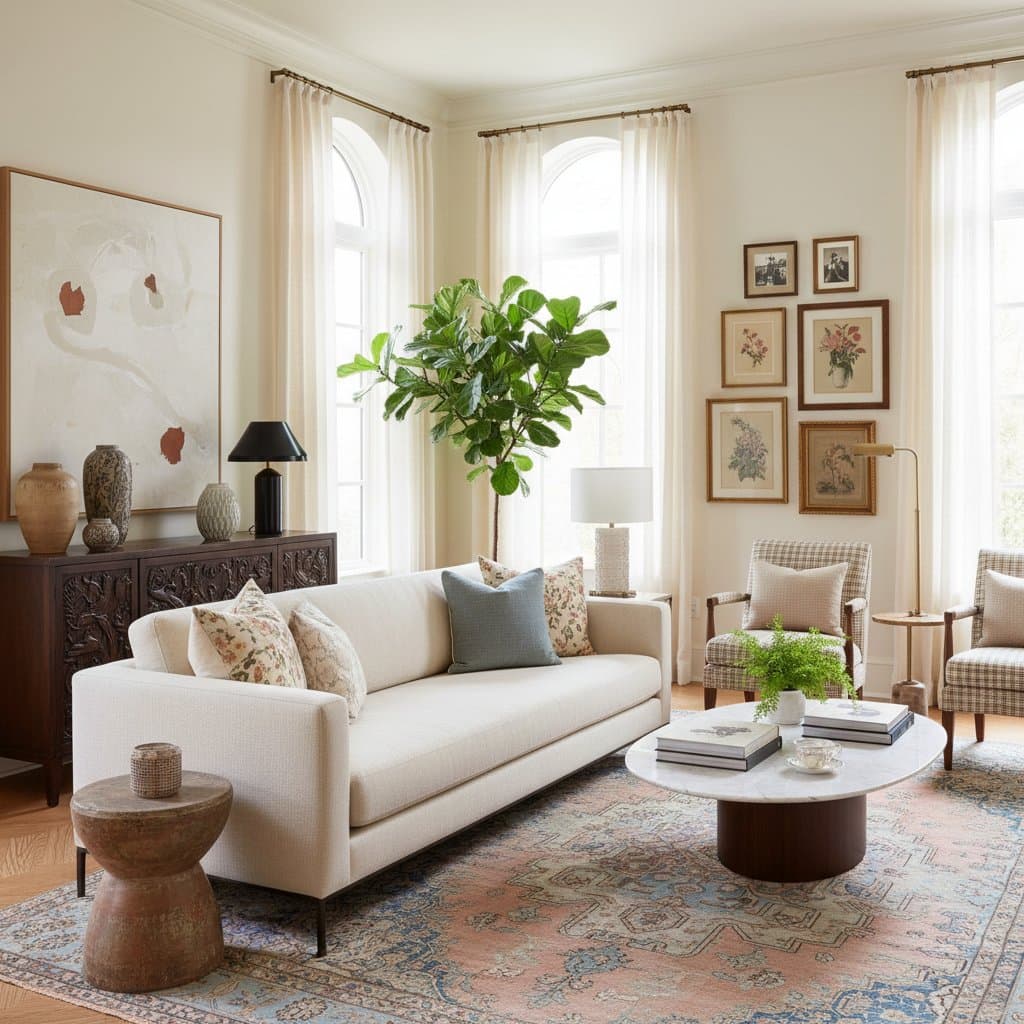
Blending Vintage and Modern Styles Without Clutter
Grandmillennial style captures the essence of nostalgic comfort while embracing contemporary simplicity. This approach allows homeowners to infuse spaces with personality and warmth without overwhelming the room. Younger generations, in particular, gravitate toward this aesthetic for its blend of tradition and practicality.
The key challenge lies in integrating vintage elements seamlessly into modern environments. Careful selection and placement prevent the design from appearing chaotic. The following guide provides practical strategies to achieve this balance effectively.
Understanding Grandmillennial Appeal
Grandmillennial design appeals to those seeking an antidote to stark minimalism. It incorporates layered patterns, natural materials, and heirloom-quality pieces that evoke a sense of heritage. At the same time, it maintains clean lines and functional layouts to suit everyday living.
This style resonates with eco-conscious individuals who value sustainability. Sourcing secondhand items reduces environmental impact and adds unique character to homes. Interior historian and design educator Dr. Lena Morales notes that the movement "reclaims domestic comfort as something stylish, not old-fashioned." She emphasizes how younger people appreciate the humanity behind handmade items and visible craftsmanship.
Essential Tools and Materials
To execute grandmillennial style successfully, gather items that support both restoration and integration. Neutral paint or wallpaper in soft tones, such as pale blues or warm beiges, forms a versatile base. Vintage or secondhand furniture provides the foundational charm, while cotton or linen fabrics in floral or chintz patterns introduce subtle pattern play.
Incorporate modern lighting fixtures or metal accents to add crisp contrast. For maintenance, prepare gentle cleaning supplies like mild soap, vinegar solutions, and microfiber cloths. Basic repair tools, including screwdrivers, wood glue, and fine-grit sandpaper, enable minor restorations. Use frame hooks or adhesive strips to display artwork securely without damaging walls.
Guidelines for Successful Integration
Recommended Practices
Start with modest additions by introducing one vintage piece at a time. This method allows assessment of how the item harmonizes with existing elements. Experiment with texture combinations, such as pairing aged wood with sleek glass and soft fabrics, to create visual depth.
Prioritize authentic materials like natural fibers and solid woods, which develop appealing patina over time. Incorporate family heirlooms to infuse spaces with personal history and emotional resonance. Ensure lighting remains bright and multifaceted, using a mix of sources to accentuate intricate details without casting harsh shadows.
Practices to Avoid
Resist the urge to incorporate every appealing floral pattern encountered. Selective choices maintain cohesion and prevent visual overload. Allow ample space around furniture arrangements to preserve the elegance of antique forms.
Consider scale carefully; oversized modern pieces can overshadow delicate vintage items. Preserve natural finishes where possible, as subtle wear contributes to the style's allure. Always verify the safety of vintage electrical components or structural integrity before use.
Strategies for Balanced Styling
Control the color palette by selecting one primary hue and a single accent color. Limit patterns to variations within this scheme to foster unity. Play with textures by juxtaposing polished metals against textured fabrics, which adds interest without complicating the composition.
Develop a thoughtful lighting plan that includes table lamps for ambient glow, wall sconces for targeted illumination, and overhead fixtures for overall brightness. Curate displays of collections, like porcelain china or leather-bound books, in compact groupings rather than sprawling across surfaces. Embrace modern restraint by leaving portions of walls unadorned, ensuring the nostalgic elements remain prominent yet uncluttered.
These techniques result in rooms that feel inviting and authentically lived-in. The overall effect promotes a serene atmosphere conducive to relaxation and daily routines.
Pitfalls to Sidestep
-
Neglecting proportion can disrupt harmony; for instance, a substantial contemporary sofa may overshadow a fragile antique side chair. Balance visual weight by aligning scales thoughtfully.
-
Excessive restoration risks stripping away historical character. Begin with thorough cleaning, resorting to refinishing only if necessary to preserve original details.
-
Combining disparate eras without unification, such as a mid-century modern lamp next to ornate Victorian cabinetry, can create discord. Bridge styles through consistent color choices or shared motifs.
-
Prioritizing aesthetics over functionality leads to impractical spaces. Select furnishings that support comfortable, prolonged use in routine activities.
-
Relying on cool-toned lighting flattens the richness of traditional decor. Opt for warm bulbs to enhance depth and coziness.
Infusing Personal Narrative
Grandmillennial style thrives on storytelling, transforming generic spaces into meaningful environments. Showcase heirlooms, original artwork, or mementos from travels to weave personal history into the design. Frame vintage family recipes alongside botanical illustrations for a touch of whimsy and heritage.
Incorporate elements like embroidered linens or delicate lace table runners inherited through generations. These additions layer emotional depth without dominating the room. For those without inherited items, explore local craft traditions; seek out handmade pottery from regional potters or woven baskets from community artisans. Such pieces convey the same intentional care and foster a genuine sense of connection.
Embracing Sustainability
This design philosophy aligns seamlessly with responsible living practices. Acquiring vintage furnishings prolongs the lifecycle of quality goods and minimizes landfill contributions. Repairing and repurposing items, rather than discarding them, honors craftsmanship while cutting down on resource consumption.
Many contemporary homeowners favor durable secondhand solid wood over disposable engineered alternatives. These choices not only endure longer but also retain value for future resale. The approach encourages mindful consumption, blending aesthetic appeal with ethical considerations.
Investment and Timeline Overview
Budget expectations vary based on sourcing and customization levels. A thrifty approach using local thrift stores might total under $200 per room, while investing in authenticated antiques or professional upholstery could reach several hundred dollars. Reusing and refinishing existing pieces keeps costs manageable without sacrificing quality.
Allocate time across multiple weekends for sourcing, cleaning, and arranging elements. This gradual process allows for thoughtful decisions and discoveries of standout items. As the style matures, adjustments refine the space, making the evolution an enjoyable aspect of the design journey.
Cultivating Lasting Harmony
Once established, grandmillennial interiors invite ongoing appreciation and adaptation. The blend of vintage warmth and modern efficiency creates homes that evolve with their inhabitants. This timeless aesthetic supports both daily comfort and enduring style, rewarding those who invest in its nuanced balance.