
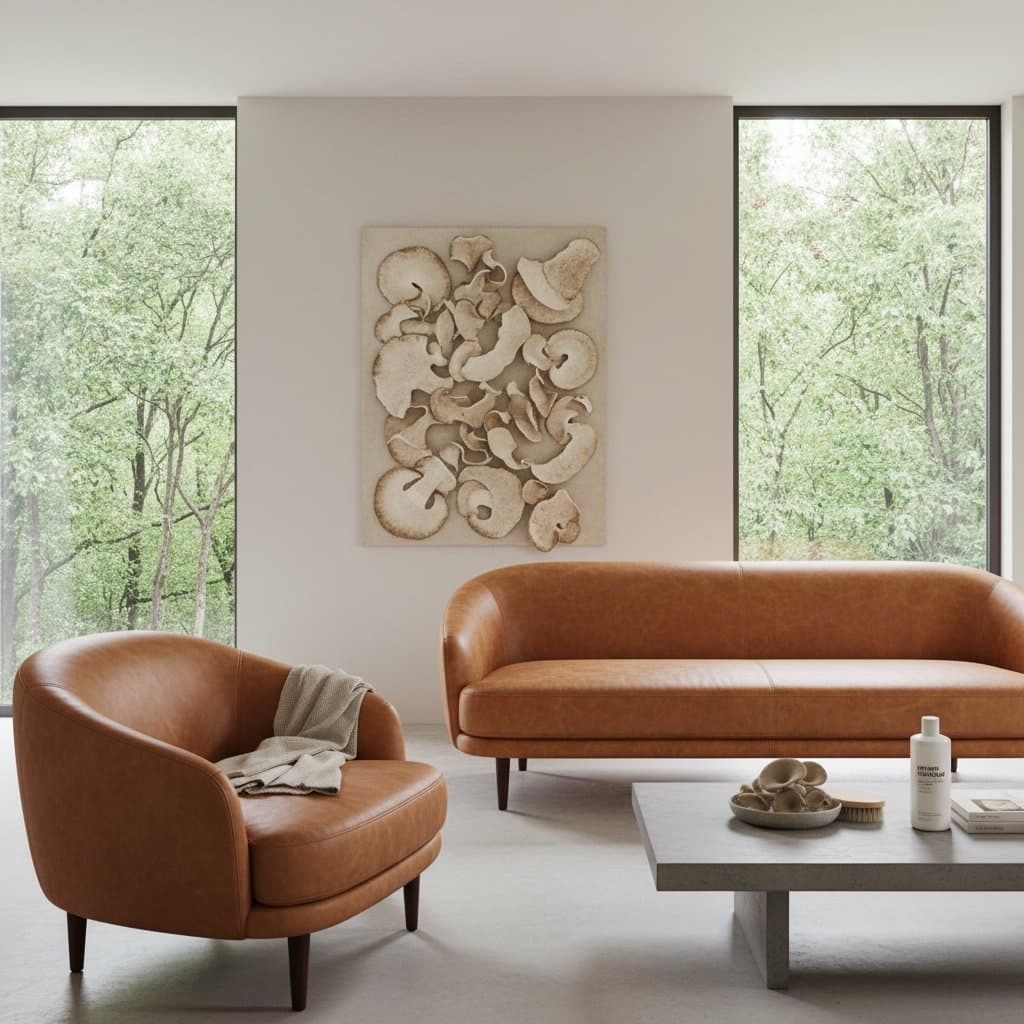
Mushroom Leather: Elevating Vegan Upholstery with Sustainable Care
Mushroom leather represents a breakthrough in luxury furniture, combining the elegance of traditional upholstery with environmental responsibility. Derived from mycelium, the root-like network of fungi, this material provides a soft, durable, and fully biodegradable option free from animal products or plastics. This guide details its unique properties, essential cleaning and maintenance techniques, and selection advice to help preserve its appeal in high-end interiors.
While manufacturing variations exist, most mushroom leather features a sealed or natural finish that requires gentle handling. Understanding these differences ensures long-term performance without compromising style or ethics.
Understanding Mushroom Leather
Mycelium forms the foundation of mushroom leather through a controlled growth process in vertical sheets. These sheets undergo compression, drying, and finishing treatments to replicate the suppleness and strength of animal hides. The final product breathes well, accepts dyes and textures, and decomposes naturally at the end of its life cycle.
Unlike synthetic vegan alternatives, it avoids petroleum-based components, making it ideal for eco-conscious consumers. Harsh chemicals like solvents or acids can degrade its organic fibers, so maintenance focuses on mild, non-abrasive methods.
Essential Tools and Materials
Prepare these items for effective care:
- Soft microfiber cloths for dusting and wiping
- Mild, plant-based dish soap or gentle cleaner
- Distilled water to prevent mineral buildup
- A small, soft brush or toothbrush for detailed areas
- Diluted white vinegar for occasional odor neutralization
- Vegan leather conditioner or natural wax for protected surfaces
These tools minimize risk while maximizing cleanliness.
Cleaning and Care Process
Follow these steps to maintain mushroom leather upholstery safely and effectively.
Step 1: Initial Dusting
Use a dry microfiber cloth to remove surface dust and debris. This preliminary action prevents particles from causing scratches during wet cleaning.
Step 2: Prepare Cleaning Solution
Mix one teaspoon of mild dish soap with two cups of distilled water. Stir until light suds form, ensuring the solution remains gentle to avoid stripping protective finishes.
Step 3: Perform Spot Testing
Apply a small amount of the solution to a hidden area. Observe for five minutes for any signs of color change or material softening. If issues arise, proceed with only distilled water and a damp cloth.
Step 4: Apply Gentle Cleaning
Soak a microfiber cloth in the solution, wring thoroughly, and wipe in circular motions over stained or soiled spots. Concentrate on high-touch zones like armrests, using minimal moisture since mycelium absorbs liquids readily.
Step 5: Rinse Thoroughly
Follow with a clean cloth dampened in distilled water to eliminate soap traces. Dry immediately with a soft towel, then allow full air drying away from direct heat sources.
Step 6: Condition Protected Finishes
For sealed surfaces, apply a thin layer of vegan conditioner using a soft cloth. Buff lightly to enhance luster and flexibility. Omit this for unsealed or suede-like textures to prevent residue buildup.
Step 7: Address Odors
Dilute white vinegar with four parts water and mist lightly into the surrounding air, avoiding direct contact. Ventilate the area to dissipate scents without affecting the material.
Step 8: Prevent Environmental Damage
Position furniture out of direct sunlight and away from heat sources. Such exposure accelerates drying and fading of the natural fibers.
Step 9: Establish Routine Maintenance
Dust weekly and perform deeper cleans every two to three months. Consistent light care preserves suppleness and wards off permanent stains.
Key Practices: Dos and Don’ts
Adopt these habits to extend the life of mushroom leather.
Recommended Actions
- Select soft, non-abrasive cloths and cleaners.
- Test solutions on inconspicuous spots first.
- Dry surfaces promptly after any moisture exposure.
- Place coasters or protective mats on tabletops.
- Condition sealed finishes biannually.
Actions to Avoid
- Apply bleach, alcohol, or acetone-based products.
- Scrub vigorously or use rough tools.
- Saturate the material with liquids.
- Employ silicone sprays that may clog pores.
- Apply waxes or oils without confirming surface compatibility.
Dr. Lena Roth, materials scientist at GreenFiber Labs, notes, “Mycelium leather behaves more like natural suede than vinyl, so it responds best to dry, low-pressure cleaning.” This perspective aligns with guidelines from leading producers.
Professional Assistance
Seek expert help for severe issues such as embedded stains, surface cracks, or moisture damage. Professionals also handle integrated features like heated elements or built-in lighting, ensuring repairs maintain structural integrity and warranty coverage.
Time and Cost Overview
Mushroom leather pieces command prices between synthetic options and top-tier animal leathers, often in the mid-to-high luxury range. Custom designs or specialty finishes increase expenses. Routine cleaning requires 30 minutes for a single chair or up to one hour for a full sofa, scaling with size and condition.
Ongoing Maintenance Schedule
Integrate these routines for optimal upkeep:
- Weekly: Dust surfaces with a soft cloth.
- Monthly: Inspect for dryness or color shifts.
- Seasonally: Clean with the prepared solution.
- Biannually: Condition applicable finishes.
- As Needed: Refinish or replace upon noticing cracks or stubborn marks.
Prompt attention to dullness, discoloration, or rigidity prevents escalation.
The Appeal in Luxury Interiors
Architects and designers value mushroom leather for its authentic texture and eco-narrative. It surpasses plastic-based vegans in mimicking genuine hide while enabling mold-grown customization that cuts waste. Subtle organic patterns add depth to furnishings.
Interior designer Marco Yates of Studio Haven observes, “Clients love that it feels soft and real, but it aligns with ethical values.” Its breathability suits upholstery and panels, while inherent sound absorption enhances serene environments.
Selecting Quality Mushroom Leather
Verify labels for “mycelium” or “mushroom leather” specifications, distinguishing it from broader vegan categories. Examine backings for natural rather than synthetic supports, especially in budget variants. Prioritize brands using eco-friendly dyes and finishes if sustainability drives your choice.
Opt for sealed versions in demanding areas like sofas; choose textured unsealed options for decorative elements. Review care directives, as treatments influence handling.
Sustainability Advantages
Production demands far less water than conventional leather and eliminates harmful tanning agents. Mycelium thrives on waste materials like agricultural residues in short cycles, conserving energy. At disposal, it breaks down harmlessly, bypassing microplastic pollution.
This efficient process supports circular economies, meeting the surge in responsible luxury demands.
Advanced Care Strategies
Maintain moderate humidity to avert mildew or brittleness. Employ covers during transport to guard against abrasions. Blot spills instantly with dry cloths rather than wiping. Alternate seating to distribute wear evenly. Lift rather than drag furniture to avoid floor marks.
Integrating Mushroom Leather into Daily Life
Adopting mushroom leather transforms spaces into havens of style and conscience. With diligent care, it delivers enduring comfort and visual allure, proving that luxury need not compromise planetary health. Invest in this material for interiors that evolve gracefully over time.