
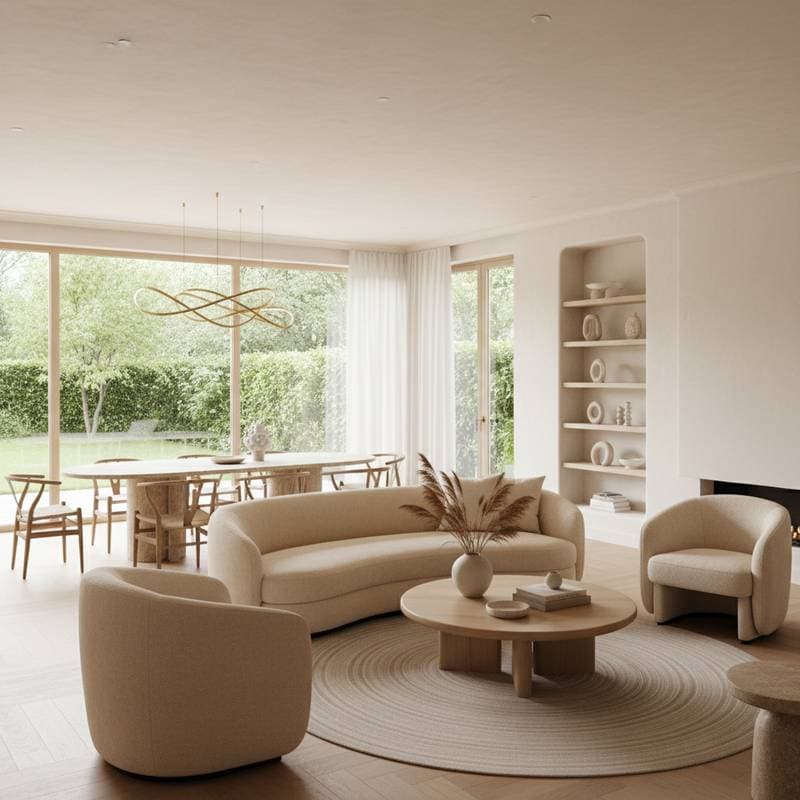
The Rise of Curves in Contemporary Home Design
Curved furniture and architectural details are redefining interior spaces by introducing gentle contours that evoke tranquility and fluidity. These elements shift away from the stark geometry of traditional designs toward environments that feel more organic and approachable. Homeowners increasingly seek this softer aesthetic to cultivate areas that support relaxation and effortless movement.
Straight-edged furnishings often impart a sense of formality or austerity, which can disrupt comfort in everyday settings. In contrast, rounded forms encourage a more intuitive interaction with the surroundings. This article outlines practical methods to incorporate curves thoughtfully, ensuring they elevate rather than overwhelm a room.
A key consideration involves moderation: excessive curves might introduce visual chaos. Strategic placement maintains clarity and purpose in the design.
Understanding the Appeal of Curved Forms
Curved designs derive their allure from the organic silhouettes observed in nature, such as rolling hills or the human silhouette. These shapes resonate intuitively, providing a subconscious sense of ease and familiarity. Interior specialists note that curves distribute visual weight evenly, mitigating the harshness of materials like glass, metal, or stone while preserving practicality.
Select furnishings featuring softened edges, such as chairs with contoured seats or tables with elliptical surfaces. Such choices enhance perceptual comfort without compromising utility. The result integrates beauty and function seamlessly into daily routines.
Essential Tools and Materials for Implementation
To integrate curves effectively, gather these basics:
- Measuring tape for precise spatial assessment
- Painter's tape to outline placements and test arrangements
- Neutral wall paint or textured backgrounds to complement soft shapes
- Existing linear furniture pieces to provide necessary contrast
- Optional sculptural lighting or rugs that subtly mirror curved motifs
These items facilitate planning and execution, allowing adjustments before final commitments.
Step-by-Step Guide to Incorporating Curves
1. Select a Foundational Curved Piece
Begin with a prominent item, such as a circular coffee table, a sofa with a bowed profile, or an oval dining surface. This anchor establishes the design's core motif and influences subsequent choices.
2. Plan Spatial Flow Prior to Additional Purchases
Apply painter's tape to the floor to simulate the piece's footprint. Navigate the area to evaluate accessibility. Allocate a minimum of two feet for pathways, ensuring curves enhance rather than impede circulation.
3. Integrate Curves with Linear Elements for Equilibrium
Combine a rounded sofa with a rectangular area rug or pair a circular table with a straight-backed bench. This interplay anchors the composition, preventing it from appearing adrift. The juxtaposition allows the eye to settle comfortably.
4. Consider Variations in Scale and Elevation
Multiple petite curved items risk creating a fragmented appearance. Opt for one substantial rounded element to convey serenity. Reserve angular forms for vertical accents, like shelving or floor lamps, to delineate and support the softer contours.
5. Incorporate Tactile Textures Thoughtfully
Curves harmonize with materials that invite touch, including boucle weaves, brushed cottons, or satin-finished woods. These selections add dimensionality while subordinating themselves to the form's elegance.
6. Subtly Reiterate Curved Motifs
Reinforce the theme through minor echoes, such as a circular mirror, a lamp with a bowed shade, or a vessel with an arched silhouette. Limited repetition fosters unity without monotony.
7. Refine the Color Scheme for Emphasis
Gentle contours shine in subdued palettes, featuring off-whites, terracotta hues, or muted greens. These choices direct attention to shape over saturation. Introduce a single bold tone for grounding if desired.
8. Refine or Relocate Angular Intrusions
Identify furnishings that clash with the new softness, such as edged consoles or rigid shelving. Substitute or reorient them strategically. Even minor swaps, like exchanging a square end table for a rounded alternative, can profoundly alter the ambiance.
9. Verify Ergonomics and Proportional Fit
Visual appeal alone does not suffice; test for physical suitability by engaging with the pieces. Ensure seats support posture and surfaces align with body dimensions. True comfort arises from forms that accommodate human scale intuitively.
Best Practices and Common Pitfalls
Recommended Approaches
- Blend curved and straight components to achieve stability.
- Measure meticulously prior to acquiring oversized items.
- Employ natural fabrics and woods to infuse authenticity.
- Incorporate the curved motif two to three times for visual cohesion.
Approaches to Avoid
- Position curved pieces flush against walls or into corners, which stifles their flow.
- Cluster numerous rounded elements in confined areas.
- Overlook proportional relationships, as expansive curves may overshadow the space.
- Neglect illumination assessments, since shadows can accentuate or distort contours.
Engaging Professional Expertise
Complex layouts with intricate built-ins benefit from designer guidance to optimize proportions and perspectives. Seek specialists for bespoke upholstery or custom millwork, where precision in fabrication ensures durability. Professionals adeptly handle the technical demands of curved integrations, guaranteeing alignment and structural integrity.
Investment and Timeline Overview
Pricing for curved furnishings varies by scope and craftsmanship. Compact accents, such as poufs or auxiliary tables, remain accessible, whereas tailored sofas or ensemble sets command premium investments. Implementation timelines span a single weekend for simple substitutions to multiple weeks for specialized orders, influenced by material sourcing and production intricacies.
Sustaining Curved Designs Over Time- Clean contoured surfaces weekly using a microfiber cloth to eliminate dust from crevices.
- Inspect upholstery resilience and padding integrity seasonally, as frequent use may distort outlines.
- Shift rugs and portable items quarterly to distribute usage evenly.
- Restore wood finishes or address fabric stains delicately to preserve contour integrity.
- Reassess arrangements annually, confirming ongoing spaciousness and natural progression.
The Psychological Comfort of Curved Spaces
Rounded forms align with innate human patterns of motion and perception. Environmental design consultant Dana Muir observes, "People naturally associate rounded forms with safety and softness. The absence of sharp corners lowers subconscious tension." Consequently, curved interiors not only refresh aesthetics but also modulate emotional responses, promoting a paced, intimate atmosphere conducive to repose.
In expansive layouts, curves facilitate fluid transitions across zones like kitchens, dining areas, and lounges. They unify disparate elements into a cohesive whole, diminishing the perception of division.
Tailoring Curves to Personal Aesthetics
Integration need not entail comprehensive overhauls. Initiate with modest changes, such as substituting a linear low table for a rounded counterpart or introducing a contoured armchair to a nook. In sparse environments, a solitary, understated sculptural form suffices to impart subtlety.
Experiencing the Lasting Impact of Curved Interiors
As curves settle into your living spaces, observe their subtle influence on habits and sentiments. Environments gain a sense of continuity, fostering unhurried interactions and extended sojourns. This evolving serenity integrates into routines, yielding enduring enhancements to well-being.