
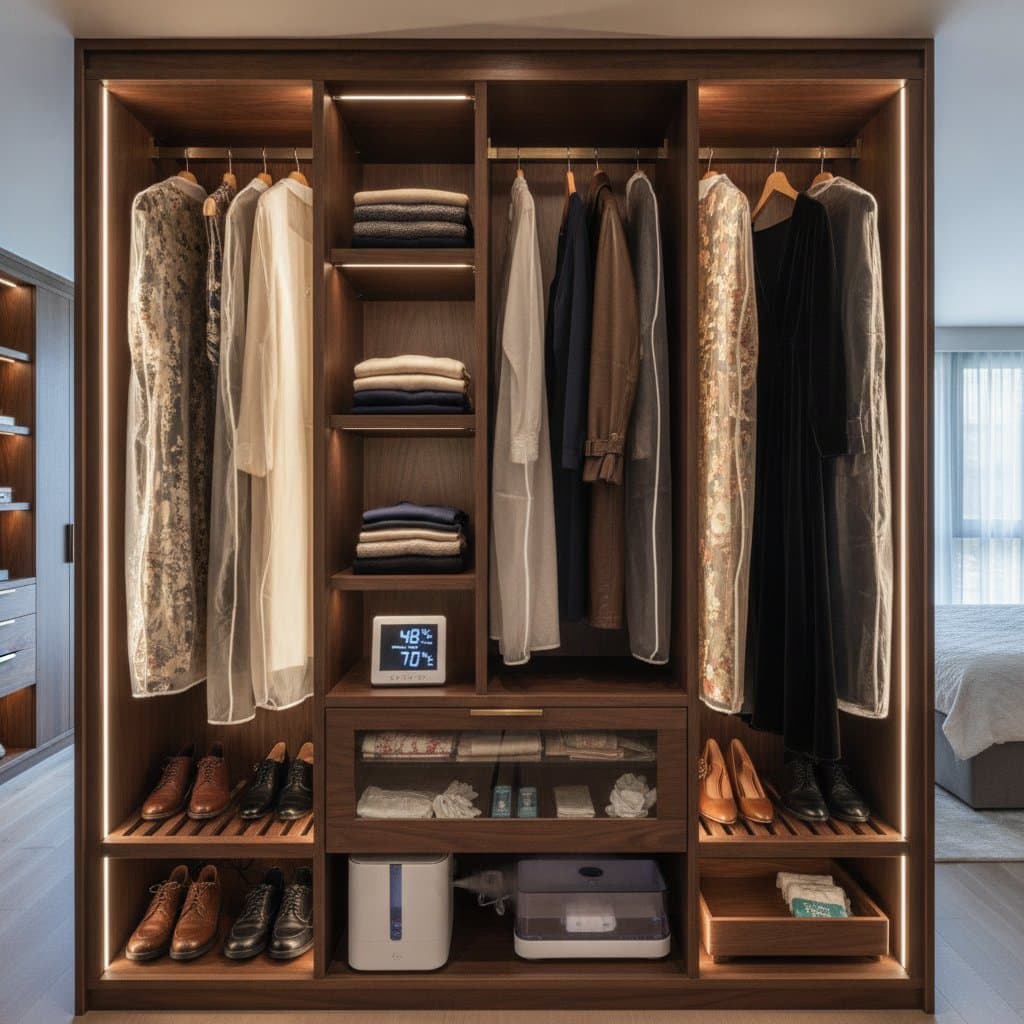
Humidity-Controlled Closets Safeguard Luxury Items
Protect your fine clothing, leather goods, and heirloom textiles by keeping humidity steady inside your closet. The right balance prevents mildew, cracking, and fading so your investment lasts longer. Too much moisture invites mold and fabric rot. Too little dries out leather and silk.
You will learn how to set up and maintain a humidity-controlled closet that preserves luxury pieces without overcomplicating your routine. If your closet connects to a bathroom or basement, you may need extra moisture control beyond typical home conditions.
What To Know
Luxury materials like silk, leather, cashmere, and fine cotton are sensitive to swings in humidity. Ideal storage humidity sits around 45 to 55 percent. Higher levels encourage mildew, while lower levels cause brittleness. Always check that any electrical or desiccant device you use is rated safe for enclosed spaces. Avoid direct heat sources or chemical dehumidifiers that release strong fumes.
Tools and Materials
- Small digital hygrometer or humidity sensor
- Portable dehumidifier or moisture absorber
- Humidifier, if your home air is very dry
- Soft cotton garment bags or breathable covers
- Wooden or cedar hangers
- Microfiber cloths for wiping surfaces
- Vacuum with soft brush attachment
If you cannot install a powered unit, silica gel packets or charcoal moisture absorbers can help in smaller closets.
Step By Step
1. Measure the current humidity
Place a hygrometer inside your closet for 24 hours with the door closed. Record the average reading. This baseline tells you whether you need to add or remove moisture.
2. Clear and clean the space
Remove everything. Vacuum corners, shelves, and baseboards with the soft brush tool. Wipe surfaces with a slightly damp microfiber cloth, then dry them fully. This prevents hidden mold spores from taking hold.
3. Improve airflow
If your closet has no vent, leave a small gap under the door or use a louvered door panel. Air movement prevents stagnant pockets where humidity can spike.
4. Add the right climate devices
Use a small dehumidifier for damp spaces or a mini humidifier in dry areas. Choose models with an automatic shutoff. Aim to hold humidity between 45 and 55 percent. Check the readings daily for the first week, then weekly.
5. Prepare items before storage
Clean and dry garments completely. Condition leather with a neutral balm if it feels stiff. Never store anything that is even slightly damp. Moisture trapped in fibers can spread to nearby pieces.
6. Choose breathable covers
Use cotton or linen garment bags instead of plastic. Plastic traps moisture and can cause yellowing. For folded items, wrap them in acid-free tissue paper to reduce friction.
7. Position items correctly
Leave at least an inch of space between hanging pieces. Avoid pressing clothes against the back wall, which is often cooler and more prone to condensation. Keep leather goods off the floor.
8. Maintain consistent conditions
Check humidity levels weekly. Empty and refill water tanks as directed. Replace desiccant packs every few months, or sooner if they feel heavy with moisture.
9. Inspect seasonally
Twice a year, inspect every piece for musty odors, surface changes, or color shifts. Early detection helps you correct humidity issues before damage sets in.
Dos and Don’ts
Dos
- Keep humidity steady between 45 and 55 percent.
- Store freshly cleaned items only.
- Use breathable covers and natural hangers.
- Monitor with a digital hygrometer, not guesswork.
Don’ts
- Do not use plastic garment bags for long-term storage.
- Do not run a dehumidifier nonstop without checking levels.
- Do not store items touching exterior walls.
- Do not place scented moisture absorbers directly on fabrics.
Textile conservator Rita Chen, who specializes in preservation at a private collection care studio, said, “Stable humidity is the single most protective factor for fine fabrics after cleanliness.” She recommends simple monitoring over expensive systems when space is small.
When To Call A Pro
Call a professional if you see mold growth, persistent dampness, or a musty odor that returns after cleaning. A contractor or HVAC technician can identify leaks, insulation gaps, or ventilation problems that exceed everyday repair. For built-in climate closets with integrated fans or heating elements, hire a licensed installer to prevent electrical hazards and warranty loss.
Cost and Time Snapshot
Expect a basic setup with a hygrometer and desiccant packs to cost between twenty and fifty dollars. Adding a small dehumidifier or humidifier runs from forty to two hundred, depending on capacity. Setting up and cleaning the closet takes about one to two hours. Ongoing monitoring adds a few minutes each week. Costs rise if you install built-in ventilation or cabinetry, mainly due to electrical work and materials.
Maintenance or Upkeep
- Weekly: Check humidity readings and empty water tanks.
- Monthly: Dust shelves and wipe walls.
- Seasonally: Inspect each item for odor, dryness, or stiffness.
- Annually: Deep clean and replace any worn absorbers or filters.
Repeat the full inspection sooner if weather changes sharply or if you notice condensation inside the closet door.
Pro Tips for Success
- Keep a small notebook or app log of humidity readings. Patterns show how seasons influence your closet.
- Rotate stored items a few times a year to let fabrics breathe.
- Use cedar blocks for mild pest control, but sand them yearly to refresh scent and oil release.
- If your closet shares a wall with a shower or laundry area, add a moisture barrier or sealant to protect from ambient dampness.
- Always unplug devices before refilling or cleaning them.
Achieving Long-Term Fabric Preservation
Once you stabilize humidity, luxury items stay supple, colorfast, and fresh. The closet itself smells cleaner and feels more pleasant to use.