
Humidity-Sensing Closets That Automatically Beat Mold
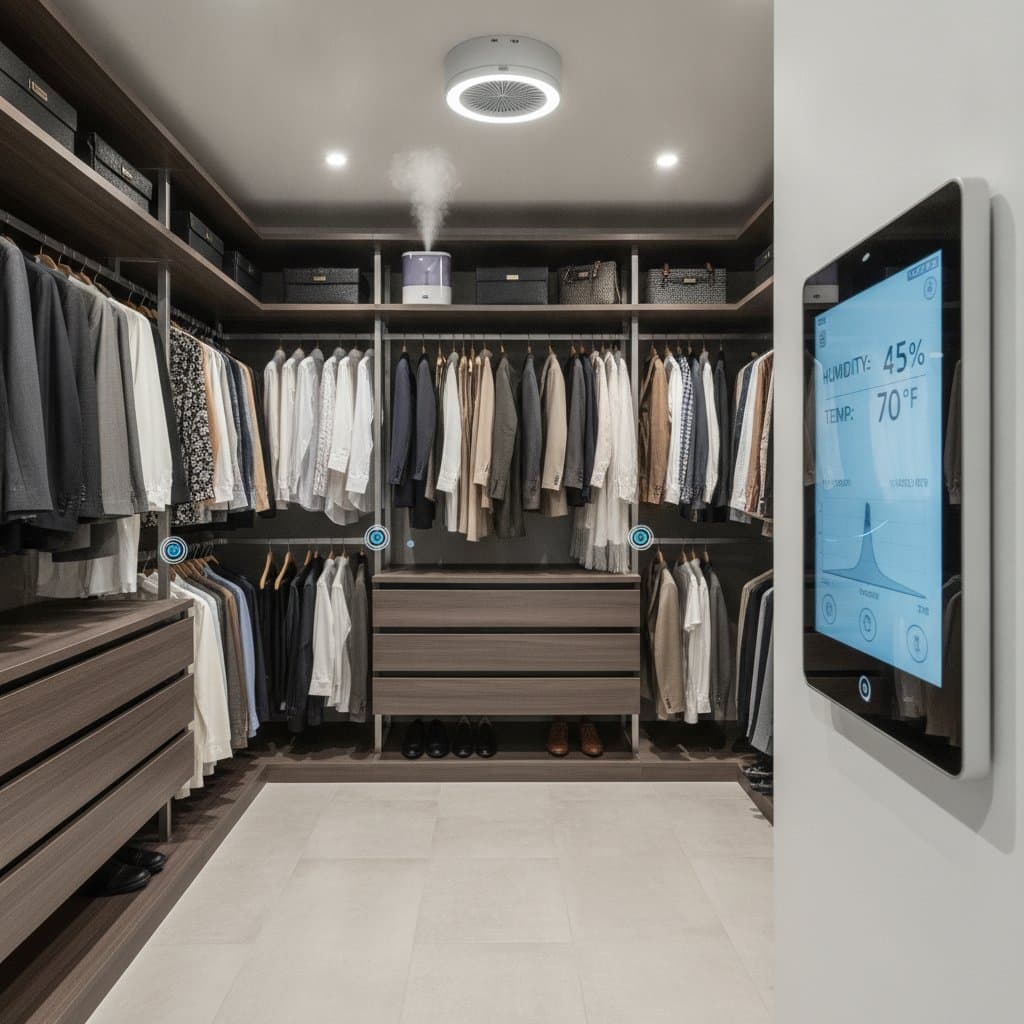
A humidity-sensing closet monitors moisture levels and activates ventilation or dehumidification as needed. This approach stops mold growth before it affects clothing or accessories. The system maintains steady humidity to protect fabrics and eliminate odors.
Mold develops when stale air combines with elevated humidity. Sensors detect changes and trigger fans or dehumidifiers to restore balance. The result is a wardrobe environment that stays fresh without constant manual effort.
Readers in arid climates may achieve results with a basic sensor and fan alone. Larger or more humid spaces benefit from integrated controllers and sealed doors.
Tools and Materials
- Hygrometer or digital humidity sensor
- Small dehumidifier or vent fan sized for the closet
- Weather stripping or door sweep to seal gaps
- Surge-protected extension cord
- Plastic or metal shelving
- Microfiber cloths and mild detergent
- Optional smart plug or humidity controller
Desiccant packs serve as an alternative when fans cannot be installed. Replace packs on a regular schedule.
Recommended Practices
Calibrate the sensor monthly to maintain accuracy. Select low-noise equipment to prevent vibration transfer. Clean closet walls with a vinegar solution several times each year. Allow brief air exchange after use by leaving the door ajar.
Keep the sensor clear of hanging garments. Test chemical absorbers on inconspicuous fabric first. Avoid any heating elements inside the space. Address musty odors promptly because they indicate hidden moisture.
Investment and Setup Time
A basic system costs between eighty and four hundred dollars. The lower end includes a sensor, fan, and plug controller. Higher amounts cover built-in units and upgraded shelving.
Installation requires one to three hours plus drying time after cleaning. Closet size, wiring needs, and material quality determine final expense.
Operating Principles
An electronic hygrometer measures air moisture. When readings exceed the set threshold, the system engages a fan or dehumidifier. Operation ceases once humidity returns to the target range. Short, repeated cycles prove more effective than continuous running.
Material Selection Guidance
Use only sealed or laminated wood to prevent swelling. Choose stainless steel or coated metal shelving for corrosion resistance. Select breathable cotton or canvas storage bins. Plastic or varnished wood hangers resist rust better than wire.
Cardboard and paper boxes absorb moisture and should remain outside the closet.
Common Issues and Solutions
Persistent high humidity
Verify that the dehumidifier tank is empty and the filter is clean. Confirm that the door seals completely when closed.
Erratic sensor readings
Relocate the sensor away from direct airflow paths. Rapid changes often occur when the unit sits too close to a vent.
Musty odor without visible mold
Clean all surfaces again with vinegar solution and run the fan for a full day. Check hidden areas behind shelves.
Rust on hangers or zippers
Add a timer to operate the fan briefly several times each day. Lower the activation threshold during humid nights.
Damp clothing
Reduce crowding so garments do not touch. Rotate thick fabrics seasonally and maintain spacing between items.
Connection to Home Systems
Link the closet sensor to an existing central dehumidifier or smart thermostat when available. Shared data helps identify nearby moisture sources such as bathrooms. Portable Wi-Fi sensors provide similar alerts in homes without central equipment.
Efficiency Measures
Operate equipment in automatic mode triggered by humidity rather than continuous running. Empty tanks and clean filters on schedule. Select Energy Star rated models. Keep doors closed during operation to reduce workload.
Sustaining Performance
Schedule quarterly inspections of sensors and seals. Adjust settings seasonally as outdoor conditions change. Consistent attention preserves both clothing and system longevity.