
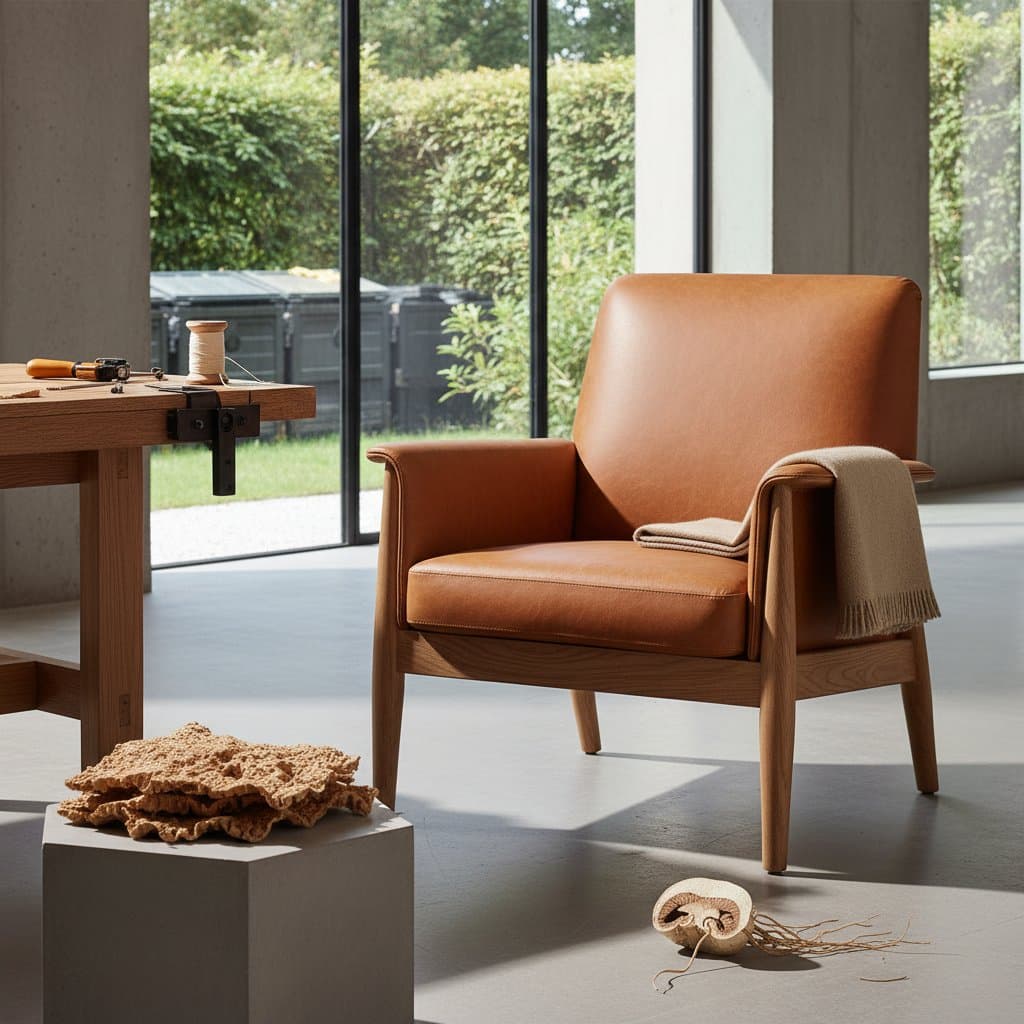
Mushroom Leather Brings Luxury Without the Waste
Mushroom leather represents a breakthrough in sustainable materials. Derived from the root structure of mushrooms known as mycelium, this innovative product mimics the look and feel of traditional leather without the environmental drawbacks. Designers and manufacturers increasingly turn to it for upholstery in high-end furniture, where style meets responsibility.
The production process begins with growing mycelium on agricultural waste. This method requires far less water and land than raising animals for hides. Once harvested, the material undergoes tanning similar to conventional leather, resulting in a versatile sheet ready for crafting.
Understanding the Material
Mycelium leather starts as a network of fungal threads that bind organic matter together. Scientists cultivate it in controlled environments, allowing it to form dense, leather-like sheets. Unlike synthetic alternatives, it biodegrades naturally at the end of its life cycle.
Key properties include a soft, supple texture that softens further with use. It resists scratches and tears while maintaining breathability, making it ideal for seating and accents. Colors range from natural earth tones to vibrant dyes, achieved through plant-based pigments.
Production emphasizes low impact. Factories use renewable energy and avoid harmful chemicals, contrasting sharply with the tanning processes that pollute waterways in traditional leather making. This approach aligns with global efforts to reduce carbon footprints in the luxury sector.
Benefits for Luxury Upholstery
In the world of fine furniture, appearance and longevity matter most. Mushroom leather delivers both, offering a premium finish that rivals calfskin or lambskin. Its natural grain patterns provide unique aesthetics, ensuring no two pieces look identical.
Sustainability stands out as a primary advantage. Traditional leather contributes to deforestation, methane emissions, and water scarcity. Mushroom leather sidesteps these issues, using upcycled substrates like corn stalks or sawdust. The result is a product that appeals to eco-conscious consumers without compromising on quality.
Durability tests show it withstands daily wear comparable to animal-based options. It holds up under sunlight and humidity, preserving color and structure over years. For manufacturers, this means fewer returns and satisfied clients.
Choosing the Right Mushroom Leather
Selecting mushroom leather requires attention to source and specifications. Look for certifications from organizations focused on ethical production. Reputable suppliers provide details on growth methods and post-processing treatments.
Consider thickness for your project. Thinner sheets suit decorative elements, while thicker ones work for high-traffic areas like sofas. Texture variations include smooth finishes for modern designs or pebbled surfaces for classic styles.
Sample swatches before committing to large orders. Test for flexibility and scent; quality pieces have a subtle, earthy aroma that fades quickly. Budget for initial costs, which may exceed synthetics but undercut premium leathers over time due to efficiency.
- Verify supplier transparency regarding sourcing.
- Assess color fastness through light exposure tests.
- Evaluate compatibility with existing hardware or frames.
Crafting Furniture with Mushroom Leather
Transforming mushroom leather into upholstery involves standard techniques adapted for its properties. Begin by cutting patterns with sharp tools to avoid fraying. Its forgiving nature allows for precise seams without cracking.
Stitching requires needles suited for non-woven materials. Use strong, vegetable-tanned thread to match the eco-theme. For padding, pair it with natural fillers like cork or wool to enhance comfort and sustainability.
Adhesives play a crucial role in assembly. Opt for water-based glues that dry clear and bond securely. Heat application during wrapping helps conform the material to curves, ensuring a taut, professional appearance.
Professionals recommend practicing on scraps first. This step reveals how the leather responds to tension and shaping. Final pieces emerge lightweight yet robust, ready for homes that value innovation.
Maintaining Your Mushroom Leather Furniture
Care for mushroom leather follows simple routines to extend its life. Dust surfaces weekly with a soft cloth to prevent buildup. For deeper cleaning, use a mild soap solution applied sparingly with a damp sponge.
Avoid direct sunlight to minimize fading. Rotate cushions periodically if applicable. Condition the material every six months with a natural oil, such as jojoba, to retain suppleness.
Spills demand immediate action. Blot excess liquid and wipe gently without rubbing. Professional cleaning services familiar with bio-materials handle tough stains effectively.
- Store in moderate humidity to prevent drying.
- Inspect seams annually for wear.
- Refrain from harsh chemicals that could degrade the structure.
Embracing Sustainable Elegance
Mushroom leather elevates furniture design by blending luxury with planetary care. Homeowners gain pieces that tell a story of innovation and ethics. As adoption grows, this material promises a future where opulence and sustainability coexist seamlessly.
Investing in it supports a circular economy. Producers recycle scraps into new growth mediums, minimizing waste. The end result is enduring beauty that benefits both living spaces and the environment.