
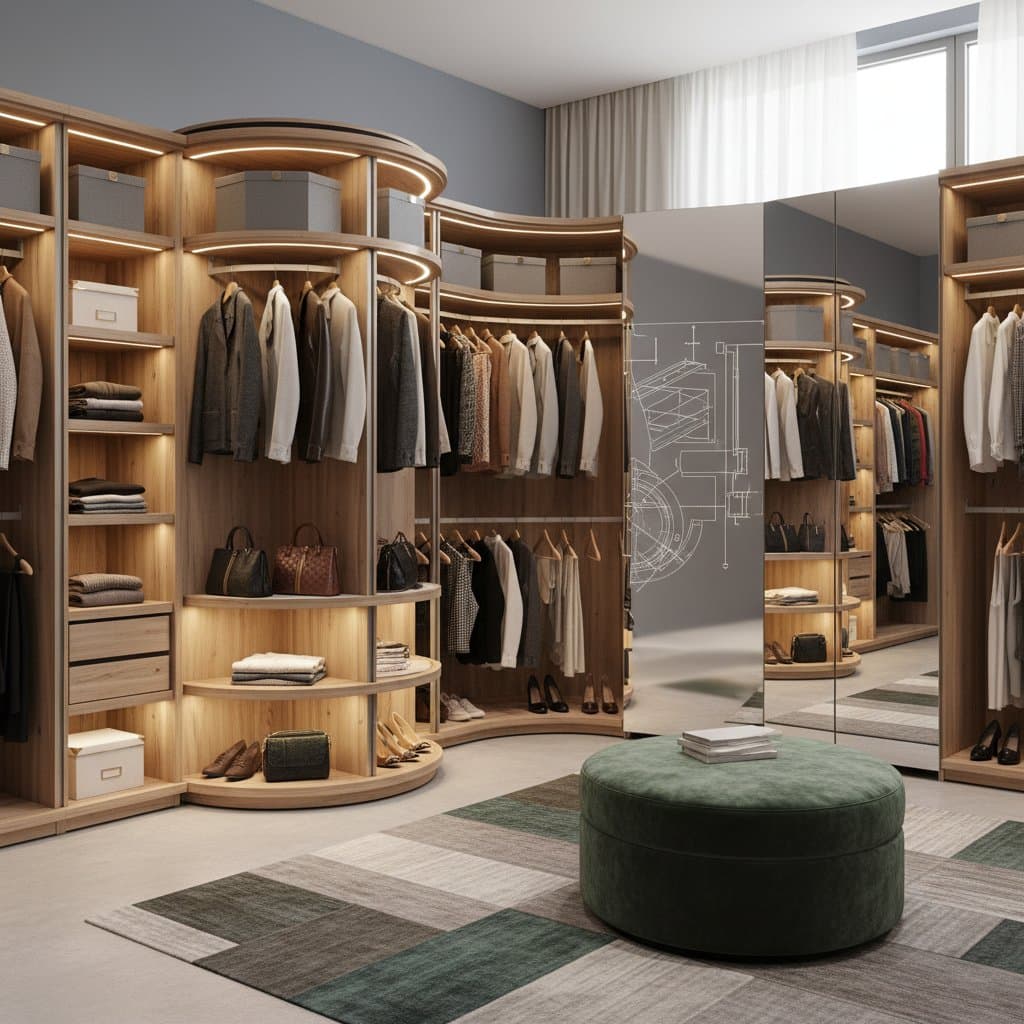
Unlocking Corner Storage Potential with Rotating Carousel Closets
Awkward corners in closets often remain underutilized, collecting dust and frustration. A rotating carousel closet addresses this challenge by providing easy access to every item. This system rotates to bring stored clothing and accessories within reach, eliminating the need to dig through dark spaces.
Readers facing limited storage or disorganized wardrobes will find value in this guide. It details the planning process, installation steps, and maintenance routines for a carousel system that integrates seamlessly into existing spaces. Carousel closets perform optimally in areas with sufficient depth, typically at least 24 inches, and level flooring to support smooth operation.
Essential Tools and Materials
Gather these items before beginning the project to ensure a smooth installation.
- Measuring tape for precise dimensions
- Stud finder to locate secure mounting points
- Level to verify even alignment
- Drill equipped with driver bits for fastening
- Screws and wall anchors suitable for the surface type
- Allen keys, often supplied with the kit
- Silicone-based lubricant spray for moving parts
- Soft cloths for wiping down components
- Optional: LED strip lights to illuminate the interior
A hand screwdriver serves as a reliable alternative to a power drill in tight spaces. Select silicone lubricant to prevent dust accumulation on metal surfaces.
Key Practices for Success
Recommended Actions
- Distribute weight evenly across all carousel arms to maintain balance.
- Fasten both the top and bottom mounting brackets firmly prior to adding items.
- Perform a thorough cleaning of the rotating mechanism every six months.
- Apply labels to individual sections if multiple users access the closet.
- Verify adequate clearance with adjacent doors in their fully open position before securing all fasteners.
Actions to Avoid
- Refrain from placing excessive weight, such as multiple heavy coats, on any single arm.
- Avoid oil-based lubricants, as they tend to attract and hold dust particles.
- Never mount directly into drywall without using appropriate anchors for stability.
- Do not store damp clothing inside, to prevent corrosion on metal components.
- Refrain from rotating the carousel while grasping hanging garments, to avoid strain on the system.
Investment and Timeline Overview
Carousel systems vary in price based on features and customization. Basic manual kits begin at approximately $200, while advanced motorized or bespoke options may exceed $1,500. Factors influencing cost include the durability of materials, such as stainless steel versus aluminum, the system's weight capacity up to 100 pounds per arm, and aesthetic finishes like matte black or polished chrome.
Installation time for a standard manual setup ranges from two to four hours, encompassing measurement, assembly, and testing. Additional time may be necessary for surface preparation, such as patching walls or adjusting uneven floors. Professional installation services, if chosen, add to the timeline but ensure precision.
Strategies for Optimal Space Utilization
Carousel closets excel at maximizing corner real estate without expanding the footprint. Begin by conducting a complete inventory of wardrobe contents. Categorize items by length: position shorter pieces like blouses and folded pants on upper levels, reserving lower tiers for full-length garments such as trousers and evening wear.
Opt for velvet-covered slim hangers to minimize space between items. Incorporate shallow baskets or divided trays at the base for storing shoes, jewelry, or seasonal accessories. For enhanced accessibility in deeper corners, install hooks along interior panels for lightweight items like ties or hats. A full-length mirror on the rear panel not only aids in outfit selection but also reflects light to reduce shadows.
Professional organizer Dana Michaels of Orderly Homes emphasizes the benefits of rotation: “A spinning closet keeps you honest about what you actually wear. If something never makes it into rotation, it probably belongs in donation.” This approach prevents reaccumulation of unused items, sustaining long-term organization.
To further optimize, consider integrating pull-out trays for bulkier folded clothes. In walk-in closets, pair the carousel with vertical dividers to separate categories like work attire from casual outfits. These adjustments can increase storage capacity by up to 40 percent compared to static shelving.
Integrating Style with Practicality
Beyond functionality, a carousel closet enhances the overall aesthetic of the space. Select materials that complement the room's decor: sleek chrome accents suit contemporary interiors, while warm wood tones harmonize with classic designs. Powder-coated finishes in neutral shades offer versatility for transitional styles.
Incorporate low-voltage LED lighting along the central pole or beneath shelves to provide focused illumination without generating heat that could damage fabrics. For closets with transparent doors, the rotating display creates an engaging focal point, showcasing curated collections.
In compact bedrooms, replacing a traditional dresser with a corner carousel frees up floor space. Utilize the newly available area for a wall-mounted mirror, reading nook, or additional shelving. Combining the system with under-bench storage maintains a cohesive, uncluttered appearance.
Experiment with modular add-ons, such as extendable rods for seasonal expansions. In high-traffic homes, choose quiet-glide bearings to minimize noise during use. These elements ensure the closet not only stores but also elevates the room's design.
Pitfalls and Prevention Measures
Several errors can compromise the performance of a carousel installation. First, overlooking vertical space requirements leads to ill-fitting systems; always confirm at least 6 inches of clearance above the pivot for rotation.
Second, inadequate alignment during setup results in uneven wear. Use a level at multiple points and test rotations empty before loading. Third, excessive force when tightening hardware risks damaging threads; apply torque gradually with a calibrated wrench.
Fourth, irregular maintenance accelerates component failure. Schedule quarterly inspections to remove dust from bearings using compressed air. Fifth, mismatched load capacities cause instability; assess total weight and select systems rated accordingly, opting for reinforced poles for dense fabrics like wool.
Addressing these issues proactively extends the lifespan of the carousel to over a decade, preserving both form and function.
Steps to Implement Your Carousel Closet
Implementing a rotating carousel closet requires deliberate preparation but yields daily convenience. Start with accurate measurements of the corner dimensions and floor stability. Select a kit aligned with your needs, then follow the assembly sequence: mount the base plate, attach the central pole, and secure the rotating arms.
After installation, load items methodically, testing rotations at each stage. Maintain the system by wiping surfaces weekly and lubricating joints biannually. Regular use reinforces habits of mindful organization, transforming a once-frustrating corner into a streamlined wardrobe hub.