
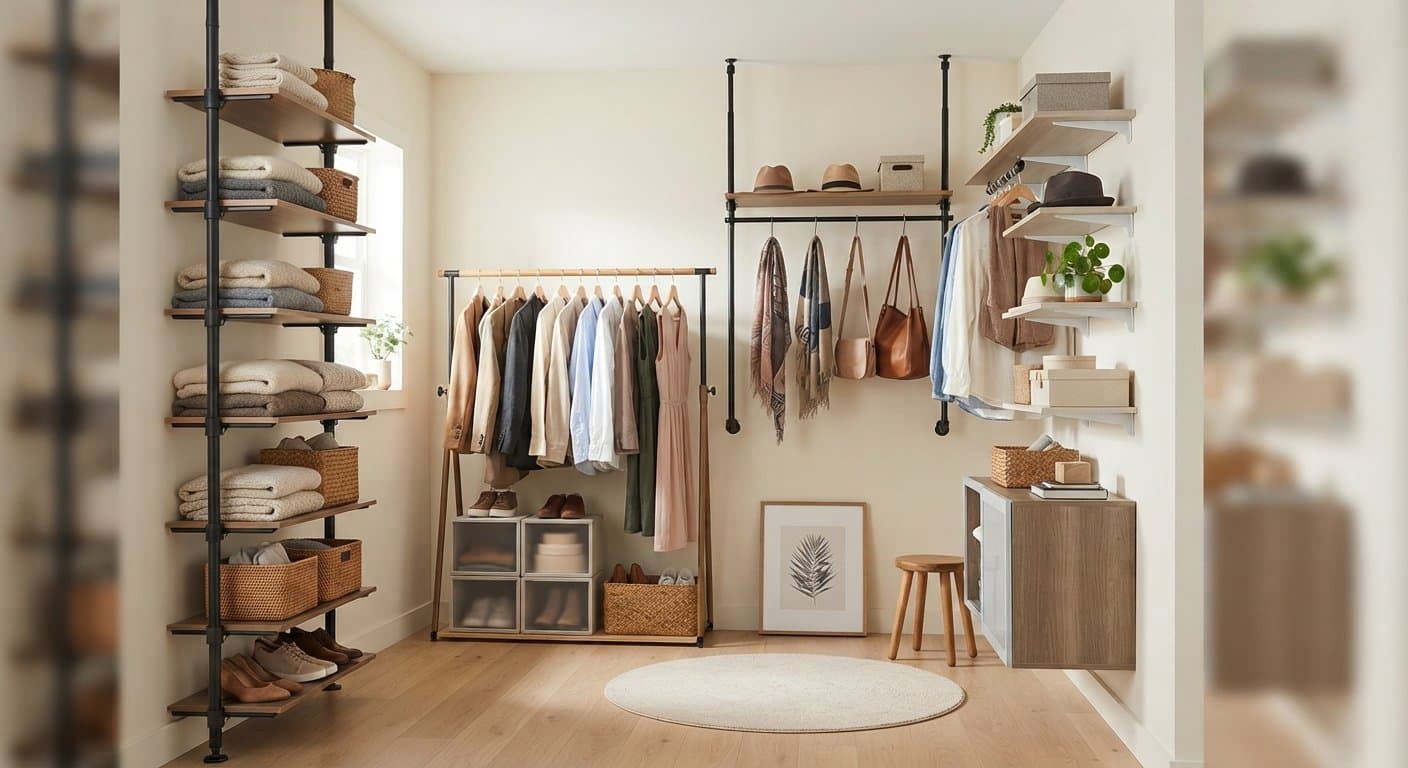
Renter-Friendly Closet Systems Gain Momentum in 2026
A renter-friendly closet system adds storage without drilling holes or risking your security deposit. The key lies in selecting supports that match your closet dimensions and the weight you plan to store.
Basic rental closets often provide just one shelf and one rod. This limited setup leaves little room to organize clothes, shoes, and daily essentials efficiently.
This guide covers how to assess your space, select a removable closet organizer, and install it while minimizing risk to walls and belongings. No-drill systems still carry weight limits that require careful attention.
Understanding Your Options
Interest in renter-friendly closet systems continues to grow as tenants seek flexible storage solutions they can relocate when they move. The right choice depends on your closet dimensions, wall and floor conditions, and planned storage weight.
Tension poles, freestanding units, and adhesive accessories each present distinct limitations. Always follow manufacturer installation guidelines and load specifications rather than assuming removable products leave surfaces untouched.
A no-drill closet system encompasses several approaches. Tension systems press between floor and ceiling or between opposing walls. Freestanding organizers rest on the floor surface. Adhesive organizers attach to clean, compatible surfaces. Each option avoids screws but requires stable contact points and appropriate loading.
Storage systems carry specific load ratings that must be observed, according to the American Home Furnishings Alliance. Position heavier items on lower levels, distribute weight across multiple supports, and review product instructions before installation or loading.
Practical Benefits for Renters
A removable closet organizer addresses daily storage challenges without requiring landlord approval for permanent modifications. These systems also travel with you during apartment changes or space rearrangements.
The trend emphasizes practical solutions rather than maximizing every available inch. Overcrowded organizers become difficult to access and may exceed support capacity. Begin with your actual storage needs, then select a system that maintains accessibility to hangers, drawers, and closet doors.
Effective setups help you achieve several organizational goals. You can separate hanging garments from folded items. Shoes become visible and reachable. Vertical space gets utilized without wall-mounted shelves. Storage configurations adapt as your wardrobe or household requirements change. Permanent holes get avoided when lease terms and product guidelines receive proper attention.
Essential Tools and Materials
Gather these items before beginning your project:
- Tape measure and pencil for accurate measurements
- Level or phone level application for proper alignment
- Selected removable closet system with complete instructions
- Soft cloth and mild soap for surface preparation when permitted
- Non-slip pads only when approved by the organizer manufacturer
- Storage bins sized to fit without overloading the system
Avoid substituting adhesive hooks, pads, or additional braces for manufacturer-specified components. These substitutions can alter weight distribution and system stability.
Selecting the Right System
Tension Systems
Tension systems employ adjustable poles or frames that press against adjacent surfaces. These work effectively in closets with solid, level contact points. Bowed ceilings, fragile plaster, or slick flooring can compromise stability.
Verify the stated height range and load capacity before purchase. Use only included pads and braces. Never exceed manufacturer weight specifications.
Freestanding Units
Freestanding racks or shelving units transfer weight directly to the floor. These suit closets with uneven walls or surfaces unsuitable for adhesive products. Measure the complete footprint, including doors or drawers that extend outward when open.
Tall units require anti-tip measures according to manufacturer guidance. If safe installation requires wall anchors, obtain landlord permission before drilling.
Adhesive Accessories
Adhesive bins and hooks accommodate lightweight items within reach. These perform best on surfaces approved by the adhesive manufacturer, typically smooth tile or glass. Painted walls, wallpaper, textured finishes, and damp surfaces often provide poor adhesion.
Adhesives may remove paint or leave residue during removal. Test application in an inconspicuous area when instructions permit.
Existing Closet Hardware
You may add hanging organizers to existing rods or place shelf inserts on current shelves. These options avoid new attachments while respecting original weight limits. Inspect for sagging, loose brackets, or cracked supports before adding load.
Installation Process
-
Review your lease and inspect the closet. Check rules regarding wall attachments, existing damage, and fixture modifications. Note loose shelves, damp areas, peeling paint, or uneven floors. Document existing conditions with photographs.
-
Measure the space thoroughly. Record closet width, depth, and height at multiple points. Measure around door trim and assess door swing clearance. For tension systems, measure exact locations where top and bottom supports will contact surfaces.
-
Create a storage inventory. Count hanging clothes, estimate shoe storage needs, and identify items suitable for bins. Keep bulky or heavy items off high shelves. This inventory prevents purchasing oversized or overloaded units.
-
Compare product specifications. Check height and width ranges, weight ratings, required surface types, and assembly requirements. Confirm whether load limits apply to the entire unit or individual shelves and rods. Contact manufacturers with questions about unclear instructions.
-
Prepare surfaces properly. Clean using methods compatible with finishes and product instructions. Allow complete drying before installing tension poles or applying adhesive accessories. Never attach adhesive to loose paint, wallpaper, or damp surfaces.
-
Install according to directions. Assemble on a clear floor using supplied components. Position tension poles straight and secure without excessive force that could damage ceiling or floor surfaces. Verify level and stability before loading.
-
Load gradually and monitor. Place heavier items on lower shelves and distribute weight evenly. Add clothing in small batches while checking for tilting, slipping, bowing, or unusual sounds. Unload immediately if shifting occurs.
-
Test removal procedures. Follow manufacturer removal steps for adhesive products without sharp pulling motions. Disassemble tension systems gradually. Inspect floor, ceiling, and wall surfaces afterward. Retain instructions and hardware components.
Important Guidelines
Follow these practices to maintain system integrity and protect your rental:
- Position heaviest items on the floor or lowest shelf
- Recheck tension and stability after moving items or adjusting the unit
- Use removable organizers only on manufacturer-approved surfaces
- Avoid hanging heavy bags from light-duty adhesive hooks
- Never install tension poles on cracked, loose, or visibly damaged surfaces
- Do not assume landlords consider all holes or adhesive marks as normal wear
Investment and Timeline
Simple hanging organizers or small accessories typically cost between ten and forty dollars. Basic freestanding racks or tension units range from thirty to one hundred fifty dollars. Larger modular systems cost between one hundred fifty and four hundred dollars or more, depending on size, materials, drawers, and additional components.
Allow thirty to ninety minutes for measuring, assembly, and setup. Larger systems or closets with uneven surfaces may require additional time. These estimates exclude shopping and belongings organization.
Professional Assistance Situations
Consult your landlord or qualified installer before modifying fixed shelves, drilling into walls, or installing systems near wiring, plumbing, or damaged ceilings. Seek professional help for active leaks, mold, cracked plaster, loose fixtures, or shifting floors. Storage systems should never conceal damage requiring repair.
Ongoing Maintenance
Inspect tension poles and freestanding units monthly and after moving or rearranging items. Monitor for slipping, leaning, bent rods, loose joints, and sagging shelves. Maintain loads within manufacturer specifications even when systems appear stable.
Address spills promptly and keep fabric bins dry to prevent odors and mildew. Remove items from the system upon noticing movement, new wall marks, or surface damage.
Maximizing Your Storage Setup
Begin with one closet section and store only frequently used items there. A sturdy, properly fitted organizer provides more value than a large system loaded beyond capacity. Select a removable closet organizer suited to your surfaces, follow all instructions, and monitor performance regularly.