
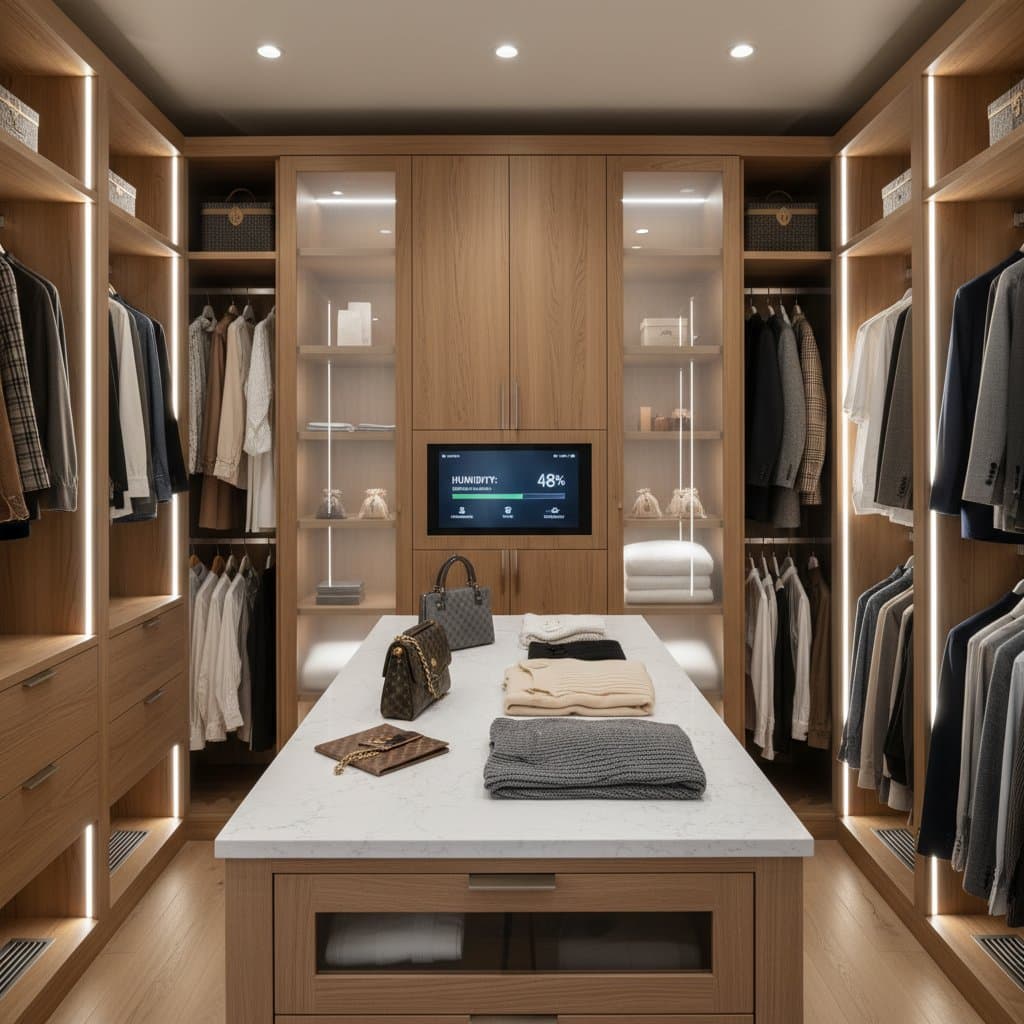
Safeguard Your Wardrobe with Built-In Humidity Control
Integrate humidity control into your closet to shield clothes from concealed moisture threats. This approach prevents mildew formation, unpleasant odors, and structural breakdown in fabrics, while preserving freshness across seasons.
Excess humidity fosters mold growth and musty scents. Insufficient levels lead to brittleness in leather and fragile textiles.
This guide details the process of installing humidity control systems and sustaining them using straightforward tools. Consider this enhancement essential unless your closet maintains steady temperature and moisture without any evident problems.
Essential Knowledge on Humidity Management
Humidity regulation safeguards textile fibers and surface treatments against fluctuations in moisture. Aim to sustain relative humidity between 45 and 55 percent. Refrain from placing electrical appliances in enclosed areas or close to suspended garments. Adhere to all manufacturer safety guidelines and verify adequate ventilation in the closet prior to setup.
Required Tools and Materials
- Compact digital hygrometer or humidity monitor
- Compact dehumidifier or moisture-absorbing product
- Humidifier suitable for arid environments
- Weatherproof sealing strips or adhesive door tape
- Power drill and standard screwdriver kit
- Surge-protected power extension
- Gentle cloth paired with non-abrasive surface cleaner
Installation and Setup Guide
Step 1: Assess Existing Humidity Levels
Position a compact digital hygrometer within the closet for a minimum of 24 hours. Record the peak and minimum values observed. These measurements indicate whether moisture addition or removal proves necessary.
Step 2: Enhance Ventilation
Remove obstructions from lower shelves and edges to promote air movement. Maintain a one-inch separation between garments and walls. Where feasible, add a small ventilation grille or opening near the door to equalize air exchange with the surrounding space.
Step 3: Secure Perimeter Seals
Apply weatherproof stripping or adhesive tape along the closet door frame and edges. Such measures block external moisture infiltration and retain controlled air within. Effective sealing amplifies the efficiency of humidity management equipment.
Step 4: Select Appropriate Equipment
For humidity exceeding 55 percent, opt for a low-capacity dehumidifier or absorbent material. In cases below 40 percent, install a small humidifier inside the closet or adjacent to the door. Select models equipped with automatic shutoff features to ensure safety.
Step 5: Configure Equipment Settings
Adjust the device to target humidity around 50 percent. Secure electrical cords away from fabric contact. Operate the dehumidifier or humidifier for two to four hours, then remeasure with the hygrometer to verify adjustments.
Step 6: Incorporate Automated Monitoring
For sustained reliability, fit a humidity-responsive electrical outlet or intelligent plug that activates the device as needed. This setup prevents excessive drying or moistening. Access readings via a mobile application or direct sensor interface.
Step 7: Perform Routine Cleaning
Clean equipment surfaces monthly using a soft cloth. Drain reservoirs and substitute absorbent components according to guidelines. Rinse filters with mild soap solution and water. Regular maintenance upholds consistent operation and eliminates potential odor accumulation.
Step 8: Safeguard Specific Materials
Hang leather, silk, and wool items on ventilated hangers or within fabric enclosures. Steer clear of plastic enclosures that retain dampness. Incorporate cedar elements or herb pouches for organic scent neutralization without altering moisture balance.
Step 9: Conduct Periodic Reviews
Adjust humidity objectives with seasonal shifts in climate. If levels deviate, fine-tune configurations or renew depleted absorbents. Routine evaluations guard against gradual, undetected deterioration in clothing.
Recommended Practices and Precautions
Recommended Practices
- Monitor humidity biweekly using a dependable hygrometer.
- Clean ventilation openings and filters to sustain equipment performance.
- Position electrical cables elevated to minimize moisture exposure.
- Organize footwear and accessories in distinct areas if their moisture tolerances vary.
Precautions
- Avoid obstructing air intakes or fans with suspended apparel.
- Refrain from applying corrosive cleaners near humidifiers or monitors.
- Address musty odors promptly, as they indicate concealed dampness.
- Permit air circulation before sealing the door following garment steaming.
Situations Requiring Professional Assistance
Engage a contractor or heating, ventilation, and air conditioning specialist if closet surfaces remain damp, mold appears, or humidity persists in instability after personal attempts. Experts can diagnose underlying leaks, insulation deficiencies, or airflow problems beyond basic repairs. Consult professionals for electrical modifications, such as embedding sensors or installing internal power sources.
Investment and Effort Overview
Anticipate expenditures of 30 to 150 dollars for basic monitors and mobile devices. Integrated systems with automation may total several hundred dollars. Effort ranges from one hour for initial placement to a full weekend for comprehensive integration. Factors influencing costs include closet dimensions, regional weather patterns, and existing electrical infrastructure.
Ongoing Maintenance Protocol
- Review humidity data each month.
- Drain and sanitize reservoirs weekly when employing a humidifier.
- Renew desiccant or absorption media every few months.
- Examine seals on door edges biannually.
- Remain vigilant for odors or condensation, signaling the need for recalibration.
Insights from Specialists
Michael Ruiz, a certified indoor air quality consultant at ClearAir Home, states, "Maintaining midrange humidity keeps natural fibers stable and prevents both mold growth and fiber brittleness." He notes that numerous homeowners neglect moisture accumulation in closets adjacent to outer walls. Tracking both temperature and humidity in these areas averts harm prior to its emergence.
Advanced Strategies for Optimal Results
Initiate with portable solutions before advancing to fixed installations. Trial a mobile dehumidifier over several weeks to validate stable conditions. Upon success, transition to a permanent fixture. For collections featuring leather or heirloom textiles, combine humidity regulation with shielding from broad-spectrum lighting to inhibit fading and structural weakening.
Achieve Lasting Wardrobe Protection
Built-in humidity control transforms the closet into a reliable defender of your possessions. Consistent levels extend garment longevity, enhance scent retention, and reduce maintenance demands.