
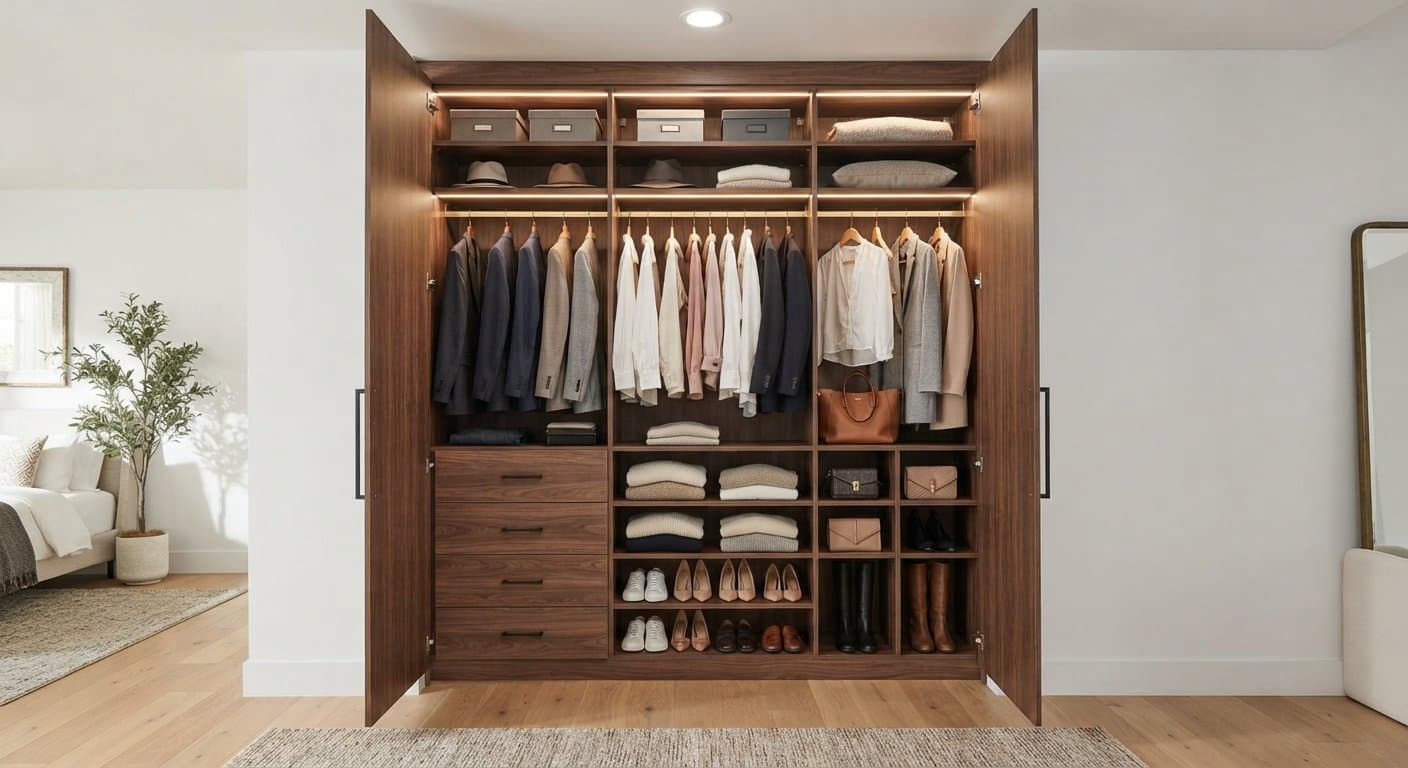
Reach-In Closets Get Luxe Upgrades With 2026 Trends
A thoughtful reach-in closet makeover can make a small storage area feel polished, easier to use, and tailored to your routine, without a full renovation.
Reach-in closets often waste space above, below, and beside a single hanging rod.
Today, you will plan a practical upgrade with better lighting, custom shelving, and details that look considered.
One caveat: check wall conditions and electrical requirements before installing heavy shelving or hardwired lights.
What To Know
The most useful closet upgrades start with an inventory, not a shopping list. Measure the closet, note what you store, and decide what needs to hang, fold, or sit in drawers. Current design ideas favor layered storage, warm lighting, and finishes that feel consistent with the bedroom. Keep the layout accessible, secure shelves to studs when possible, and use only lighting rated for enclosed spaces where required.
Trends That Earn Their Space
Custom shelving that fits your wardrobe
A standard rod leaves little room for folded clothes, shoes, bags, or accessories. Custom shelving can use the full width and height of the closet, while adjustable shelves let you change the setup as your needs shift. You do not need a built-in cabinet system to get the effect. A modular kit or a mix of sturdy shelves and drawers can create a more tailored look.
Plan for the items you own. Long garments need a clear hanging section. Shirts and folded sweaters work well on shelves that are easy to reach. Place shoes near the floor, and store occasional items higher up in labeled bins.
Layered closet lighting
A bright overhead fixture can leave shadows under shelves and at the sides of a reach-in closet. A combination of ambient light and targeted lighting makes it easier to see colors and find small items. LED strips under shelves, battery powered motion lights, or a ceiling fixture can all help, depending on the closet and local electrical rules.
Choose a light color that looks comfortable beside your bedroom lighting. Check the product label for the correct use, mounting method, and heat clearance. Avoid placing lights where clothes can cover them.
Finishes that feel considered
A luxe look often comes from a few coordinated choices rather than expensive materials. Matching shelf edges, simple drawer pulls, and a consistent palette can make open storage appear intentional. Pale finishes can help a compact closet feel brighter, while a deeper accent color can add contrast if the room has enough light.
Use finishes that suit your budget and cleaning habits. Smooth, sealed surfaces are easier to wipe than rough, unfinished wood. If you use paint, follow the label instructions and allow it to cure fully before returning clothes.
Tools and Materials
- Tape measure, pencil, and level
- Stud finder and drill
- Shelving kit or shelves, brackets, and compatible fasteners
- Storage bins, drawer inserts, or hooks
- LED closet light rated for the intended location
- Cleaning cloth and mild household cleaner
Step By Step
-
Empty the closet and sort your belongings. Make separate piles for items to keep, donate, repair, or store elsewhere. Group the keepers by type so you can estimate the space each category needs.
-
Measure the usable area. Record the width, height, and depth, plus the location of the door trim, baseboards, and any outlet. Check the door swing so a shelf or drawer will not block access.
-
Sketch the layout before buying materials. Mark long hanging space, short hanging space, shelves, and drawers. Leave frequently used items within easy reach, and reserve the highest shelf for lighter, occasional-use items.
-
Choose a system that fits the wall and load. Read the manufacturer’s weight limits and fastening instructions. Locate studs for shelf supports when possible. Use anchors only when they are suitable for your wall type and the expected load.
-
Install the main storage components. Follow the kit instructions, check each shelf with a level, and secure brackets firmly. Do not overload a shelf to test it. Distribute weight across the surface and keep heavy items low.
-
Add lighting with safety in mind. For a simple DIY option, use a closet-rated, battery powered LED light with a secure mount. If you want a hardwired fixture, have a qualified electrician confirm the placement and installation requirements.
-
Return items by frequency and category. Put daily clothes at eye level, shoes within reach, and accessories in small bins or drawer dividers. Keep a little open space so the closet remains easy to use rather than packed edge to edge.
-
Finish with a short usability check. Open the door fully, pull out drawers, and reach for common items. Adjust shelf heights or move bins if anything catches, blocks light, or feels awkward.
Dos and Don’ts
- Do anchor shelves according to the manufacturer’s instructions. A loaded shelf can pull free if its fasteners do not suit the wall.
- Do use closed bins for dust-sensitive items stored high up.
- Do choose lighting that is labeled for closet use and keep it clear of clothing.
- Don’t assume every wall anchor can hold the same weight. Match the anchor to the wall and load.
- Don’t install lights near hanging fabric or cover them with storage.
- Don’t put delicate garments against freshly painted or damp surfaces.
When To Call A Pro
Call a carpenter or closet installer if the walls are uneven, the storage must support heavy loads, or the design requires cutting into finished surfaces. Contact an electrician for hardwired lighting, new wiring, or an outlet change. If you find dampness, damaged drywall, or signs of a leak, address that problem before adding shelves or returning clothing.
Cost and Time Snapshot
A simple refresh with bins, hooks, and battery powered lighting may cost about $50 to $200. A modular shelving kit often falls around $150 to $700, while custom cabinetry can cost $800 or more. Prices depend on closet size, materials, drawers, and installation. Sorting and planning can take a few hours. A basic DIY installation may take half a day, while custom work takes longer.
Maintenance or Upkeep
- Return items to their assigned sections after use.
- Wipe shelves and bins every few months, or when dust is visible.
- Check brackets and fasteners twice a year, and tighten only as directed.
- Replace or recharge battery powered lights when they dim.
- Reassess the layout when your wardrobe or storage needs change.
Make the Upgrade Fit Your Routine
Choose one improvement that will solve a daily frustration, such as a shelf for folded clothes or a light that reaches the back corners. Build around that change, then add details only if they improve access or make the closet easier to maintain.