
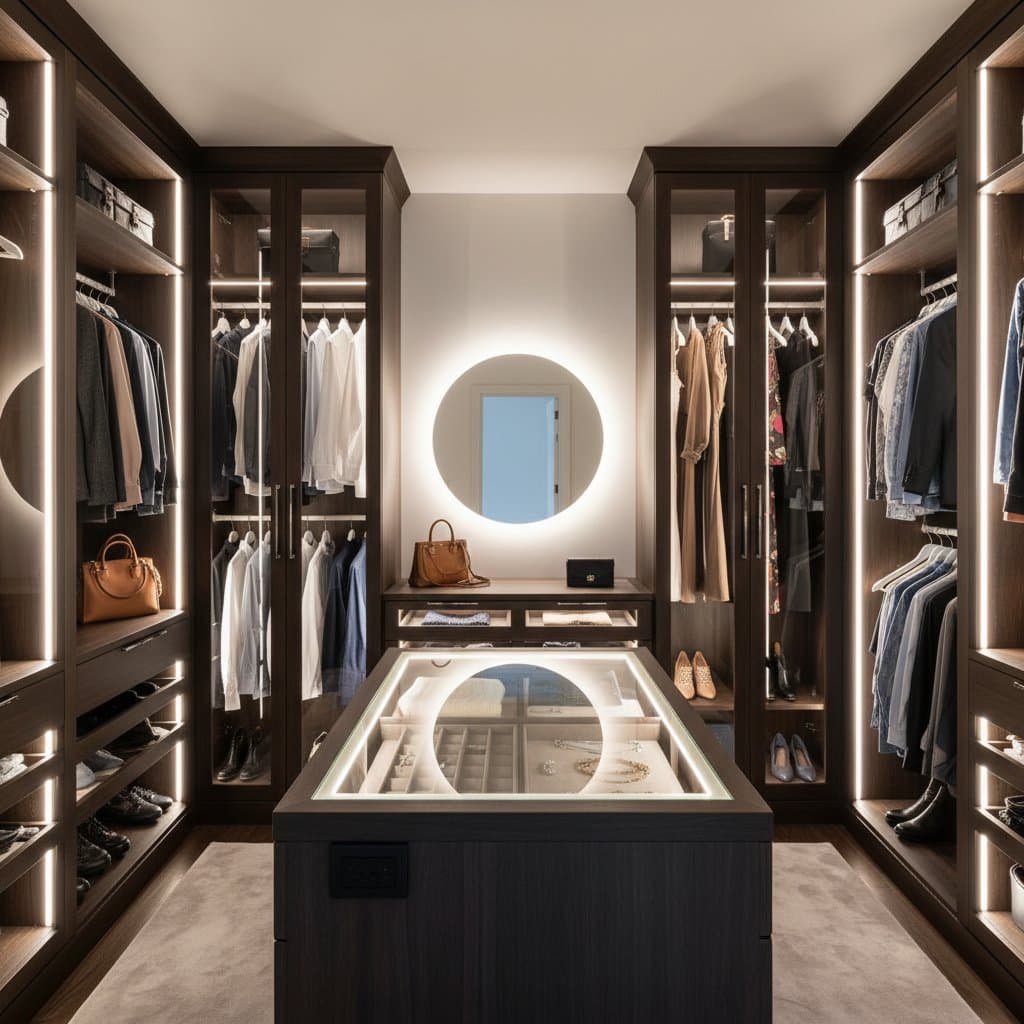
LED Lighting Transforms Ordinary Closets into Luxe Spaces
Proper lighting resolves the common issue of dim closets that hinder visibility and diminish appeal. LED strips provide clear illumination to showcase clothing and accessories while imparting a sophisticated, professional finish. This approach enhances functionality and elevates the overall aesthetic of storage areas.
Many closets suffer from inadequate lighting, leading to frustration when locating items and a generally uninspired appearance. LED solutions address these challenges by offering customizable brightness and placement options. Readers will discover methods to select and install lighting suited to specific layouts and budgets.
Select products rated for enclosed environments to avoid heat buildup, particularly near fabrics or wood surfaces. Prioritize sealed strips and consult specifications for safe operation in low-airflow spaces.
Essential Knowledge on LED Closet Lighting
LED lights enhance visibility in closets, lower energy consumption, and introduce immediate elegance. Success depends on choosing appropriate types, lumen output, and positions tailored to the space. Verify that all components suit confined areas to ensure longevity and safety.
Required Tools and Materials
Gather these essentials before starting:
- Tape measure for accurate dimensions
- Screwdriver or drill for secure mounting
- Adhesive-backed LED strips or compact puck lights
- Mounting clips or brackets for stability
- Power supply unit and compatible connectors
- Wire covers or cable clips to conceal routing
- Optional additions: motion sensors or dimmer switches for convenience
Home improvement retailers stock most items. Consider battery-powered options for setups without easy access to outlets.
Installation Guide: Step by Step
1. Measure and Plan Layout
Measure walls, shelves, and hanging sections thoroughly. Identify potential shadow areas to inform decisions on lighting placement. Sketch a simple diagram to guide purchases and avoid errors.
2. Select Appropriate LED Fixtures
Opt for flexible LED strips along shelves or rods for uniform coverage. Choose puck lights for targeted illumination in display areas like shoe racks or cabinets. Strips deliver seamless light distribution, whereas pucks provide focused highlights.
3. Determine Ideal Color Temperature
Warm white at 2700K to 3000K suits wooden closets, creating a cozy atmosphere. Cool white around 4000K complements contemporary materials for crisp clarity. Interior designer Leah Kim of BrightNest Design notes, "Warm white lighting makes clothes look true to color and keeps the space inviting." Steer clear of daylight options that can distort fabric hues.
4. Prepare the Installation Area
Remove contents from the closet and clean mounting surfaces to ensure strong adhesion. Eliminate dust and residues that could compromise bonds. Shut off electricity at the breaker if hardwiring is involved.
5. Mount LED Strips or Puck Lights
Position strips beneath shelves or along door frame edges for optimal reach. Conceal wiring with trim or covers for a tidy appearance. Install puck lights above frequently accessed zones, such as drawers or rods, spacing them 10 to 12 inches apart to eliminate uneven lighting.
6. Connect and Route Wires Securely
Employ connectors to link strip segments without sharp bends. Route power cords along edges using clips for discretion. Engage a licensed electrician for permanent hardwired installations to meet code requirements.
7. Test and Adjust the Setup
Activate the lights prior to restocking the closet. Inspect for shadows or excessive glare, repositioning fixtures as necessary. Incorporate diffusers to soften light if harsh spots appear.
8. Integrate Smart Enhancements
Motion sensors activate lights upon door opening, conserving power. Dimmer switches allow brightness adjustments for different times or preferences. Smart plugs enable automated scheduling through compatible apps.
9. Organize and Style the Closet
Arrange garments by color or type on uniform hangers for visual harmony. Illuminate shelves to accentuate shoes and accessories, mimicking retail displays. This final touch reinforces the luxurious transformation.
Best Practices and Common Pitfalls
Recommended Actions
- Choose LEDs certified for enclosed use to prevent overheating.
- Scale brightness to room size, aiming for 200 lumens per square foot in compact areas.
- Route all wiring methodically to maintain order.
- Evaluate light tones against wardrobe items during testing.
Actions to Avoid
- Position unsealed strips where moisture or fabrics might contact them directly.
- Surpass the power supply's wattage capacity.
- Allow loose cords that could snag on hangers.
- Combine varying color temperatures within the same area.
Professional Assistance Indicators
Seek an electrician for hardwired systems, recessed fixtures, or integration with existing switches. Professional intervention is advisable for outdated wiring, drilling into cabinetry, or preserving manufacturer warranties. These steps safeguard against hazards and ensure reliable performance.
Budget and Timeline Overview
Battery-operated LED strips start at 20 to 40 dollars for basic setups. Plug-in systems range from 50 to 150 dollars based on length and features. Custom hardwired configurations may exceed 500 dollars.
Straightforward installations require about one hour. More complex wired projects demand two to four hours. Factors influencing costs include fixture variety, quantity, and smart integrations.
Ongoing Maintenance Routine
Regular Upkeep Checklist
- Clean LED surfaces monthly using a dry microfiber cloth.
- Inspect adhesives and clips quarterly for security.
- Examine batteries or cords biannually for wear.
- Monitor for flickering or reduced output, signaling connection problems.
- Reassess color accuracy after any surface refinishing.
Expert Recommendations for Optimal Results
Lighting designer Omar Ruiz of LightForm Studio emphasizes, "The best closet lighting mimics daylight without glare. Place your lights where you need them most, not just where they fit." Strategic positioning outweighs sheer volume of fixtures.
Position sources above or beside items to minimize shadows. Apply frosted diffusers to temper intensity. For mirrored doors, verify setups with doors shut to prevent unwanted reflections.
A motion sensor elevates basic installations by providing seamless activation. This feature enhances convenience and efficiency, illuminating the space only when required.
Enhancing Closet Functionality Through Lighting Design
Strategic LED placement influences perception and usability. Under-shelf strips define shelving contours clearly. Flanking mirror lights simplify outfit selection.
Puck fixtures within drawers reveal small items effortlessly. Maintain consistent tones across open shelving for cohesion. In enclosed units, frame-mounted strips deliver welcoming illumination upon access.
Blend warm tones in hanging sections for warmth and neutral ones in storage for precision. Prototype arrangements before committing to permanent fixes.
Finalize Your Luxe Closet Transformation
LED lighting elevates standard closets to refined havens with deliberate planning. Focus on balanced illumination, discreet wiring, and harmonious tones. These elements create an intentional, polished environment that enhances daily routines.