
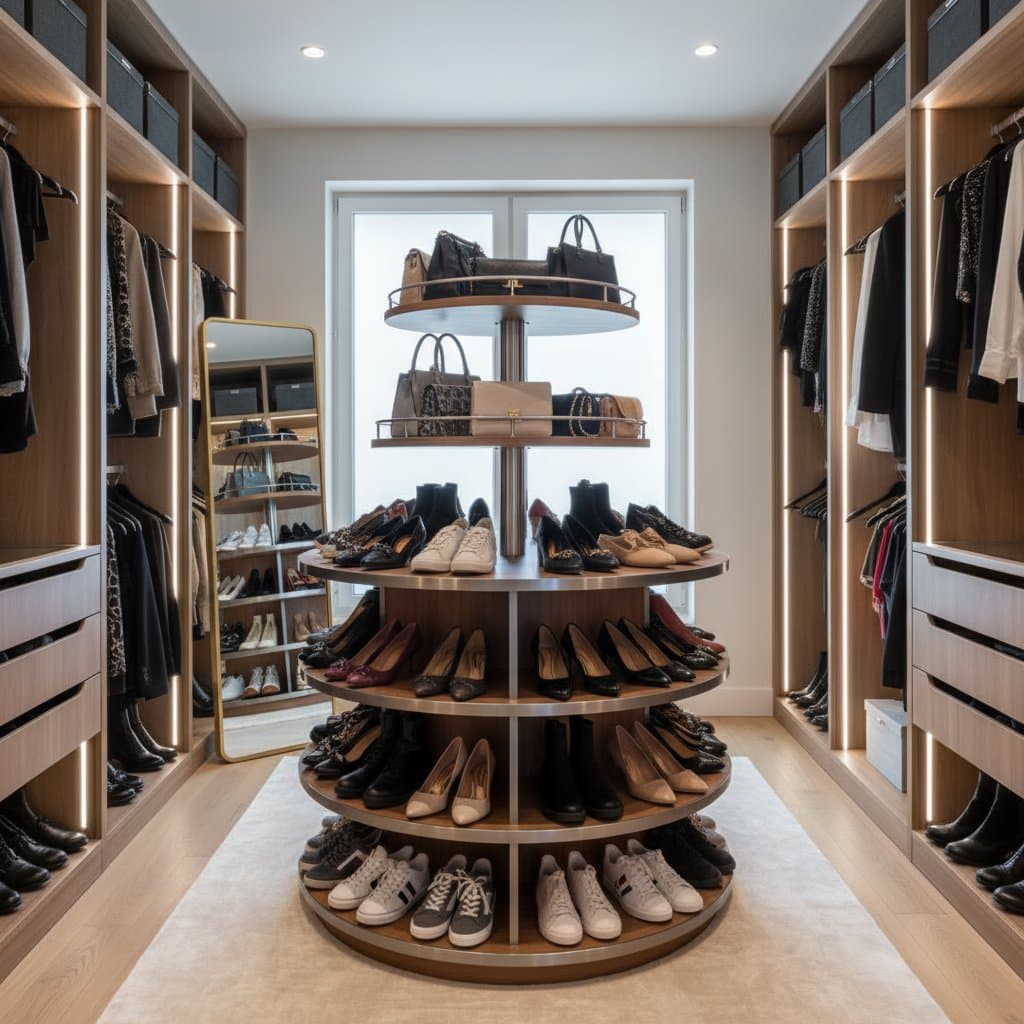
Rotating Racks Revolutionize Closet Organization
A compact rotating rack converts a cramped closet into a functional area that enhances daily routines. The design addresses common storage challenges with straightforward mechanics. Users gain quick access to items without unnecessary searching.
Shoes accumulate rapidly, and folded garments create disorder. Locating specific pieces consumes valuable time. Rotating racks provide an effective solution for storing shoes, handbags, and clothing in a structured manner.
For closets with limited width or low ceilings, verify sufficient clearance prior to selecting a tall rotating unit. This precaution prevents installation issues and ensures smooth operation.
Essential Considerations for Rotating Racks
Rotating racks, also known as carousel storage units, rotate around a central axis to bring all shelves within easy reach. Balance remains crucial for stability. Uneven distribution may cause wobbling or contact with surrounding surfaces. Secure the base firmly and position items symmetrically across tiers. Refrain from placing heavy boots or containers on upper levels to maintain equilibrium.
Required Tools and Materials
- Measuring tape for accurate dimensions
- Level or plumb line to ensure even placement
- Drill and screwdriver for assembly
- Wall anchors suitable for the surface type
- Soft cloth or microfiber duster for cleaning
- Mild surface cleaner
- Rotating rack kit or preassembled carousel unit
Opt for a freestanding model with a broad base if drilling into walls proves impractical, such as in rental properties.
Installation Guide
1. Measure the Space Precisely
Determine the closet's height, width, and depth with a measuring tape. Allocate at least one inch of clearance on all sides to allow unrestricted rotation. Neglecting this measurement frequently results in racks that rub against walls or doors, complicating use.
2. Select an Appropriate Rack Type
Choose tiered circular shelves or adjustable arms for shoe storage. A two-tier hanging carousel suits clothing items effectively. According to a closet designer at Simple Spaces Co., the selection process prioritizes aligning the rack with stored contents rather than adapting items to the rack.
3. Prepare the Installation Area
Remove all items from the floor and clean the surface thoroughly. Confirm the floor remains level using a plumb line. Place a rubber mat beneath the rack if the surface slopes, as this adjustment prevents tilting and extends the unit's durability.
4. Assemble the Rack Components
Adhere to the manufacturer's instructions during assembly. Secure all bolts firmly without excessive force, which might damage threads. Test the rotation; if movement feels resistant, adjust the fittings slightly for fluid operation.
5. Anchor the Rack Securely
For models needing wall attachment, drill pilot holes and insert anchors compatible with drywall or wood studs. Assess stability by applying gentle pressure before adding contents, as instability risks tipping when fully loaded.
6. Arrange Items Thoughtfully
Position heavier shoes or boxes on lower tiers to promote balance. Store delicate pieces, such as suede footwear or silk accessories, on higher levels. Spread weight evenly around the circumference to minimize strain on the central support.
7. Customize Shelf Spacing
Adjust trays on racks with modifiable heights to accommodate tall boots or bulky sweaters. Adequate vertical space reduces dust accumulation and simplifies retrieval.
8. Perform Initial Cleaning and Testing
Clean each shelf with a soft cloth and rotate the unit completely. Monitor for unusual sounds like friction or clicks. Address minor squeaks by tightening the central nut or applying a small amount of lubricant.
9. Implement Organization Labels
Assign sections with color codes or tags for shared closets. This method promotes consistency and encourages proper return of items to designated spots.
Best Practices and Common Pitfalls
Recommended Actions
- Verify weight capacities prior to loading items.
- Remove dust from bearings biweekly to ensure smooth function.
- Fasten loose straps on garments to prevent entanglement during rotation.
- Insert shoe trees to preserve footwear shapes.
Actions to Avoid
- Refrain from placing wet clothes on metal components, as moisture promotes rust.
- Distribute loads evenly rather than concentrating boots or bags on one side.
- Rotate the unit using the designated handle or pole, not by tugging on contents.
- Address any wobbling immediately to prevent escalation.
Professional Assistance Scenarios
Engage a carpenter or closet specialist for installations involving existing shelving or ceiling-mounted carousels. These setups demand robust anchors and precise weight management. Seek expert help if cracks appear, movement seems irregular, or electrical elements require adjustment near the rack.
Investment and Timeline Overview
Freestanding rotating shoe racks match the price of standard storage benches. Motorized or ceiling-suspended models command higher costs, often several times the base price. Assembly typically requires one to two hours, varying with design complexity. Custom options fluctuate based on materials, integrated lighting, or mirror features.
Ongoing Maintenance Routine- Dust shelves biweekly to maintain cleanliness.
- Inspect bolts seasonally for tightness.
- Clean bearings with a dry cloth periodically.
- Rotate all tiers monthly to avoid stiffness.
- Rebalance loads promptly if snagging or tilting occurs.
Schedule a tune-up if rotation becomes laborious or produces persistent squeaks.
Expert Recommendations- Install a slim LED strip overhead to improve visibility during selection.
- Apply felt pads to the base to safeguard flooring.
- Categorize shoes by style or hue prior to placement for intuitive access.
- Position a step stool adjacent to the rack for reaching upper shelves if needed.
Interior organizer Dana Lewis, certified in residential design, notes that effective systems facilitate daily tasks. A rotating rack shifts a disordered closet into an ally for organization.
Implementing Your Rotating Rack Solution
Rotating racks gain popularity for resolving space constraints through intuitive design. The user remains stationary while contents rotate into view, keeping all items accessible. Select from affordable shoe carousels to comprehensive closet systems, always emphasizing precise measurements, firm installation, and balanced loading. This approach streamlines organization, saving time in everyday use.