
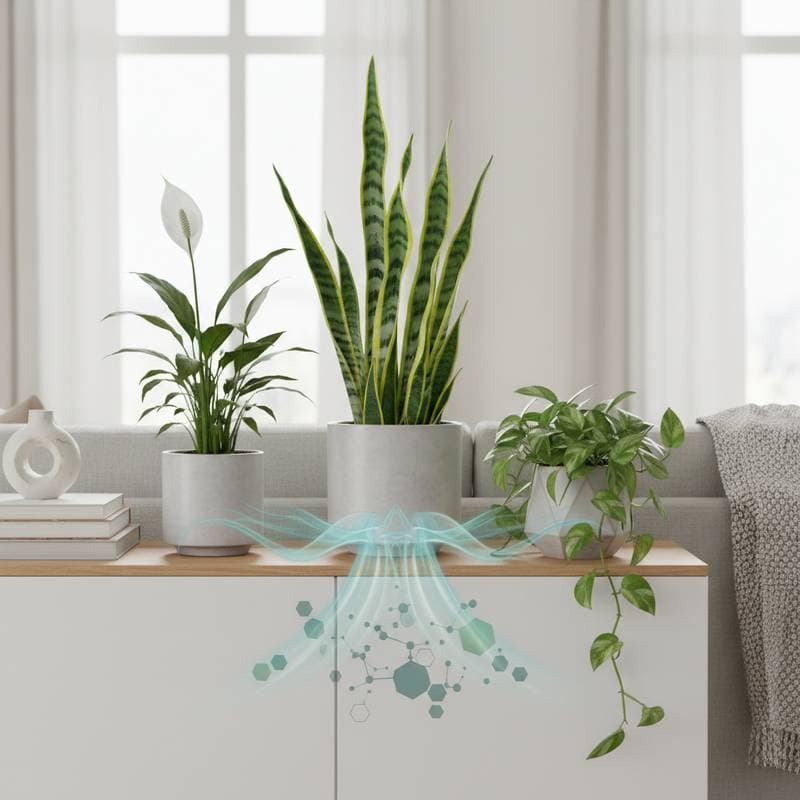
VOC-Absorbing Plants: Must-Haves for Cleaner Indoor Air
Houseplants improve the feel of a home. They also absorb volatile organic compounds released by paints, cleaning agents, and furniture. These compounds build up indoors and contribute to headaches, allergies, and fatigue.
This guide presents plants that filter toxins effectively while remaining simple to maintain. The selections come from research and direct testing focused on toxin removal rates, care requirements, and suitability for typical indoor spaces.
Evaluations considered four factors. These include effectiveness in absorbing volatile organic compounds, ease of maintenance, adaptability to indoor conditions, and visual appeal. The details that follow help match each plant to specific room needs and care routines.
The Best VOC-Absorbing Plants for Cleaner Indoor Air
1. Best Overall: Snake Plant (Sansevieria trifasciata)
The Snake Plant removes formaldehyde and benzene efficiently. It tolerates low light and infrequent watering, which suits beginners and busy households.
- Extremely low maintenance
- Thrives in low or bright light
- Continues filtering air at night
Overwatering causes root rot, and growth remains slow. Place the plant in a bedroom to benefit from nighttime purification. Allow the soil to dry fully between waterings and use a pot with drainage holes.
2. Best for Beginners: Pothos (Epipremnum aureum)
Pothos grows quickly in low light and absorbs formaldehyde along with carbon monoxide. Its trailing vines suit shelves and hanging baskets.
- Grows quickly and vigorously
- Tolerates irregular watering
- Easy to propagate from cuttings
The plant can spread aggressively without pruning and proves toxic to pets. Trim vines regularly to control length. Keep it away from cats and dogs while positioning it near sources of household chemicals.
3. Best Compact Option: Spider Plant (Chlorophytum comosum)
The Spider Plant clears carbon monoxide and formaldehyde in small spaces. It produces baby plantlets that root easily in water or soil.
- Fits apartments and offices
- Non-toxic to pets
- Adapts to varied light levels
Brown leaf tips appear when tap water contains fluoride. Use filtered water and remove spent leaves every few weeks. Position several plants together in a living area to increase overall volatile organic compound reduction.
What to Look for When Buying VOC-Absorbing Plants
Light Requirements
Match each plant to available light. Snake Plant and Pothos perform well in low light. Peace Lily and Rubber Plant need bright indirect light to maintain strong growth and steady toxin absorption.
Maintenance Level
Choose low-maintenance options such as Snake Plant or Pothos when travel or forgetfulness affects watering. Moisture-loving plants like Boston Fern reward consistent attention with faster growth and higher humidity output.
Pet Safety
Select Spider Plant or certain ferns when cats or dogs share the home. Keep Peace Lily and Pothos out of reach. Confirm safety details on the plant tag before purchase.
Aesthetic Fit
Consider foliage shape and size. Large leaves on a Rubber Plant create a focal point. Trailing stems from Pothos soften shelves and cabinets.
Placement and Air Circulation
Set plants near furniture, rugs, or electronics that release volatile organic compounds. Ensure airflow around leaves so the plants can process airborne toxins without becoming stressed.
Soil and Watering
Use well-draining soil and pots with drainage holes. Let the top inch of soil dry between waterings for most varieties. Increase humidity through misting rather than extra water for plants that prefer moist conditions.
Frequently Asked Questions
Do VOC-absorbing plants really clean the air?
Plants reduce common volatile organic compounds when several are present in one room. They support but do not replace mechanical ventilation.
How many plants do I need to improve indoor air quality?
Two or three medium plants suffice for a small room. Five or more distributed throughout larger spaces produce a clearer improvement in freshness.
Can these plants survive in low light?
Snake Plant and Pothos tolerate low light well. Peace Lily and Rubber Plant maintain better performance with indirect sunlight.
Do I need to clean the leaves?
Dust blocks the pores used for absorption. Wipe leaves with a damp cloth every two weeks to sustain efficiency.
Are VOC-absorbing plants safe for children and pets?
Spider Plant and Boston Fern offer safer choices. Place Peace Lily and Pothos out of reach of children and pets.
Building a Plant-Based Air Care Routine
Start with two or three plants suited to your light and pet situation. Position them near pollutant sources and maintain a simple watering schedule. Over time the combination of steady care and strategic placement supports fresher air and a more comfortable living space.