
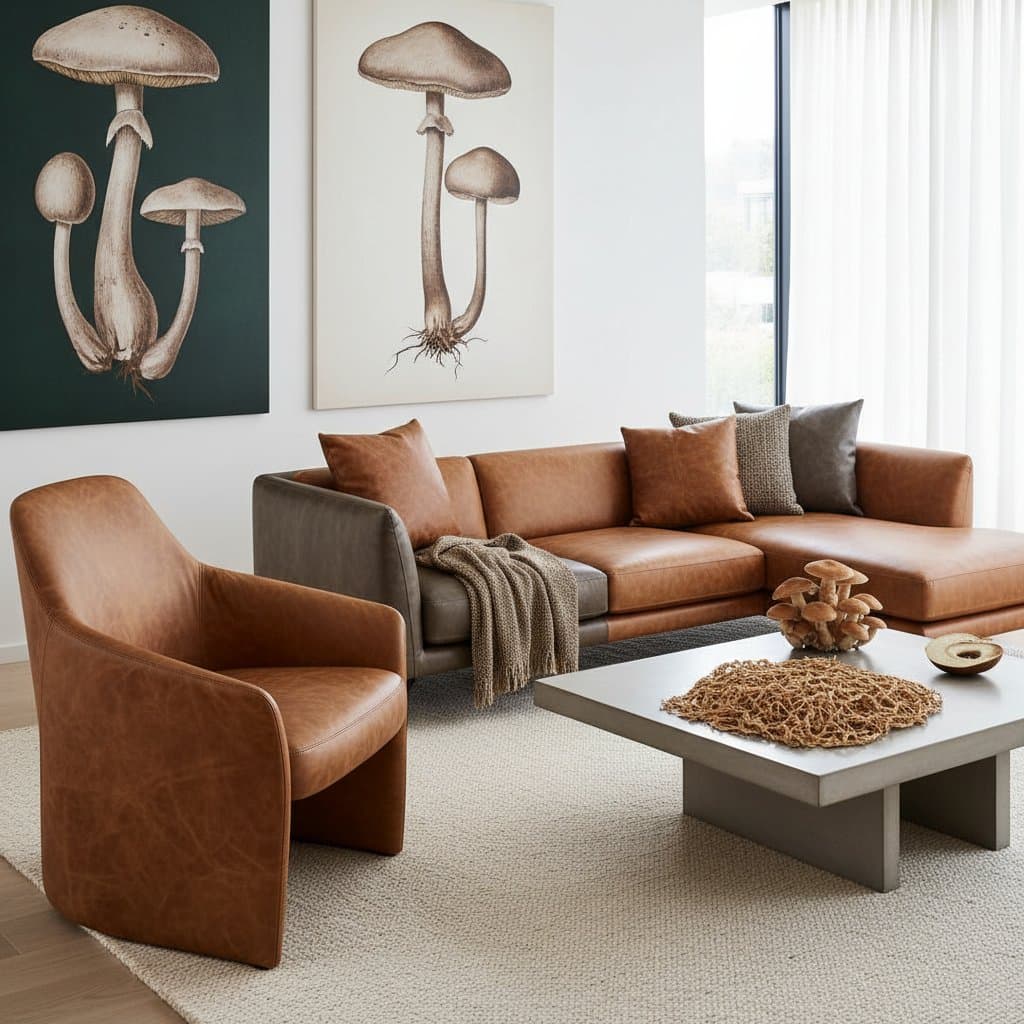
How Mushroom Leather is Bringing Vegan Upholstery into the Mainstream
A subtle shift is underway in interior design circles. Mushroom leather, derived from mycelium, transitions from experimental labs to everyday applications in homes, eateries, and creative spaces. This fungal-based material reimagines vegan upholstery by providing a realistic leather alternative that prioritizes biodegradability, ethical sourcing, and resilience.
The Significance of Mushroom Leather
Traditional vegan leathers often rely on petroleum-derived plastics, which degrade poorly and contribute to pollution. Mushroom leather stands apart as a cultivated product that utilizes organic waste materials. Growers inoculate substrates like corn stalks or wood chips with mycelium, allowing the fungal network to develop into a robust, leather-like sheet through natural expansion.
This approach yields a material with inherent breathability and moisture resistance. Professionals value its organic variations in grain and tone, which add character absent in uniform synthetics. Such qualities position it well for upholstery in high-traffic areas, from sofas to office chairs.
Producing Mycelium Leather
The production begins in sterile environments where mycelium is introduced to nutrient-rich bases. Within one to two weeks, the mycelium colonizes the substrate, creating a dense mat ready for harvesting. Workers then compress the sheet, cure it under controlled conditions, and apply non-toxic finishes derived from plants.
Compared to conventional leather processing, this method consumes minimal resources. It avoids energy-intensive steps like chrome tanning and generates little byproduct. The final product remains fully compostable, breaking down in soil within months after use.
Upholstery Applications and Design Versatility
Mycelium leather adapts seamlessly to diverse furniture styles. It molds to contoured surfaces during installation, ensuring taut, wrinkle-free coverage on everything from minimalist benches to ornate armchairs. Available in hues ranging from deep espresso to soft taupe, it integrates with palettes inspired by nature.
Pair it with oak accents or wool blends to enhance a space's warmth. Its subtle sheen reflects light evenly, fostering inviting ambiance without glare. This thermal neutrality prevents the discomfort associated with plastic alternatives during extended contact.
Durability and Maintenance in Daily Settings
Testing reveals that mushroom leather withstands pulls up to 200 pounds per square inch, comparable to bovine leather but at a lighter weight. It repels stains from spills like coffee or wine when wiped promptly with neutral cleaners. Families with active lifestyles benefit from its scratch-resistant surface, which holds up against claws or rough handling.
Beyond furniture, artisans apply it to dividers or ceiling tiles for sound dampening. The material's cellular makeup traps noise frequencies effectively, ideal for multipurpose rooms like combined workspaces and lounges.
Pricing Trends and Entry Points
Initial costs exceed those of basic vinyls, yet advancements in cultivation lower expenses by 30 percent annually. Partnerships with furniture brands now incorporate it into ready-to-buy collections, from dining sets to modular seating. Trial kits, featuring swatches and care guides, enable testing in small projects.
Start with accents such as bolster cushions or stool tops to gauge compatibility with current decor. These pieces often cost under 100 dollars, offering an affordable entry while showcasing the material's tactile appeal.
Full Lifecycle Sustainability
Mycelium leather supports regenerative practices from start to finish. Sourced from upcycled farm residues, it sequesters carbon during growth and requires no irrigation beyond ambient humidity. Disposal integrates into composting systems, returning nutrients to soil without landfill contributions.
In larger installations, such as hospitality venues, adoption cuts Scope 3 emissions significantly. Certifications like Cradle to Cradle validate its role in green building initiatives, attracting eco-aware clients.
Integrating Mushroom Leather into Your Space
This material enhances living environments without overhauling aesthetics. It harmonizes with mid-century pieces or contemporary setups, adding depth through its natural patina over time. Select it for a heirloom desk chair to blend functionality with forward-thinking responsibility.
Homeowners report greater satisfaction from its lived-in feel, which evolves subtly with use. As supply chains mature, mushroom leather bridges the gap between innovation and practicality, inviting broader adoption in thoughtful interiors.