
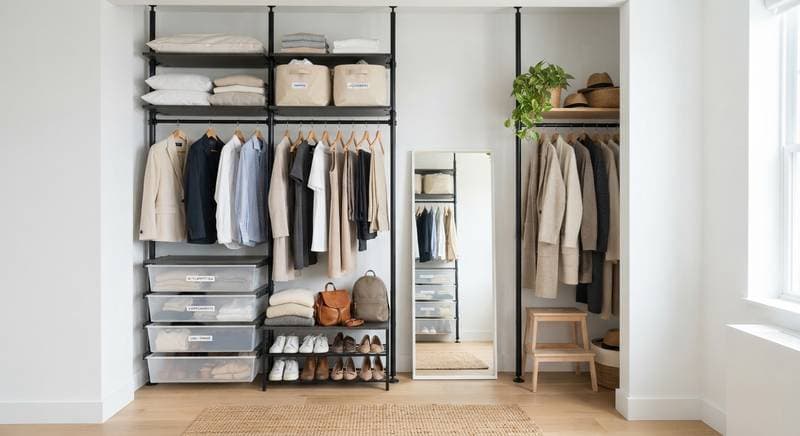
Renter Friendly Closet Systems That Fit Any Space
A cramped rental closet can make getting dressed feel harder than it should. With a few well-chosen shelves, hanging bars, and freestanding organizers, you can create a system that fits your clothes, your room, and your lease, without leaving holes behind.
The best setup is not necessarily the biggest one. It is the one that makes everyday items easy to see and reach, uses awkward space well, and can move with you when your lease ends. Start with what you own, measure carefully, then build a closet system in manageable steps.
Start With the Closet You Have
Before shopping, empty the closet and take stock of what you actually store there. Separate daily clothing from seasonal pieces, shoes, bags, and items that belong elsewhere. This is a practical chance to donate or sell pieces you no longer wear, but there is no need to create a perfectly minimal wardrobe. Your storage should suit your life.
Measure the closet width, depth, and height. Note the door swing, baseboards, sloped ceilings, existing shelves, and any floor vents. A standard hanger needs roughly 22 inches of depth, while a shelf for folded clothes can be shallower. If the closet is narrow, confirm that bins or drawers will not block the doorway.
Take a quick photo and sketch the measurements. Those small steps can prevent an expensive mistake, especially when buying modular components online.
Choose a No Drill Closet System
A no drill closet system is useful when your lease restricts wall changes or you would rather avoid patching holes later. Options range from simple add-ons to freestanding furniture, and each has trade-offs.
- Tension-pole systems press vertical poles between the floor and ceiling, supporting adjustable shelves and rods. They use vertical space efficiently in many reach-in closets, though they need stable, fairly level surfaces. Follow the manufacturer weight limits and install each pole as directed.
- Freestanding garment racks can add hanging space in a bedroom or inside a large closet. Choose a model with a low shelf for shoes or baskets, and check that its feet sit securely on your flooring.
- Over-the-door organizers can hold shoes, accessories, or small bags without using shelf space. Measure the gap between the door and frame first so the organizer will not scrape paint or prevent the door from closing.
- Stackable drawers and cubes work well for folded clothes and accessories. Use sturdy pieces at floor level, and avoid stacking beyond the product safe limit.
Adhesive hooks can keep belts, scarves, or lightweight bags visible, but they are not a substitute for structural support. Check the package instructions, test a discreet area if needed, and avoid hanging heavy items where a failure could damage the wall or belongings.
Make Every Inch Work
A small closet often needs more thoughtful zones, not more stuff. If there is one high shelf, reserve it for items you use less often, such as spare bedding or out-of-season clothing. Store them in labeled fabric bins so they stay easy to identify.
Use matching slim hangers to create a little more room on a crowded rod. Group garments by type, then leave a small section for the clothes you wear most. If your closet has a single high rod, a removable lower rod can double hanging capacity for shirts and folded trousers, as long as the added bar leaves enough clearance underneath.
Keep frequently worn shoes near the floor and use a shallow rack or clear boxes to prevent pairs from spreading into the room. A small tray can collect everyday accessories, while a hook on the inside of a door can hold a robe or tomorrow outfit.
For a reach-in closet, consider leaving one narrow section open rather than filling every inch. A clear area makes it easier to take clothes out and return them without shifting a pile of bins.
Build a Capsule Wardrobe Storage Plan
A capsule wardrobe does not require a strict clothing count. It simply means keeping a useful group of pieces in easy rotation and storing less-used items separately. This can make a compact closet feel calmer without asking you to part with clothes you genuinely love.
Give your everyday pieces the most accessible hanging and drawer space. Fold sweaters on a shelf instead of hanging them, since hangers can stretch the shoulders. Place occasion wear, winter accessories, or off-season pieces in labeled bins on an upper shelf or under the bed.
The same approach works for different households. A shared closet might use separate baskets or shelf zones for each person. A studio apartment might use a freestanding rack as a visible wardrobe, with a curtain panel to soften the view. A rental with no closet at all can use a rack, a compact dresser, and under-bed storage as a complete system.
Keep the Look Personal and Practical
Storage can feel considered without a custom renovation. Choose bins in a color you enjoy, or cover plain cardboard boxes with leftover fabric. A battery-operated motion-sensor light can brighten a dim closet without wiring, while a small mirror nearby helps a tight entry feel more useful.
Spend first on pieces that solve a daily problem. If you have enough hanging space but nowhere for shoes, a shoe rack matters more than another clothing bar. Secondhand shelves, baskets, and dressers can reduce costs, and many can be reused in a new home. Check measurements and condition before bringing them home.
Living With Your System
A renter-friendly closet works best when it can adapt. After living with the setup for a few weeks, notice what remains hard to reach, where clutter collects, and which items never leave their bins. Move components before buying more. Often, a shelf placed lower or a basket added near the door fixes the daily frustration.
Keep the installation reversible, save product instructions, and take a photo before moving out. If a system uses tension poles or removable adhesive, remove it carefully and follow the maker guidance to protect painted surfaces. With a measured plan and a few flexible pieces, even a narrow rental closet can support an easier routine and reflect the person who lives there.