
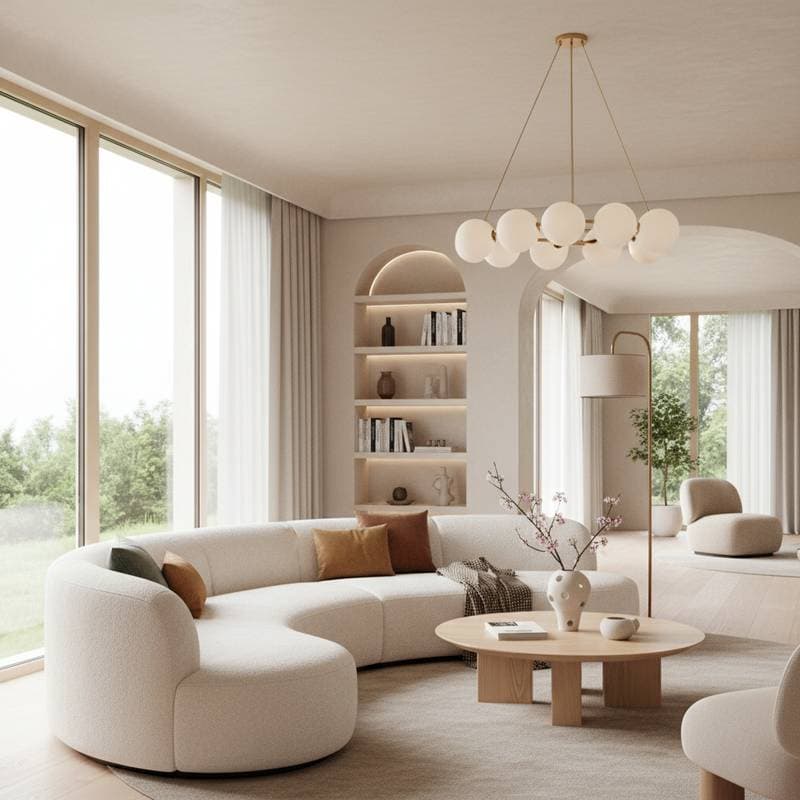
Curves That Soften Stark Modern Interior Edges
Modern interiors emphasize simplicity, clean lines, and open layouts. However, when every edge remains sharp and every surface gleams, the space risks feeling like a sterile gallery rather than a lived-in home. Curves offer an effective solution. Round silhouettes, soft corners, and organic shapes reduce visual tension from strict geometry. They create welcoming environments without sacrificing the clarity central to modernism. Gentle curves, incorporated via furniture, lighting, or architectural details, introduce balance and emotional depth to minimalist designs.
Why Curves Matter in Modern Design
Straight lines establish order. Curves foster comfort. Their combination produces spaces that feel contemporary yet approachable. The human eye follows rounded shapes more naturally, slowing perception and promoting calm. Hard edges, by contrast, accelerate visual movement, causing the gaze to jump abruptly from one corner to another. A curved chair or oval table can thus soften a room dominated by rectangles.
Design psychologist Ingrid Meyer observes that individuals respond instinctively to curvature, as it mirrors natural elements such as stones, leaves, and the human form. Integrating these organic shapes indoors restores a sense of flow and relaxation. In even the most minimalist settings, one curved object can alter the atmosphere from rigid to serene.
Introducing Curves Without Overhauling Everything
This design strategy shines in its accessibility; extensive renovations prove unnecessary. Begin modestly by incorporating one or two rounded elements into an existing room. View them as punctuation that interrupts the straight lines of the space.
Practical starting points:
- Coffee tables with rounded corners. Select a circular or oval top to avoid a boxed-in sensation. A white oak table with chamfered edges, measuring approximately 42 inches (107 centimeters) in diameter, provides balance and enhances safety.
- Arched mirrors. Install a tall arched mirror, roughly 70 inches (178 centimeters) high, to draw the eye upward and temper the vertical lines of contemporary walls.
- Curved-back chairs. Choose mid-century inspired options with upholstered backs that envelop the sitter, like the Gubi Beetle Chair or pieces from the Hay About a Chair series.
- Rounded lighting. Opt for a globe pendant in opal glass to diffuse light evenly, substituting harsh shadows with a soothing glow.
Each addition creates rhythm, guiding the eye smoothly around the room rather than halting at right angles.
How to Balance Curves and Clean Lines
Curves succeed when they support rather than dominate. Excess can render a space whimsical or cluttered. Aim for harmony between structure and softness, such as pairing a rectangular dining table with rounded chairs or a squared sofa with a circular rug.
Color and material selections influence this balance. Matte finishes, textured fabrics, and natural woods amplify the calming quality of curves. High-gloss or reflective surfaces may render even rounded forms severe. Prioritize tactile options like bouclé upholstery, linen drapery, or brushed metal to encourage interaction and convey warmth.
Designer Ana Ruiz emphasizes that curved forms must serve a purpose beyond aesthetics. “A curved sofa works because it changes how people sit and talk,” she states. “It turns the focus inward, encouraging connection.” Her insight highlights how curves influence spatial use and social dynamics.
Architectural Curves: When the Structure Itself Softens
Furniture provides an entry point for curves, yet architectural elements can elevate the effect. Arched doorways, rounded kitchen island corners, and curved stair railings introduce fluidity to angular layouts. Implement these subtly; for instance, applying a two-inch (5-centimeter) radius to a drywall corner softens a hallway immediately.
In kitchens, waterfall countertops with eased edges evoke the gentle contour of a pebble over a straight slab cut. Renters may lack options for permanent changes, but peel-and-stick arch decals or rounded wall shelves serve as viable substitutes. Painting a half-circle motif behind a nightstand achieves similar softness without construction.
Curves in Small Spaces
Compact areas benefit particularly from curves, which enhance circulation. A round dining table facilitates movement around confined corners. A curved sofa adapts well to irregular spaces like bay windows. Rounded pieces carry less visual weight, promoting openness and ease in tight quarters.
In a personal small apartment, replacing a rectangular table with a 36-inch (91-centimeter) round pedestal version yielded instant results. The new form encouraged conversation and freed up navigation space. Its rounded edges also prevented minor injuries during hurried routines, proving that functional updates often align with aesthetic appeal.
Materials That Emphasize Organic Shapes
Curves align seamlessly with materials evoking vitality. Wood grains, woven fibers, and stone veining accentuate nature's irregular beauty. For synthetics, select finishes that replicate this essence; matte porcelain with subtle texture outperforms polished marble in organic feel.
Reliable combinations:
- White oak furniture featuring rounded profiles
- Linen upholstery on curved seating
- Rattan or cane baskets to temper shelving
- Ceramic lamps with bulbous bases
- Sculptural concrete or plaster side tables
These choices underscore natural imperfection, supplying the human element absent in some modern interiors.
Budget-Friendly Ways to Add Curves
Custom pieces prove unnecessary for this style. Affordable methods abound to integrate rounded forms.
- DIY projects: Sand corners on an existing wood table or paint a curved mural behind the sofa.
- Secondhand finds: Vintage shops frequently stock curved accent chairs or round mirrors, infusing character into sleek settings.
- Textiles: Incorporate rounded patterns on rugs or cushions to visually soften areas without furniture changes.
- Lighting: Replace angular fixtures with globe bulbs or paper lanterns for both form and diffused illumination.
Consistency matters; repeat the curve theme in two or three elements to ensure cohesion over randomness.
Integrating Curves for Everyday Comfort
Curves transcend fleeting trends; they embody comfort and connection. Start with elements that resonate personally, such as swapping a rigid chair for a rounded one or installing an oval mirror in the entryway. Allow these shapes to direct visual flow and ease spatial tension. Modern design excels in simplicity, and curves demonstrate that such restraint can remain compassionate.